Struggling with streaky or cakey foundation? Using the wrong tool can waste product and ruin your look. A kabuki brush1 is the secret to a flawless, airbrushed finish.
A kabuki brush is a short-handled, dense makeup brush that buffs powder or liquid foundation evenly across the face. Use circular motions for powders and dot-then-buff or stipple for liquids for a smooth finish.
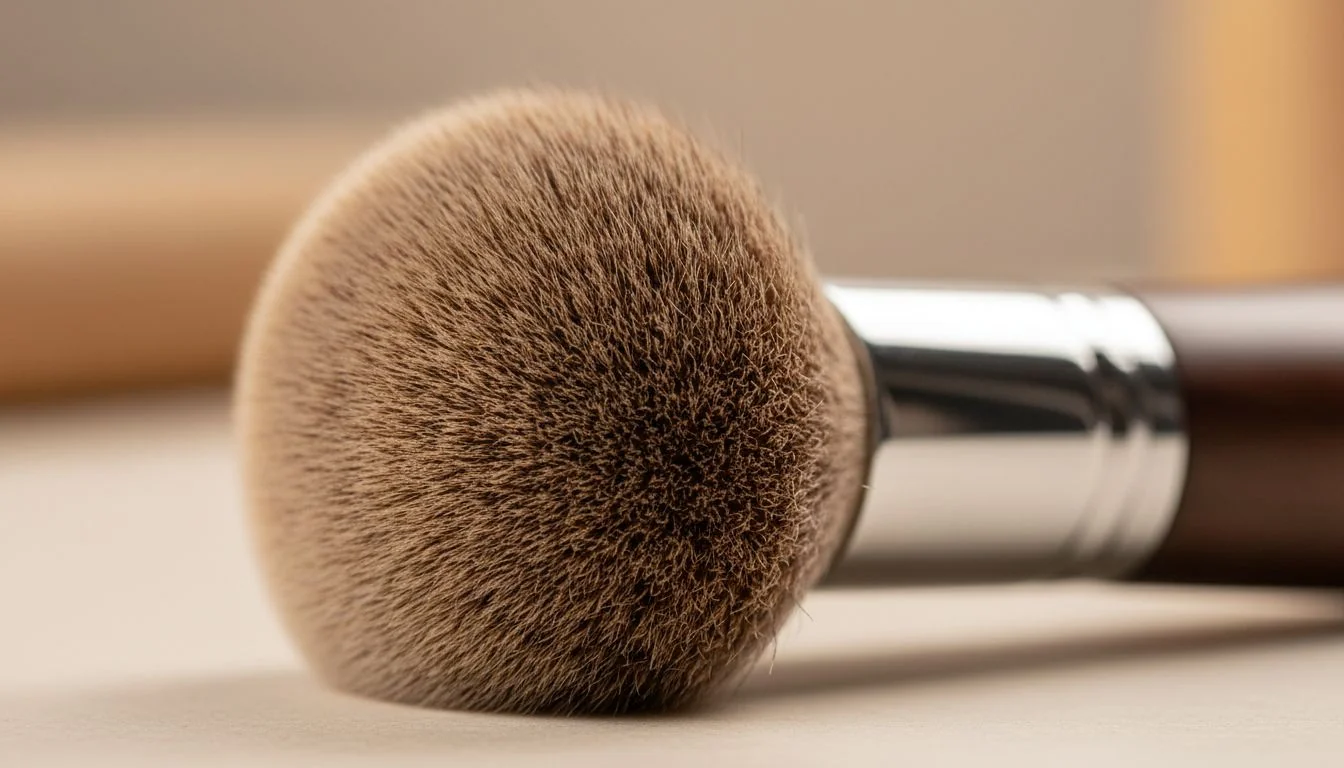
So, you know what a kabuki brush is, but the real magic is in the details. The shape of the head, the density of the bristles, and even the type of fiber can completely change your makeup result. I’ve seen it firsthand on the factory floor. Understanding these differences is key for both daily users and brand owners sourcing the perfect tool. Let’s break down exactly how to choose and use the right kabuki for any formula.
Kabuki brushes were invented in the 21st century for mineral makeup.False
This is false. The kabuki brush originates from Japanese kabuki theater, where actors used them to apply white rice powder makeup uniformly.
Modern synthetic kabuki brushes are often better for liquid foundation than natural hair brushes.True
This is true. Synthetic fibers don't absorb liquid products like natural hair, leading to less waste and a smoother application. They are also easier to clean and more hygienic.
Kabuki Brush Basics: How Do Shape, Density, and Finish Connect?
Overwhelmed by flat, round, and angled kabuki brushes? Choosing the wrong one can ruin your makeup. Let’s match the right brush shape2 and density to your desired finish.
A brush’s shape and density control coverage. Rounded domes diffuse product for a soft, airbrushed finish. Flat tops provide fuller, faster coverage. Denser bristles pick up more product for higher opacity.
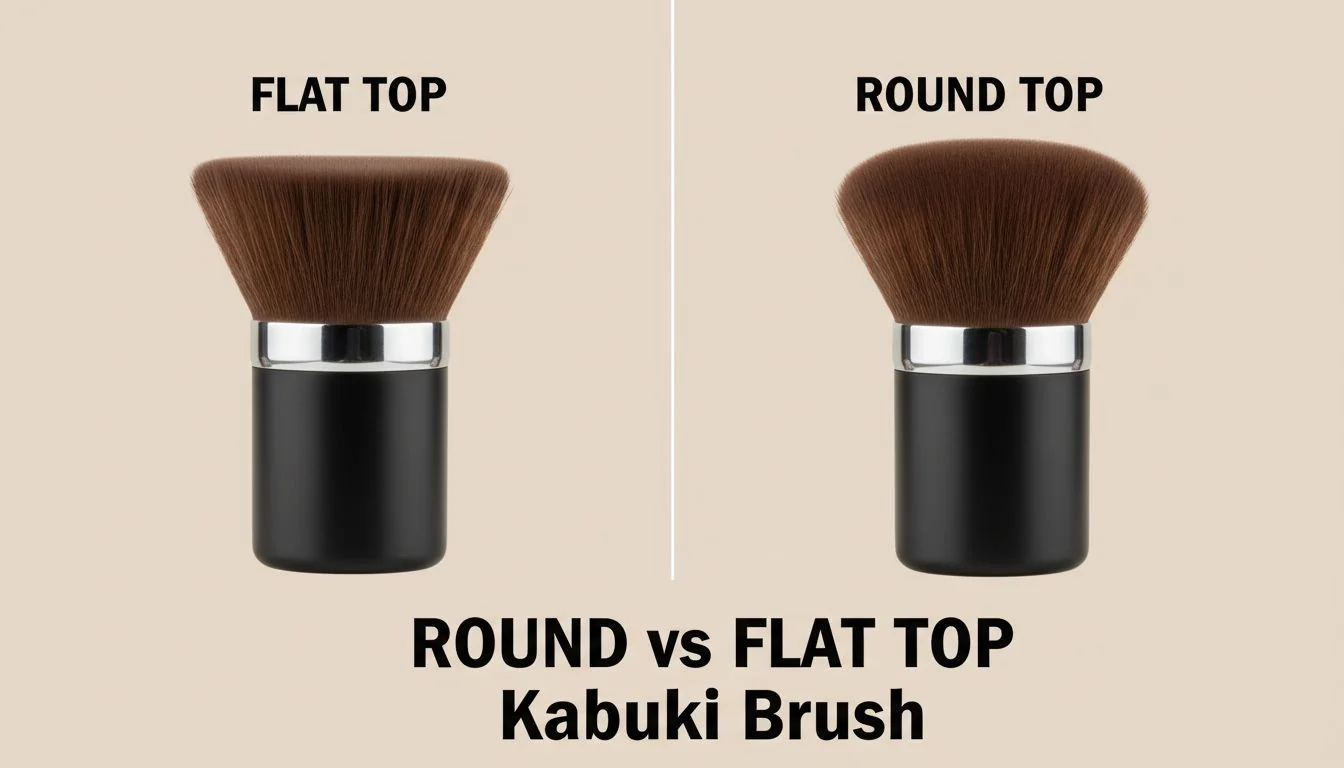
When I work with brand founders, the first thing we discuss is the desired user experience. It all starts with the brush head. The geometry and density are not just design choices; they dictate performance. Let’s look at the key factors.
Head Shape: Round vs. Flat
A rounded dome is perfect for diffusing product. The bristles move flexibly, blending edges for a seamless, airbrushed effect. It’s my go-to recommendation for beginners or for applying bronzer and finishing powders. A flat top has a larger surface area that makes direct contact with the skin. This design is built for buffing and stippling, allowing you to build coverage quickly. It’s ideal for liquid foundation and mineral makeup when you want a more polished, full-coverage look.
Finish Selector Matrix
To make it simple, here is a quick guide I use to help clients choose the right brush for their product line.
| Desired Finish | Best Formula | Recommended Kabuki Shape |
|---|---|---|
| Airbrushed, Natural | Loose Powder, Bronzer | Rounded Dome |
| Sheer to Medium | Mineral Foundation, Liquid | Rounded Dome |
| Medium to Full | Liquid, Cream Foundation | Flat Top |
| Fast, Full Coverage | Pressed Powder, Mineral | Flat Top |
A flat top kabuki brush is generally better for achieving full coverage with liquid foundation.True
True. Its flat surface allows for stippling and buffing motions that press and blend product into the skin for higher opacity, unlike a rounded brush which diffuses it.
All synthetic fibers are the same quality.False
False. There's a huge range in synthetic fiber quality. Premium synthetics mimic natural hair's softness and pickup, while lower-grade ones can feel scratchy and apply product poorly.
Powder vs Liquid: How Do You Buff Without Caking?
Is your foundation looking heavy and cakey? The problem might not be the product, but your technique. Here’s how to buff correctly for a perfect, skin-like finish.
To prevent caking, use less product and the right motion. For powders, tap off excess and use light, circular buffs. For liquids, dot product on your face first, then stipple or buff.

In the factory, we test brushes with dozens of formulas. I’ve learned that technique is just as important as the tool itself. A great brush used incorrectly will still give a bad result. Here are the exact steps I teach my clients for a flawless application, whether you’re using powder or liquid.
For Powder Foundations (Loose or Pressed)
- Load Lightly: Swirl the brush in the powder, then tap the handle firmly on the edge of the container. This is the most skipped step! It removes excess and prevents a cakey look.
- Buff in Circles: Start from the center of your face (like your nose and cheeks) and buff outwards in light, circular motions. This distributes product evenly without harsh lines.
Common Mistake: Dragging the brush. This just moves product around instead of blending it into the skin.
For Liquid or Cream Foundations
- Dot, Don’t Smear: Apply dots of foundation directly onto your forehead, cheeks, nose, and chin. Don’t put a big blob on the brush.
- Stipple and Buff: Use a flat-top kabuki for this. Gently press or "stipple" the brush onto the dotted areas to deposit the product. Then, use small, circular buffing motions to blend everything together. This method gives amazing coverage without streaks.
Common Mistake: Using too much pressure. Let the dense bristles do the work for you. A light hand is all you need.
Tapping excess powder off a kabuki brush is essential for a natural finish.True
True. This step ensures you don't overload the skin with product, which is the primary cause of a cakey, unnatural appearance. It allows for building coverage gradually.
You should apply liquid foundation directly onto your kabuki brush.False
False. Applying liquid directly to the brush can cause the bristles to absorb too much product, leading to waste and a streaky application. Dotting it on the face first ensures even distribution.
Care and Hygiene: How Do You Clean Brushes to Preserve Performance?
Are your brushes getting stiff and shedding? Improper cleaning can ruin them and cause breakouts. Here’s the professional way to wash your brushes so they perform like new.
To preserve brushes, deep-clean weekly for liquids and monthly for powders. Use a gentle cleanser, rinse bristles only (avoiding the ferrule), reshape, and dry them upside down or flat to protect the glue.
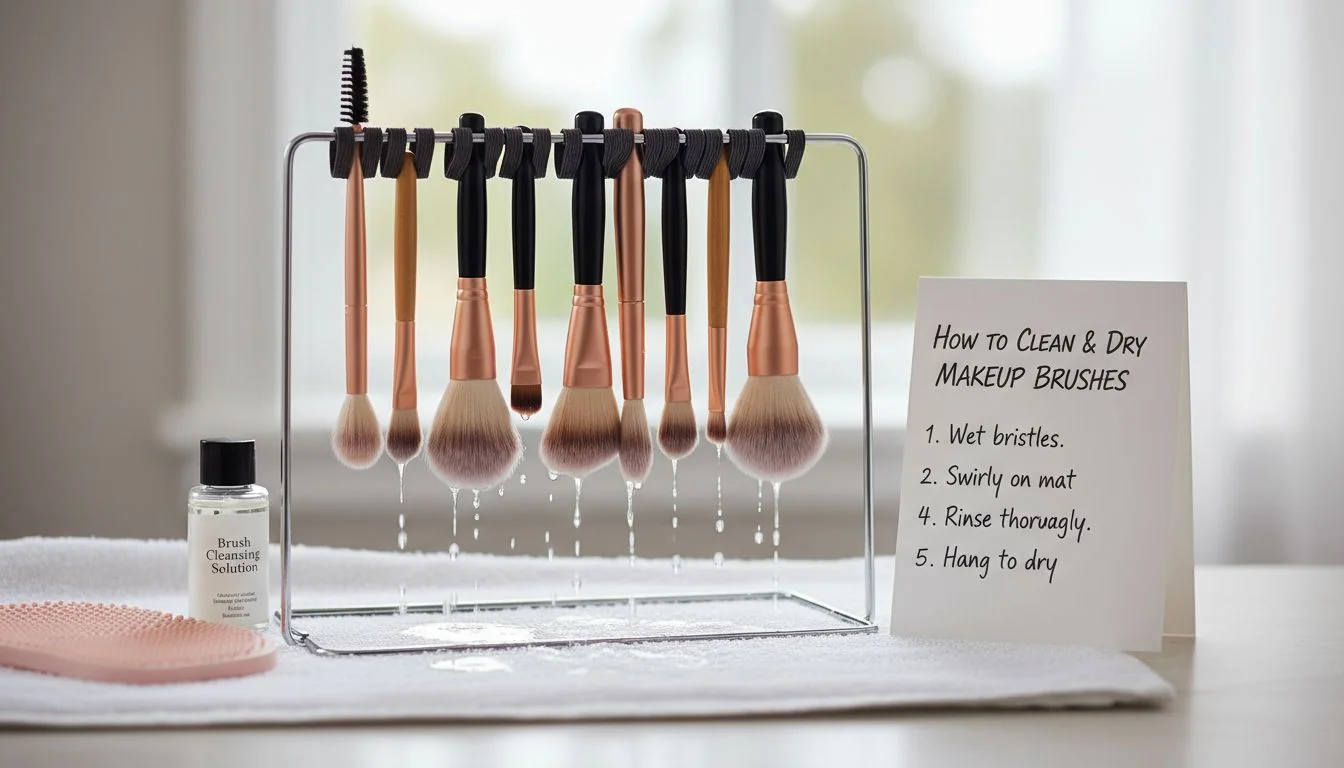
A well-made brush is an investment. I’ve seen brushes last for years with proper care, and I’ve seen expensive ones ruined in months. The biggest enemy of a brush is water getting into the ferrule—the metal part that holds the bristles. This dissolves the glue and leads to shedding. Here is the cleaning cycle I use myself and recommend to all brand owners.
Weekly Quick-Clean (Especially for Liquid/Cream Users)
Use a spray-on brush cleanser on a paper towel. Swirl the brush on the towel until no more makeup comes off. This is great for daily hygiene without a full wash and prevents product buildup that can lead to breakouts.
Monthly Deep-Clean (For All Brushes)
- Wet the Bristles: Run only the bristles under lukewarm water, pointing them downwards.
- Cleanse: Put a drop of gentle soap (baby shampoo works well) or a dedicated brush soap into your palm. Swirl the wet brush in the soap.
- Rinse: Rinse the bristles thoroughly, again keeping them pointed down. Squeeze out excess water gently.
- Reshape and Dry: Reshape the brush head with your fingers. Hang the brush bristles-down to dry, or lay it flat on the edge of a counter. Never dry it upright in a cup!
Water getting into the ferrule can ruin a makeup brush.True
True. The ferrule is the metal band holding the bristles, which are secured with glue. Water can dissolve this glue, causing the bristles to shed and the brush to fall apart.
You should dry your makeup brushes standing upright in a cup.False
False. This allows water to seep down into the ferrule and handle, damaging the glue and wood. Always dry brushes flat or hanging with the bristles down.
OEM Buyer’s Guide: What Are the Key Trends for Private Label Brushes?
Sourcing brushes for your beauty brand? Navigating market trends, materials, and sustainability claims can be confusing. Here are the key insights you need to make profitable decisions.
Key trends for private label brushes are a shift to high-performance synthetic fibers3, sustainable materials like bamboo or recycled aluminum, and cruelty-free/vegan certifications. Low MOQ options are also crucial for new brands.

As a factory owner, I live and breathe these trends. For brand founders, understanding the market isn’t just academic—it directly impacts your product’s success and profitability. The global makeup tools market is growing fast, projected to hit nearly $13 billion by 2034. But let’s focus on what matters for your brand right now.
Market Growth & Fiber Choice
The brush market itself is a significant part of this growth. The most important trend is the dominance of synthetic fibers. Why? They are cruelty-free4, more hygienic, and modern versions offer incredible performance with both liquids and powders. When you write your product specs, specifying "high-performance, vegan synthetic fibers" is a must for today’s consumer.
Sustainability is a Selling Point
Consumers want eco-friendly options. For handles, request materials like FSC-certified wood, bamboo, or recycled aluminum. For packaging, ask your supplier about recycled paper options. These aren’t just "nice-to-haves"; they are powerful marketing claims that resonate with buyers.
Translating Trends to Your Spec Sheet
When you contact a supplier, be specific. Instead of "a dense brush," say "a flat-top kabuki with a 25mm diameter head, using 0.07mm premium synthetic fibers, with a density that supports full coverage for liquid foundation." This clarity prevents sampling errors and shows you’re a serious partner.
The makeup brush market is increasingly favoring synthetic, cruelty-free fibers over natural hair.True
True. This is driven by consumer ethics, performance advantages with liquid formulas, and improved synthetic technology. Brands are responding to the demand for vegan and cruelty-free products.
All OEM factories offer low MOQ (Minimum Order Quantity).False
False. Many large factories have high MOQs that are difficult for indie brands to meet. Finding a partner like Brushino that specializes in low MOQ solutions is crucial for new or niche brands.
Conclusion
From choosing the right shape to proper cleaning and smart sourcing, the kabuki brush is a powerful tool. Master these basics to elevate your application and build a better brand.
References
-
Explore the versatility and benefits of kabuki brushes for achieving flawless makeup application. ↩
-
Understand how different brush shapes can impact your makeup results and help you choose the right one. ↩
-
Discover why synthetic fibers are preferred for makeup brushes and their advantages over natural hair. ↩
-
Explore the significance of cruelty-free products and how they impact consumer choices in beauty. ↩

 English
  French
  Spanish
  Italian
  German
  Portuguese
  Russian
  Arabic
  Japanese
  Korean
  Czech
Czech  Polish
  Swedish
  Vietnamese
  Thai
Thai  Indonesian