Struggling to choose the right synthetic fiber for a makeup brush design? The wrong material can ruin performance and waste money. I’ll guide you through the key options.
Synthetic makeup brush fibers include PBT (Taklon), nylon (PA6/PA66/PA610/PA612), PET/RPET1, and advanced options like micro‑crystal fibers (MCF) and bio‑based nylons (PA1010/PA510). Each has specific performance, cost, and sustainability profiles for different applications.
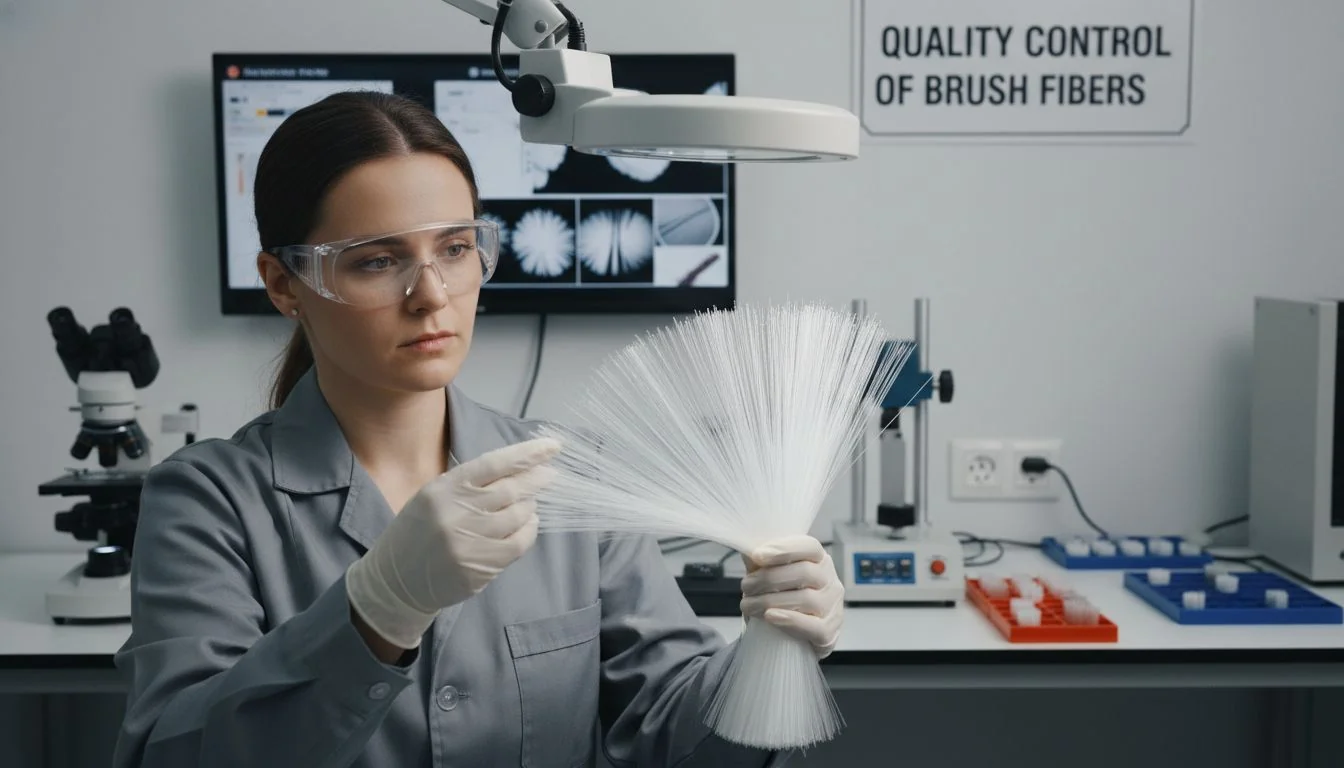
Choosing the right fiber is more than just feel; it’s about engineering the perfect tool. When I first started sourcing materials for clients, I was surprised by the complexity. It’s a deep field of material science. Let’s break down the main types so you can brief your factory with confidence and create a product that truly performs.
Taklon is a type of natural animal hair.False
This is a common misconception. Taklon is the trade name for a synthetic polyester fiber called PBT, which is engineered to mimic the properties of natural hair.
PBT fibers are less porous than natural hair, making them better for liquid and cream makeup.True
The smooth, non-absorbent surface of PBT prevents it from soaking up liquid products, ensuring more makeup is applied to the skin rather than being wasted in the brush.
Why is PBT (Taklon) the OEM Standard for Vegan Makeup Brushes?
Need a reliable, high-performance vegan fiber? Natural hair is inconsistent and raises ethical concerns. PBT, known as Taklon, offers a superior, standardized alternative for modern cosmetic tools.
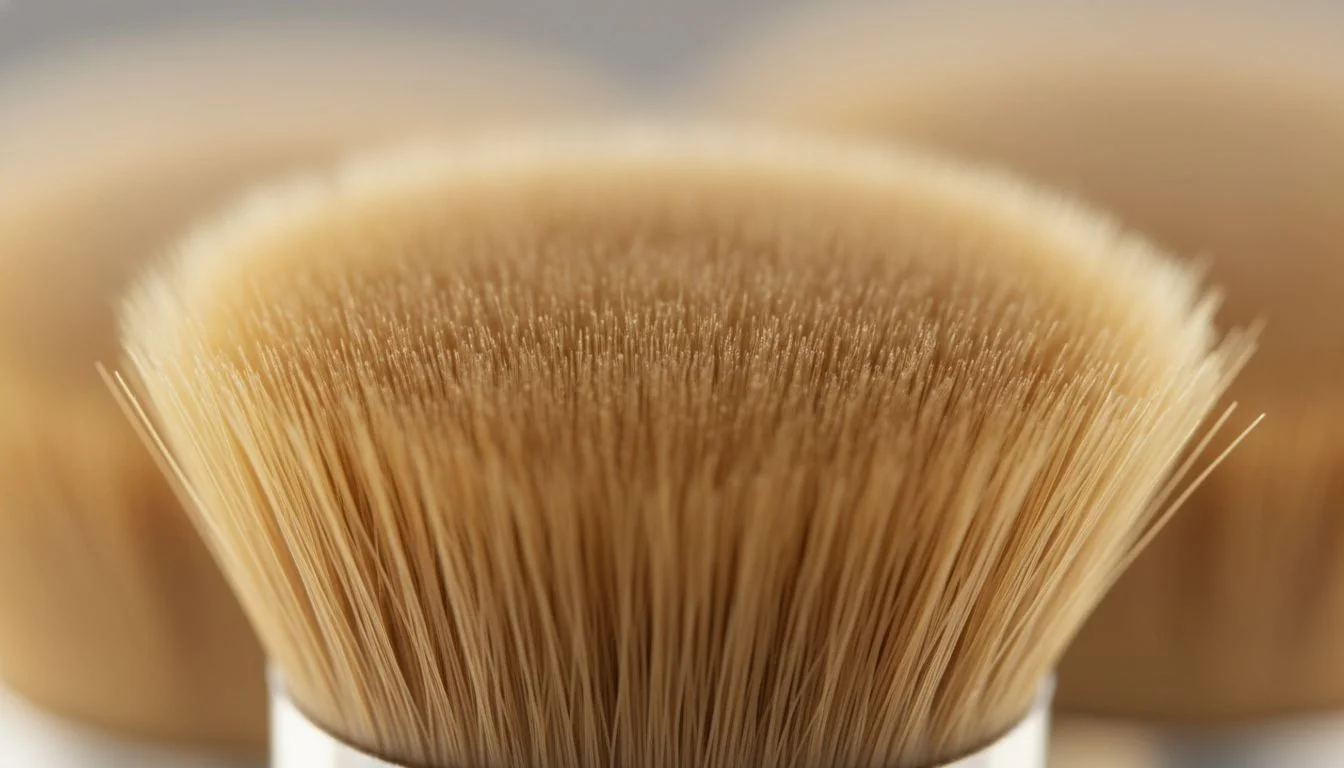
PBT, marketed as Taklon, is the standard because it’s an extruded polyester engineered with tapered tips to mimic sable hair. Its smooth surface is more hygienic and easier to clean than natural hair, making it ideal for professional and liquid applications.
Diving Deeper into PBT
In my experience, PBT (polybutylene terephthalate) is the workhorse of the vegan brush world for a reason. It’s not just a plastic string; it’s an engineered material. The extrusion process creates a solid filament, which is then given a single or double taper to create a fine, soft point. This mimics the structure of natural sable hair, but with more consistency and control. The key for any product designer is understanding how to specify it. The diameter of the fiber is critical. A softer powder brush needs finer filaments, while a firm concealer brush requires thicker ones. Because PBT lacks the cuticle scales found on natural hair, it doesn’t trap as much product, bacteria, or oil. This makes it far easier to clean and a top choice for professional makeup artists who prioritize hygiene.
| fiber diameter2 | Feel & Performance | Typical Brush Type |
|---|---|---|
| ≈0.08–0.10 mm | Very soft, flexible | Powder, blush, bronzer |
| ≈0.10–0.12 mm | Soft with some body | Foundation, blending |
| ≈0.12–0.20 mm | Firm, stiff, precise | Concealer, eyeliner, lip |
Nylon and PBT fibers are interchangeable for all makeup brush types.False
Nylon's stiffness is better for precision tools like mascara wands, while PBT's softness is preferred for powder and foundation brushes that cover larger areas of the face.
Is Taklon the same as PBT? Yes. Taklon is the widely recognized trade name for tapered, extruded PBT filaments engineered for cosmetic use.True
Brands and manufacturers use the name Taklon to market this specific type of PBT fiber that has been processed to mimic the performance of natural brush hair.
When Should You Choose Nylon Grades (PA6/66/610/612) Over PBT?
Is your brush design lacking precision or durability? PBT is soft, but sometimes you need more stiffness and resilience. Nylon grades offer the rigidity required for specific, demanding applications.
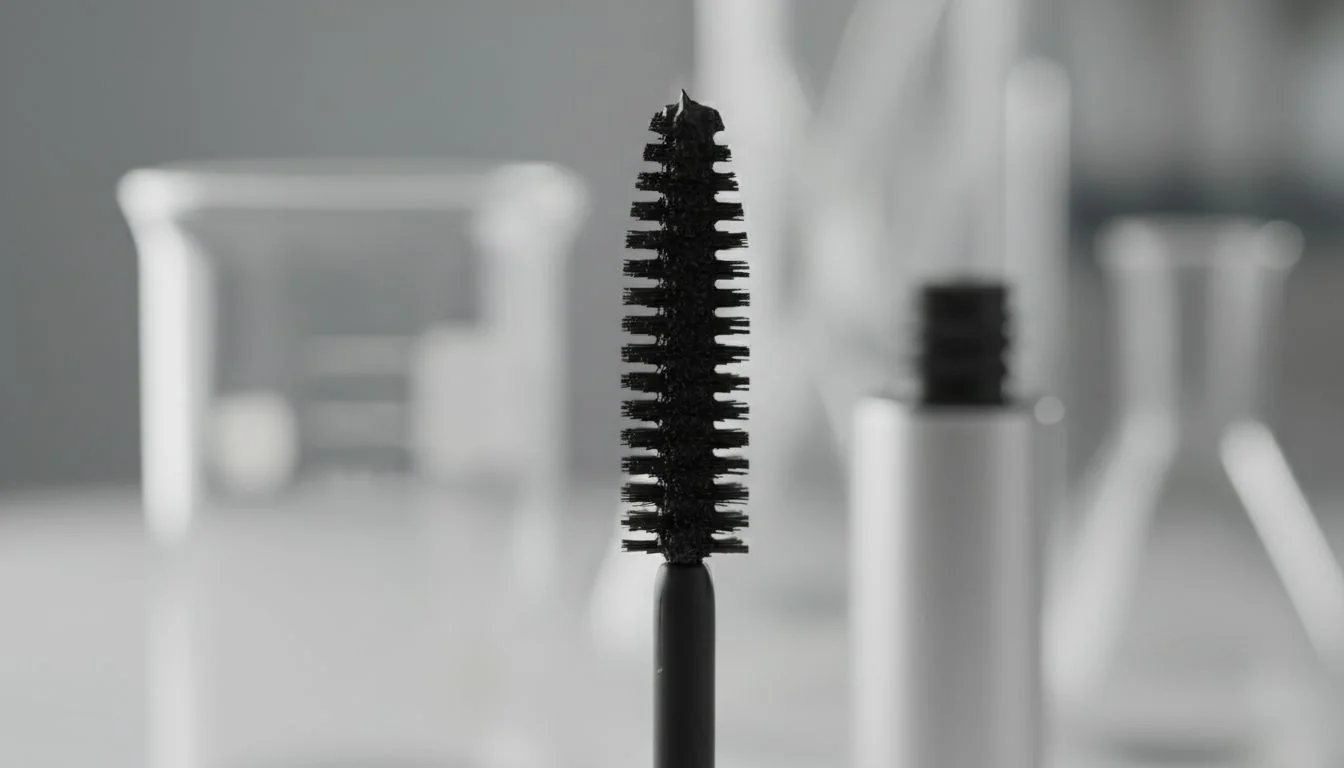
Choose nylon for tools needing higher stiffness, spring-back, and wear resistance, like mascara wands, brow spoolies, and fine-tipped eyeliner brushes. Premium grades like PA612 offer resilience for eye brushes, while PA66 ensures uniformity for mascara.
Diving Deeper into Nylon
While PBT dominates face brushes, nylon (Polyamide) holds its ground in specific, high-stakes applications. Think about the job a mascara wand or a brow spoolie has to do. It needs to comb through hairs, separate them, and deposit product evenly without bending or losing its shape. This is where nylon’s superior stiffness, resilience (or "spring-back"), and straightness shine. In my projects, we specify different grades for different needs. Premium PA612 is a great choice for fine eyeliner brushes that need to be soft at the tip but have a strong, resilient base. For mascara wands, PA66 is often the go-to material. Its ability to be molded into a perfectly uniform diameter is critical for consistent performance, and it holds color well during the manufacturing process. So, while PBT wins for soft blending, nylon is the engineer’s choice for structure and precision.
| Nylon Grade | Key Property | Common Application |
|---|---|---|
| PA612 | Fine, soft, resilient | Fine eyeliner brushes, detail eye brushes |
| PA66 | High straightness, uniform diameter | Mascara wands, brow spoolies |
| PA6/PA610 | General purpose, good wear resistance | Nail brushes, cleansing tool bristles |
RPET fibers perform identically to virgin PBT fibers in all applications.False
While RPET is a viable sustainable option, it may not achieve the same level of tactile softness and tip fineness as premium PBT, making it better suited for value-lines or accessories.
PA66 is often used in mascara brushes because it maintains a uniform diameter and holds color well.True
These properties are critical for the injection molding process of mascara wands, ensuring each brush performs consistently for the end-user.
Are PET and RPET Good Cost-Efficient and Recycled Options for Brushes?
Facing tight budgets or sustainability3 targets for a new brush line? Premium fibers can be expensive. PET and its recycled version, RPET, offer a viable, cost-effective alternative.
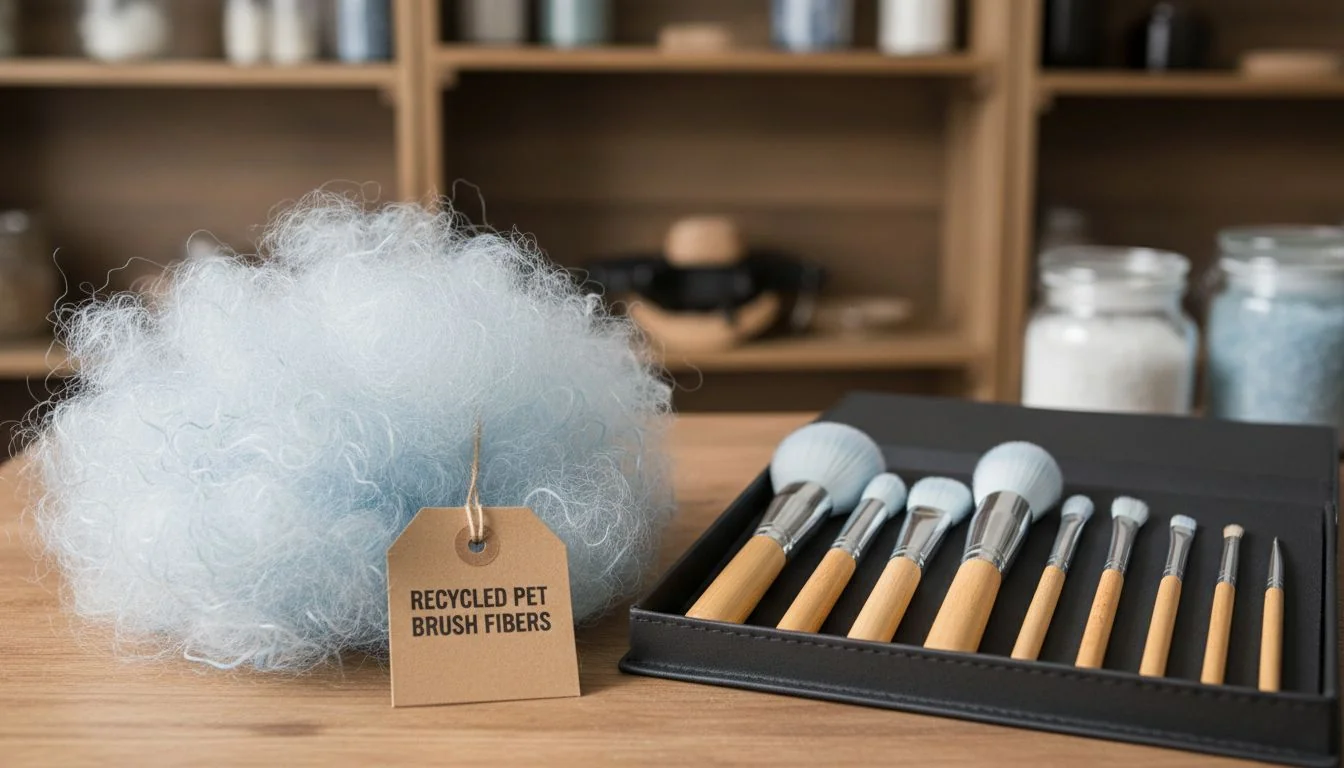
Yes, PET/RPET are cost-efficient options, especially for value lines, kits, and accessories. RPET supports sustainability claims. While PBT is often preferred for the softness of face brushes, PET/RPET can be engineered for decent powder application.
Diving Deeper into PET/RPET
Every product designer has to balance performance with cost. That’s where PET (polyethylene terephthalate) and its recycled counterpart, RPET, come in. These materials are very cost-effective, making them a great fit for large brush kits, promotional items, or entry-level product lines. The "R" in RPET stands for recycled, meaning the material is derived from post-consumer plastics like water bottles. This provides a powerful sustainability story for brands. However, it’s important to manage performance expectations. In my experience, virgin PBT generally provides a softer feel and a more finely tapered tip. But that doesn’t mean PET is a bad choice. The fibers can be processed in different ways—crimped, hollowed, or tapered—to improve their softness and ability to pick up powder. For a brand prioritizing eco-messaging and price, specifying RPET for powder brushes and accessories is a smart, practical move.
| Fiber | Key Advantage | Best Use Case | Trade-off |
|---|---|---|---|
| PBT | Superior softness, fine tip | Premium face brushes (liquid/powder) | Higher cost |
| PET | cost-efficiency4 | Value-line brushes, accessories | Less soft than PBT |
| RPET | Sustainability, cost-efficiency | Eco-conscious lines, kits | Performance can vary |
All 'bio-based' nylons are 100% biodegradable.False
Bio-based means the raw material comes from a renewable source, like castor beans for PA1010. However, the resulting polymer is not necessarily biodegradable and should be recycled appropriately.
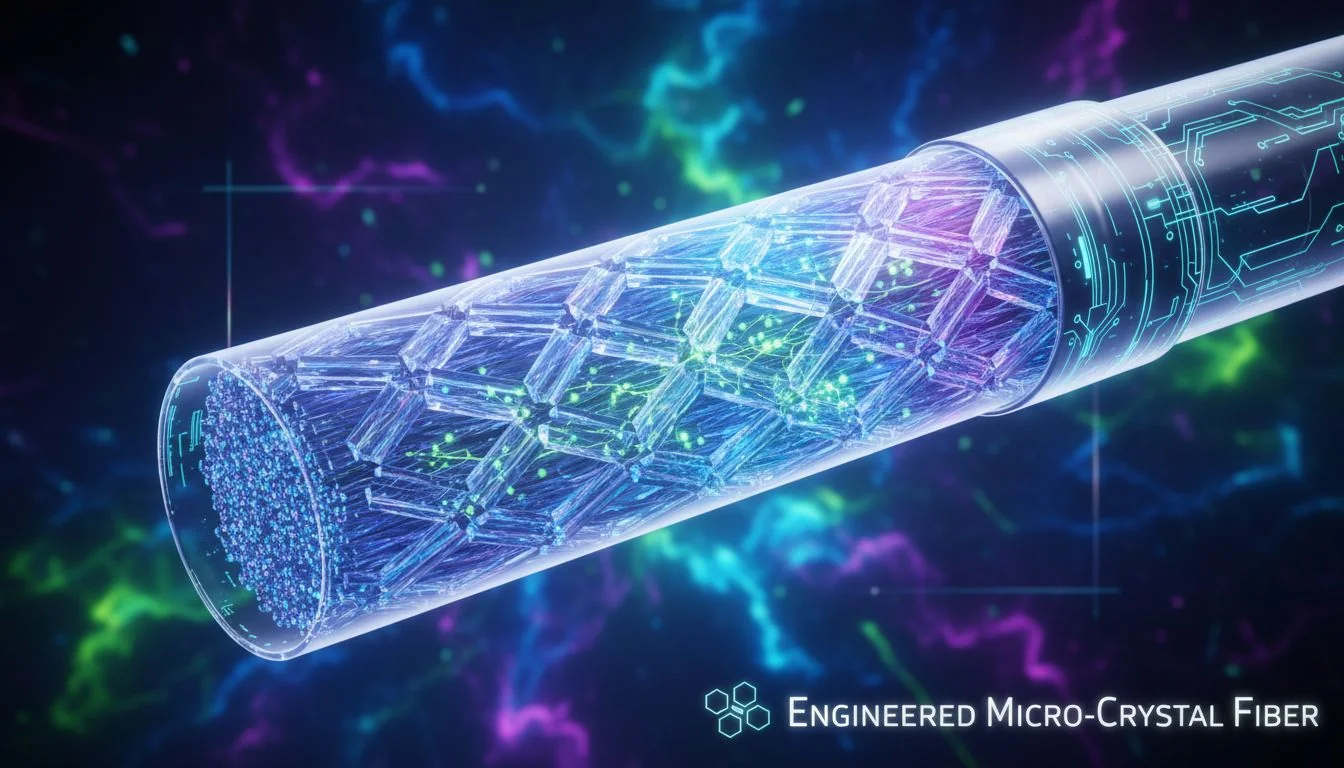
Micro-crystal fibers (MCF) are engineered with micro/nano structures to improve powder pickup.True
This textured surface is specifically designed to replicate the scales on high-end natural hair, allowing it to grab and hold powder more effectively than standard smooth synthetic fibers.
What Do Next-Gen Fibers Like MCF and Bio-Based Nylons Offer?
Want to create a brush that truly outperforms the competition? Standard synthetics are good, but next-gen fibers are better. These materials offer superior performance and enhanced sustainability stories.
Next-gen fibers offer specialized performance and sustainability. Micro-crystal fibers (MCF) mimic premium natural hair for superior pickup. Bio-based nylons (PA1010/PA510) reduce fossil fuel reliance. antibacterial additives5 enhance hygiene for professional use.
Diving Deeper into Next-Gen Fibers
The future of brush fibers is exciting. We’re moving beyond simple imitation and into true performance engineering6. I’ve been watching materials like Micro-Crystal Fiber (MCF) closely. These aren’t just smooth filaments; they have micro-structured surfaces designed to replicate the powder-gripping ability of the best natural hairs. Manufacturers even offer different versions, like MCF-P for powders and MCF-L for liquids. On the sustainability front, we have bio-based nylons like PA1010 and PA510. These are derived from renewable resources like castor beans, which helps brands reduce their reliance on fossil fuels. Finally, for the pro market, hygiene is everything. Fibers can now be infused with antibacterial additives like charcoal or given an antimicrobial surface treatment. This inhibits microbial growth on the brush itself, a huge selling point for makeup artists and anyone concerned with skin health. These innovations allow for true product differentiation.
| Fiber Type | Primary Benefit | Target Market |
|---|---|---|
| MCF (Micro-Crystal Fiber) | Superior powder/liquid pickup | Premium, performance-focused |
| Bio-based Nylon (PA1010/510) | Reduced fossil fuel reliance | Eco-luxe, sustainable brands |
| Antibacterial Fibers | Enhanced hygiene, inhibits microbial growth | Professional MUA, acne-prone skin |
Conclusion
Choosing the right synthetic fiber comes down to balancing performance, cost, and application. By understanding these materials, you can engineer a brush that meets both brand goals and user expectations.
References
-
Find out how PET and RPET fibers provide cost-effective and sustainable options for brush manufacturing. ↩
-
Explore the importance of fiber diameter in achieving desired brush performance and feel. ↩
-
Investigate the sustainable practices in the production of makeup brush fibers. ↩
-
Understand the trade-offs between cost and performance in makeup brush materials. ↩
-
Learn how antibacterial additives enhance hygiene and safety in makeup brushes. ↩
-
Delve into the concept of performance engineering and its impact on brush quality. ↩

 English
  French
  Spanish
  Italian
  German
  Portuguese
  Russian
  Arabic
  Japanese
  Korean
  Czech
Czech  Polish
  Swedish
  Vietnamese
  Thai
Thai  Indonesian