Finding a reliable factory for your product is a huge challenge. A bad partner can ruin your launch, waste your budget, and cause endless stress. This guide gives you a vetted shortlist and the exact criteria to choose the right one.
The best private label makeup brush manufacturers offer audited quality (ISO90011/BSCI/SMETA), engineered vegan fibers, and clear MOQs (often 500–5,000 per SKU). They provide documented QC like shed/tug tests and have lead times between 30–90 days. Compare certifications and test samples before committing.
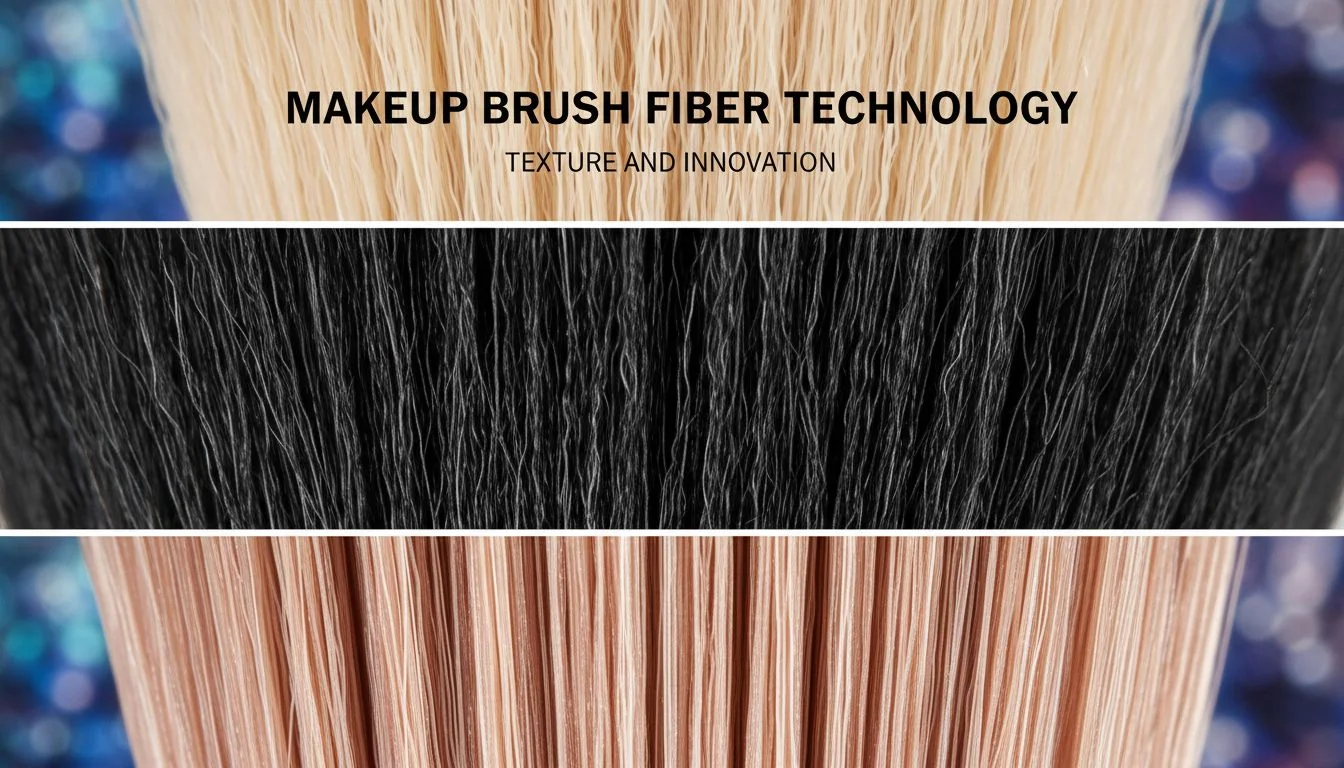
When I started my own trading company, sourcing was the hardest part. I learned that finding a good supplier isn’t just about price; it’s about finding a partner. The principles are the same whether you’re making complex molds or, in this case, high-quality makeup brushes. A great product starts with a great factory.
This article is the shortcut I wish I had. It’s designed to help you, the product designer or brand owner, quickly identify credible partners and avoid common pitfalls. We’ll look at market data, a list of potential suppliers, and the exact questions you need to ask. Let’s get your production started on the right foot.
Market Snapshot: The Growth in Brushes
The beauty tools market is growing fast. It’s important to understand the numbers. The total market for makeup brushes and tools is estimated at USD 7.0 billion in 2024 and is expected to reach USD 12.9 billion by 2034. That’s a huge category.
However, if we look only at the makeup brush market, the numbers are more focused. Estimates place it around USD 1.5 billion in 2023, with steady growth projected. The key takeaway is that demand is strong, especially for brushes with synthetic and vegan-engineered fibers. Consumers want performance, hygiene, and ethical products. Your choice of supplier directly impacts your ability to meet that demand.
15 High-Quality Makeup Brush Factories: A Starting List
Finding the right factory is about matching their capabilities to your brand’s needs. I’ve put together this table to give you a head start. It includes some well-known names and represents the types of suppliers you’ll find. Use this as a starting point for your own research. Always verify claims and run your own tests.
| Factory Name | Location | Key Certifications | fiber technology2 | MOQ (per SKU) | Lead Time (New/Repeat) | Key Export Regions |
|---|---|---|---|---|---|---|
| Taiki Cosmetics | Global | ISO9001, ISO14001, SMETA | Engineered Vegan, Antimicrobial | 5,000+ | 90 / 60 days | Global |
| Brushino | China | ISO9001, BSCI, FSC, Vegan | Synthetic, Vegan | 3,000 | 60 / 45 days | EU, US, UK |
| Gracedo | China | BSCI, ISO9001 | High-performance Synthetic | 1,000-3,000 | 45 / 30 days | US, EU |
| ShangYang | China | BSCI, ISO9001 | Vegan, Synthetic | 2,000 | 50 / 35 days | Global |
| Green Brush | China | FSC, BSCI | Recycled Fibers, Bio-resins | 3,000 | 75 / 50 days | EU, North America |
| Apex Brushes | China | ISO9001, BSCI | Custom Synthetic Blends | 1,500 | 60 / 40 days | US, Australia |
| Chic Cosmetics Mfg | Taiwan | ISO22716, GMP | Patented Synthetic Fibers | 5,000 | 80 / 60 days | Asia, US |
| EcoBrush Co. | China | FSC, Vegan Certified | Bamboo, Recycled Aluminum | 2,000 | 70 / 45 days | EU, Canada |
| Prestige Brushes | S. Korea | ISO9001, ISO14001 | Advanced Engineered Fibers | 5,000+ | 90 / 60 days | Global |
| Artisan Brushworks | China | BSCI | Hand-shaped Synthetic | 1,000 | 60 / 45 days | US, UK |
| Quantum Beauty | China | ISO9001 | Standard Synthetic | 500-1,000 | 45 / 30 days | North America |
| Pennelli Faro | Italy | ISO9001, VeganOK | Dermocura® Synthetic Fiber | 3,000+ | 90 / 60 days | EU, US |
| Global Brush Mfg | China | BSCI | Wide Range of Synthetics | 2,000 | 50 / 35 days | Global |
| LuxePack Beauty | China | ISO9001, SMETA | Premium vegan fibers3 | 3,000 | 75 / 50 days | EU, Middle East |
| NextGen Fibers | Německo | ISO9001, REACH | Antimicrobial, Custom Fibers | 10,000+ | 100 / 70 days | Global |
How Do You Pick a Private Label Brush Factory in 7 Checks: From Fibers to Final QC?
Struggling to tell a great factory from a mediocre one? It’s easy to get lost in promises. A structured evaluation is the only way to protect your brand and investment.
Use this 7-point checklist to systematically vet potential partners. This process moves beyond their sales pitch and focuses on verifiable capabilities, ensuring the factory can deliver the quality your customers expect, every single time.
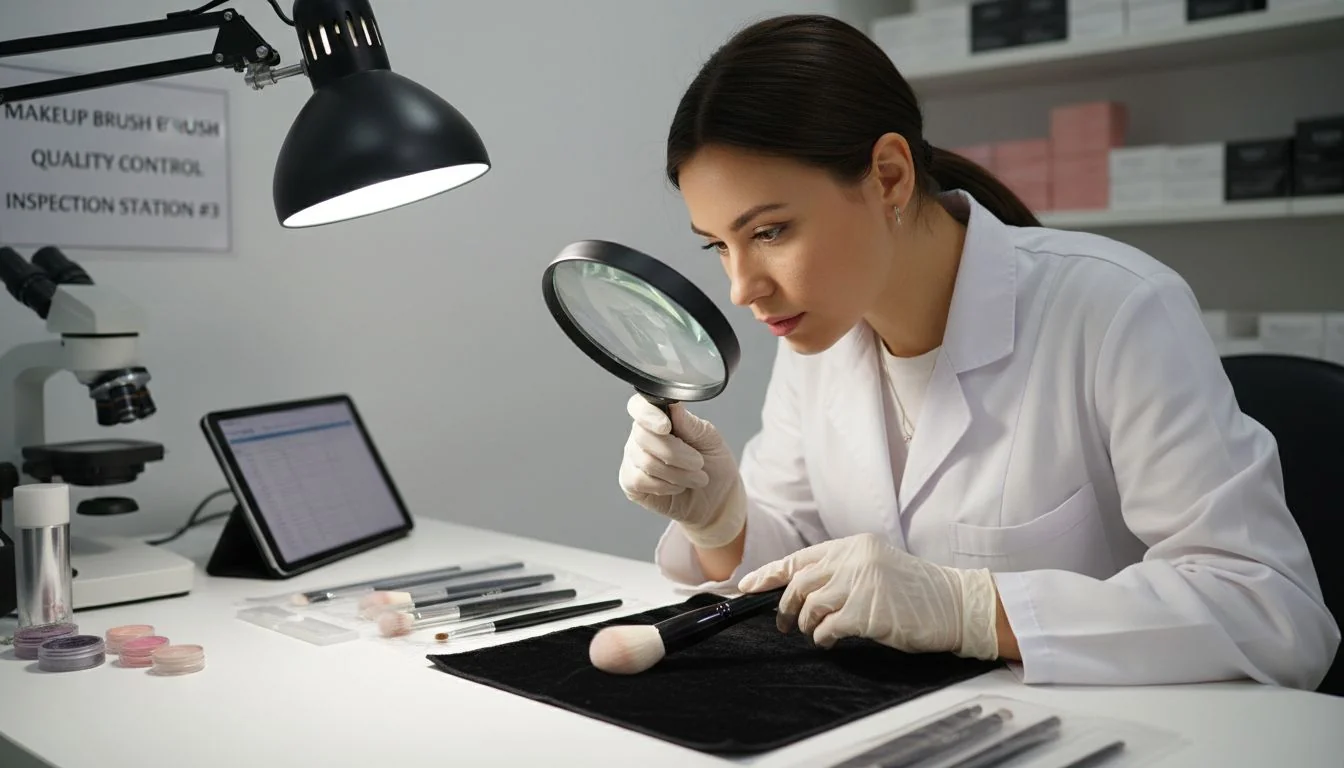
I tell my clients to treat factory selection like hiring a key employee. You need to check their resume, test their skills, and make sure they fit your company culture. A factory is a long-term partner. These seven checks are your interview questions. They cover everything from the raw materials to the final product that lands in your customer’s hands. Don’t skip a single step.
1. Fiber Technology
The fiber is the heart of the brush. Don’t just accept "synthetic." Ask for specifics. Are they standard fibers or engineered for better pickup and release? Do they offer antimicrobial treatments for hygiene? A top-tier factory will discuss fiber vendors and performance data.
2. Ferrule and Handle
The ferrule holds it all together. Ask if they use aluminum or double-crimped copper/brass. Copper is more durable and resists corrosion. For handles, check their substrates. Do they offer FSC-certified wood, sustainable bamboo, or modern bio-resins? This impacts quality, cost, and your brand’s sustainability story.
3. Audit Stack
Certifications are non-negotiable. Look for a strong "audit stack":
- ISO 9001: For quality management systems.
- BSCI or SMETA: For social and ethical compliance.
- FSC: For responsibly sourced wood handles.
- ISO 22716 (GMP): For good manufacturing practices, crucial if they also handle cosmetics.
4. Capacity and Automation
Ask about their production capacity in units per month. Do they use automation for consistent gluing, crimping, and trimming? A factory with modern equipment is more likely to deliver consistent quality and meet deadlines, especially as you scale.
5. In-Process QC
How do they test quality during production? Ask to see their QC protocols. They must include:
- Tug/Shed Test: To check for fiber loss.
- Ferrule Pull Test: To ensure the head is secure.
- Glue Cure Test: To verify adhesive strength.
- Dimensional Checks: To ensure every brush meets spec.
6. Export Compliance
A factory must provide documentation for your target markets. This includes a Restricted Substances List (RSL) and proof of compliance with EU REACH and US Prop 65. Without this, your products can get stuck at the border.
7. Sampling and Stress Tests
Finally, test the product yourself. Get samples and put them through real-world use. Wash them repeatedly. Use them with different makeup formulas. A sample that fails is a cheap lesson compared to a full production run of faulty products.
All makeup brush factories in China have BSCI certification.False
This is false. While many reputable factories have BSCI for social compliance, it is not universal. Brands must always verify a factory's current audit status.
FSC certification ensures that the wood used in brush handles comes from responsibly managed forests.True
This is true. The Forest Stewardship Council (FSC) is a key certification for brands prioritizing sustainability and ethical sourcing for wood components.
MOQ, Lead Time, and Defect Targets: What Does ‘Good’ Look Like for Your Brand Tier?
Your brand’s size dictates your sourcing strategy4. A startup can’t meet enterprise-level MOQs. Understanding industry benchmarks helps you negotiate from a position of strength and find a partner that fits.
Good sourcing isn’t just about finding the lowest price. It’s about finding a balance between order size, delivery speed, and quality that works for your business model. These targets help you define what a "good" partnership looks like for you.

When you’re just starting, flexibility is key. You might pay a slightly higher per-unit price for a lower MOQ, and that’s a smart trade-off. It preserves your cash flow and lets you test the market. As you grow, your focus will shift to optimizing costs and securing production capacity. The table below breaks down what to expect. Use it to filter factories and set realistic expectations for your RFQ.
Brand Tier Benchmarks
| Metric | Boutique / DTC Pilot | Enterprise / Scale-Up |
|---|---|---|
| MOQ per SKU | 500 – 2,000 units | 5,000+ units |
| Lead Time (New Design) | 45 – 90 days | 60 – 90 days |
| Lead Time (Repeat Order) | 30 – 60 days | 30 – 45 days |
| Target Defect Rate | < 1.0% (Functional) | < 0.5% (Functional) |
A "functional defect" is anything that stops the brush from working as intended, like shedding fibers or a loose ferrule. Cosmetic blemishes are a separate category. Always clarify defect definitions with your factory. For lead times5, remember that offline retail channels often require longer planning horizons, while DTC brands need to be nimble enough to react to influencer-driven sales spikes.
A 5% defect rate is acceptable for a first production run.False
This is dangerously high. A professional factory should target a functional defect rate below 1.0%, even on a pilot run. A 5% rate indicates serious quality control issues.
Lead times for new brush designs are typically longer than for repeat orders.True
This is true. New designs require tooling, material sourcing, and sample approvals, which adds 15-45 days compared to a repeat order using existing specifications.
Synthetic vs. Vegan-Engineered Fibers: What Are the Performance, Hygiene, and Cost Trade-offs?
Your choice of fiber is a major product decision. It impacts performance, price, and brand perception. The debate between natural hair and synthetics is largely over, with synthetics now leading the market.
The real choice today is between standard synthetic fibers and advanced, vegan-engineered options. Understanding the differences helps you create a product that stands out and meets modern consumer expectations for performance, hygiene, and ethics.
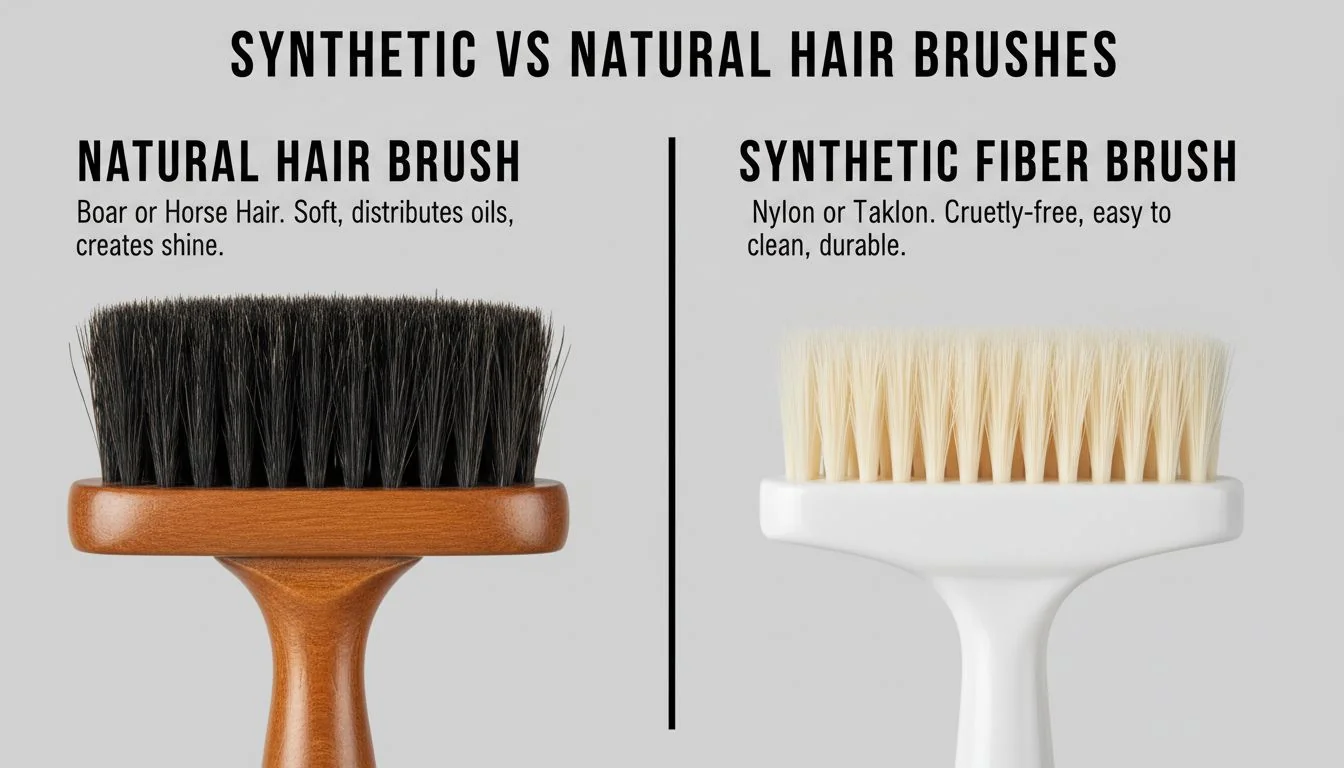
Years ago, professional makeup artists swore by natural hair brushes. But technology has changed the game. I’ve seen firsthand how engineered fibers have evolved. Modern synthetics are designed to mimic the surface texture of natural hair for incredible product pickup, but without the downsides. They are more durable, more hygienic, and ethically sound. For a new brand, choosing high-quality vegan fibers is the smartest path forward. It aligns with market trends and reduces compliance headaches.
Fiber Type Comparison
| Feature | Engineered Synthetic/Vegan | Natural Hair (e.g., Goat, Squirrel) |
|---|---|---|
| Performance | Excellent pickup & release; highly consistent. | Can excel with powders, but performance varies by batch. |
| Hygiene | Non-porous, easy to clean, resists bacteria. Can be antimicrobial. | Porous, can trap bacteria, requires more careful cleaning. |
| Durability | Very durable, maintains shape after many washes. | More fragile, can become brittle or shed over time. |
| Consistency | Every brush is identical. | Varies from batch to batch and animal to animal. |
| Ethics & Vegan | 100% cruelty-free and vegan. | Raises ethical concerns; not vegan. |
| Cost | Generally lower to moderate, depending on the technology. | Generally higher and subject to market volatility. |
The takeaway is clear: engineered vegan fibers offer superior hygiene and consistency. They meet the ethical demands of today’s consumers and often provide better long-term value. When you brief your factory, specify that you want "engineered vegan fibers" and ask about their performance characteristics.
Vegan-engineered fibers are always cheaper than natural hair.False
While often more cost-effective, highly advanced or patented synthetic fibers can sometimes be as expensive as mid-grade natural hair. However, their price is more stable.
Synthetic brushes are more hygienic because their fibers are non-porous.True
This is a key advantage. Non-porous synthetic filaments do not absorb makeup, oils, or bacteria, making them easier to clean thoroughly and safer for the skin.
How Can You Fast-Track Compliance for Retail Readiness in the EU, US, and UK?
Getting your product into major retailers requires more than just a great brush. You need a folder full of paperwork. A factory that can’t provide this documentation is a non-starter for any serious brand.
Navigating global regulations seems intimidating, but it’s a solvable problem. The key is to partner with a factory that has already done the work and has a robust compliance system in place.
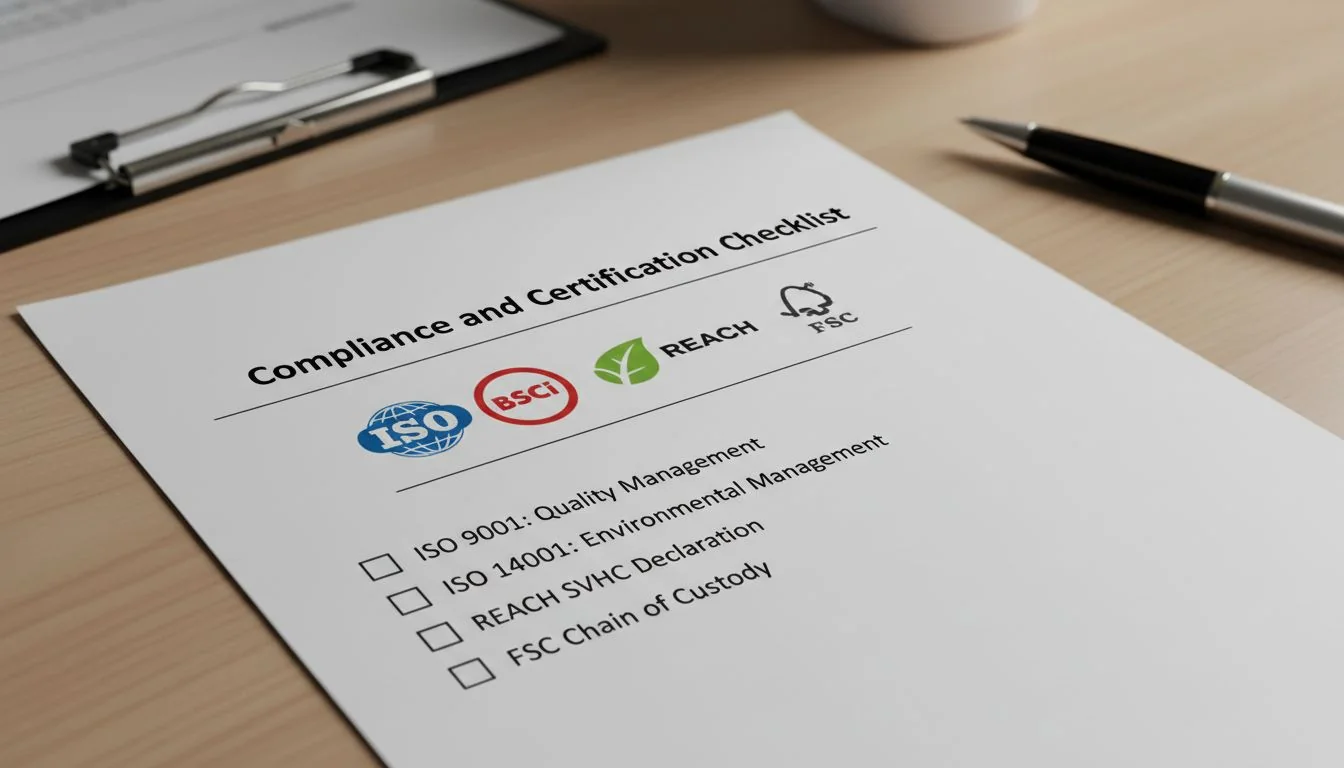
I’ve seen clients get excited about a low-cost supplier, only to find out they have zero compliance documentation6. This can delay a launch by months or kill it entirely. Don’t let that be you. Think of compliance as a passport for your product. Without it, you can’t cross borders or get onto store shelves. A good factory will have these documents ready to go, which dramatically speeds up your onboarding process with retailers.
Your Compliance Documentation Checklist
Before signing a contract, ask your potential factory to provide evidence for the following. A well-prepared factory will have a dedicated compliance manager who can supply these.
1. Factory Audits
- ISO 9001: Proves they have a quality management system.
- BSCI or SMETA: Confirms they meet social and ethical standards. This is a must-have for most Western retailers.
- ISO 14001: Shows they have an environmental management system.
- FSC: Required if you are using wood handles and want to make a sustainability claim.
2. Manufacturing Environment
- ISO 22716 / GMP: Essential if the factory also handles or packages cosmetics. It ensures a clean and controlled environment.
3. Material Safety & Traceability
- Bill of Materials (BOM): A detailed list of every single material used in your brush.
- Material Safety Data Sheets (MSDS): For all chemicals used, like glues and coatings.
- Restricted Substances List (RSL) Compliance: A declaration that their products do not contain harmful chemicals banned in your target markets. This must align with:
- EU REACH: Regulations for chemicals in the European Union.
- US Prop 65: California’s list of chemicals known to cause harm.
- CPSIA: For products sold in the US, especially if they could be used by children.
A factory like Kingyin, which lists its multi-audit stack publicly, reduces your risk and onboarding time. Prioritize suppliers who are transparent about their compliance.
A factory only needs an ISO 9001 certificate to be considered high-quality.False
ISO 9001 is crucial for quality systems, but it doesn't cover social ethics (BSCI/SMETA) or material safety (REACH/Prop 65), which are equally important for retail readiness.
REACH is a European Union regulation concerning the registration and restriction of chemical substances.True
Correct. Any product sold in the EU must comply with REACH regulations, making it a critical checkpoint for any brand targeting the European market.
Frequently Asked Questions (FAQs)
Here are answers to some of the most common questions I get from brands looking to source makeup brushes.
Who are reliable private label makeup brush manufacturers with wholesale support?
A good starting list includes global OEMs like Taiki, audited Chinese factories such as Kingyin and Gracedo, and sustainable specialists like Green Brush. The "best" one depends on your specific needs for MOQ, customization, and compliance. Always build a shortlist and test samples.
What is the global market size and growth for makeup brushes?
The market has two common measurements. The broad "brushes & tools" market is about USD 7.0 billion (2024). The more specific "brushes-only" market is estimated around USD 1.5 billion (2023-2024). Both are growing steadily at about 6% per year.
What certifications matter when choosing a factory?
Prioritize ISO 9001 (quality), BSCI/SMETA (social ethics), and FSC (for wood). Also, demand documented proof of compliance with material safety laws like EU REACH and US Prop 65.
Are synthetic/vegan fibers as good as natural hair?
Yes. Modern engineered synthetics now match or even outperform natural hair in terms of application consistency, durability, and hygiene. They are also cruelty-free, which is a major factor for consumers.
What are realistic MOQ and lead times for private label brush sets?
For boutique brands, expect an MOQ of 500–2,000 units per brush style. For larger enterprise orders, it’s often 5,000+ units. Lead times are typically 45–90 days for a new design and 30–60 days for a repeat order.
Conclusion
Choosing the right factory is the most critical decision you’ll make. Use this guide to build a shortlist, ask tough questions, and verify everything. Your brand’s reputation depends on it.
References
-
Understanding ISO9001 certification can help ensure quality management in manufacturing. ↩
-
Stay updated on innovations in fiber technology that improve brush performance. ↩
-
Learn how vegan fibers enhance product performance and meet consumer demand for ethical products. ↩
-
A solid sourcing strategy is crucial for finding reliable suppliers and optimizing costs. ↩
-
Understanding lead times helps in planning and managing production schedules effectively. ↩
-
Understanding compliance requirements is essential for successful product launches in retail. ↩

 English
  French
  Spanish
  Italian
  German
  Portuguese
  Russian
  Arabic
  Japanese
  Korean
  Czech
Czech  Polish
  Swedish
  Vietnamese
  Thai
Thai  Indonesian