You see a hit collaboration and want to create your own. But the path from a great idea to a finished, sellable product is full of traps.
To integrate a style like Winnie the Pooh x Spectrum into OEM brush kits1, first secure licensing or use public-domain art (not Disney’s version). Then, translate honey motifs into manufacturable specs—PMS-matched yellows, gold anodized ferrules, and vegan PBT fibers—and validate with REACH and durability tests.
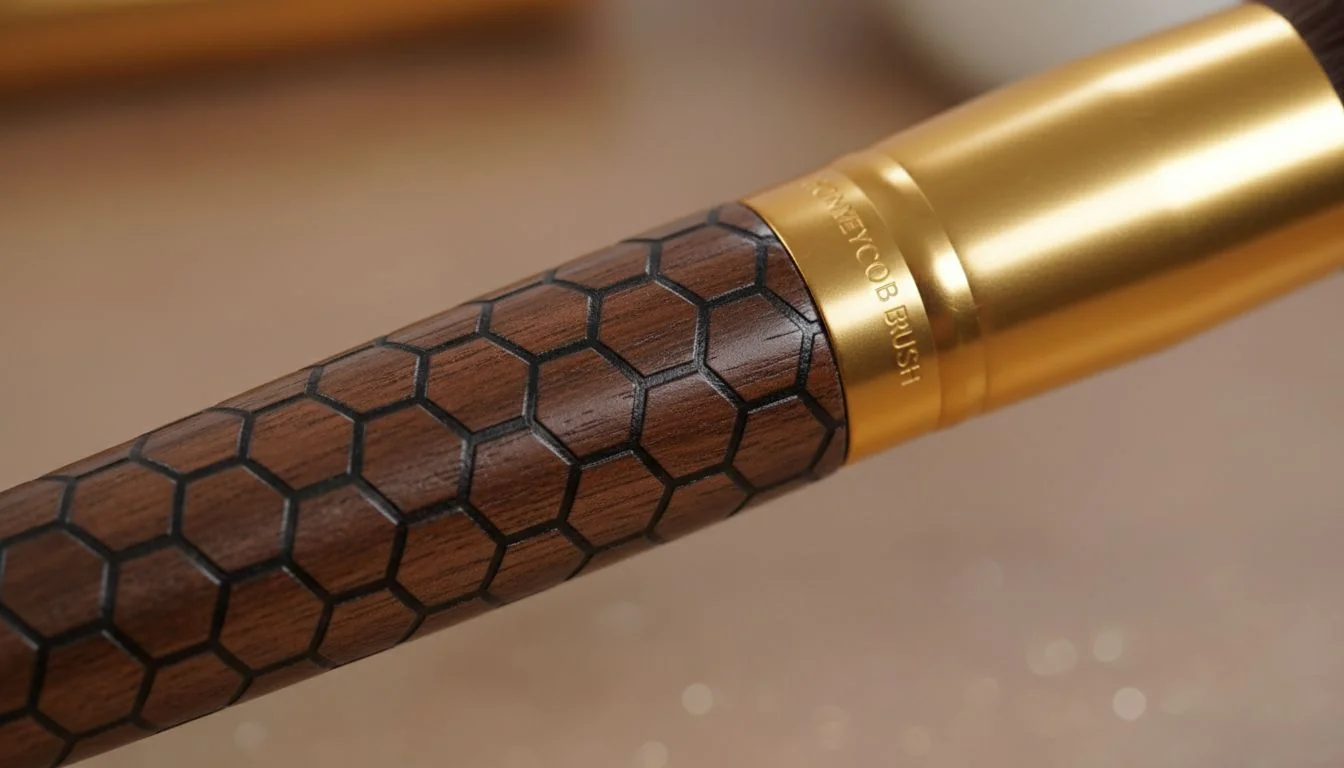
I’ve seen many brands get excited about character collaborations2. It’s a proven way to get attention in a crowded market. The global beauty market hit over $252 billion in 2024, so the opportunity is huge. But I’ve also seen projects get stuck. They get tangled in legal issues, or the beautiful design they imagined turns out to be impossible to manufacture affordably. The difference between success and failure is in the details—the technical specs, the legal groundwork, and the go-to-market plan. Let’s break down how to do it right, using this case study as our guide.
The global beauty market was valued at $252.09 billion in 2024.True
This figure reflects the total sales in the beauty and personal care industry for the year, indicating a massive market for new products like licensed collaborations.
Any depiction of Winnie the Pooh is now in the public domain worldwide.False
Only A.A. Milne's original 1926 text is in the public domain in the US. Disney's specific visual style (like the red shirt) is a protected trademark, and copyright expiration dates vary by country.
Licensing First: What Parts of Winnie the Pooh Can You Legally Use in OEM Brush Kits?
You have a great idea for a Pooh-themed brush set. But using protected art without permission can shut down your project and lead to costly legal battles. Here’s how to navigate it.
Stick to public-domain art3 inspired by the original 1926 text, or secure a formal license from the rights holder, like Disney. Disney’s red-shirted Pooh is a protected trademark and cannot be used without a license. Always document every art asset approval.
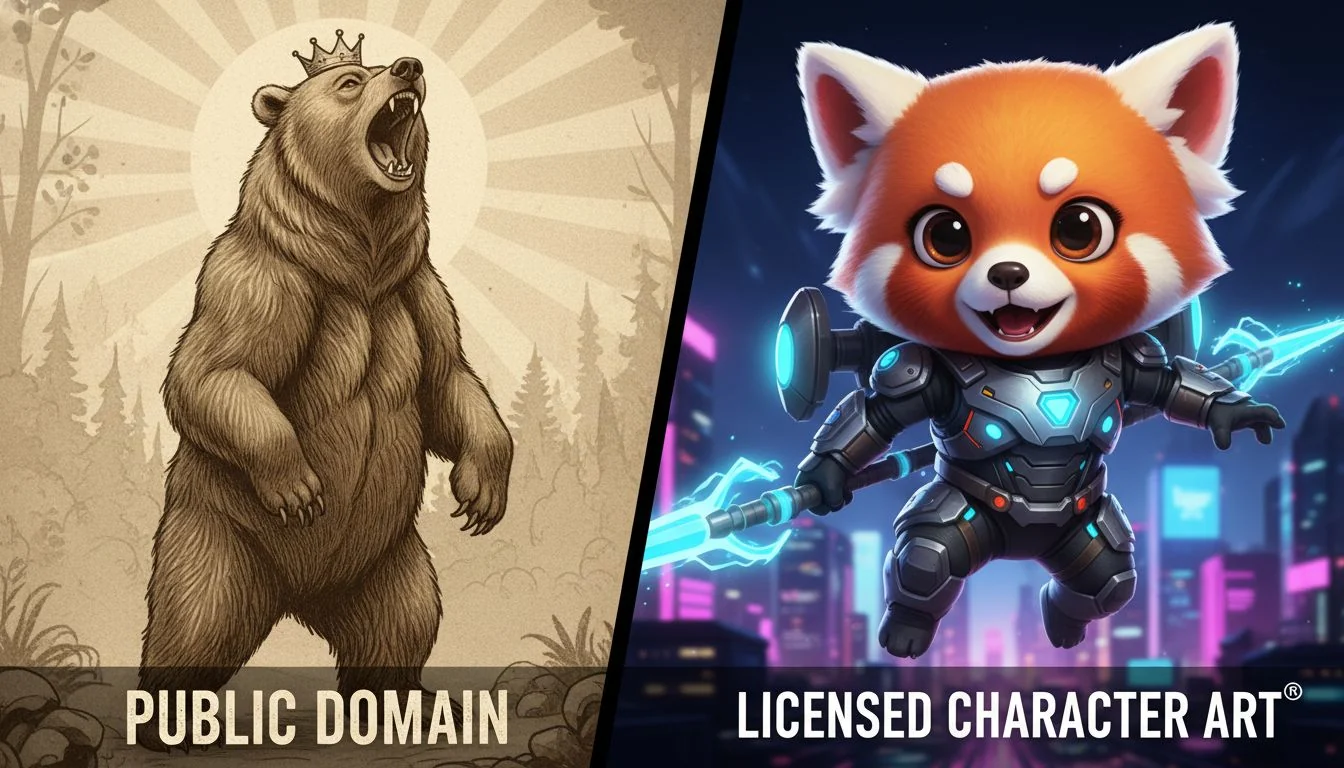
The first question I always ask a client is, "Do you have the rights?" With a character like Winnie the Pooh, the answer is complex. In my experience, this is the step where projects most often go wrong before they even begin. It’s not as simple as finding a picture online. You have to understand the difference between what’s free for all and what’s protected.
Public Domain vs. Protected IP
The original 1926 book by A.A. Milne is in the public domain in the United States. This means you can use the story and characters from that specific book as inspiration. However, the iconic look of Pooh that most people know—the one with the red shirt—is a Disney creation. That specific design, along with the name "Winnie the Pooh" used as a brand, are protected trademarks. Using them without a license from Disney is a direct infringement.
Regional Differences and Workflow
Your legal standing also changes depending on where you plan to sell. The rules are different in the US, UK, and EU. To stay safe, your best bet is to either get a license or create a design that is clearly different from Disney’s version. If you get a license, the licensor will provide an asset pack with approved artwork and a list of "do’s and don’ts." Your team must follow these rules exactly. Every design, from the brush handle to the packaging, will need to go through an approval workflow with the licensor.
| IP Consideration | US Rules | UK Rules | Best Practice for OEM |
|---|---|---|---|
| Original Text | Public Domain (1926 book) | Enters Public Domain in 2027 | Use as inspiration, but avoid direct copying of protected illustrations. |
| Illustrations | E.H. Shepard’s work is complex | Enters Public Domain in 2047 | Avoid using any original illustrations without legal counsel. |
| Disney’s Pooh | Protected Trademark | Protected Trademark | Do not use without a direct license from Disney. |
| Approval Workflow | N/A for public domain | N/A for public domain | For licensed projects, document every approval for every SKU. |
In the US, A.A. Milne's 1926 Winnie-the-Pooh book is in the public domain.True
As of January 1, 2022, the copyright for the 1926 book expired in the United States, allowing the text and characters from that specific work to be used freely.
You can use Disney's red-shirted Pooh on products as long as you sell them outside the US.False
Disney's stylization of Winnie the Pooh is a globally protected trademark. Using it without a license in any major market is a significant legal risk.
Design Translation: How Do You Turn Honeycomb Aesthetics into Manufacturable Brush Parts?
You have a beautiful mood board with honeycomb patterns and warm, golden colors. But turning that feeling into a physical product that can be mass-produced is the real engineering challenge.
Translate aesthetics into precise specs. Use PMS-matched colors with UV-stable coatings for handles, and consider embossing for texture. Use anodized aluminum for ferrules and specify vegan PBT fibers4 with clear performance targets for shedding and softness.
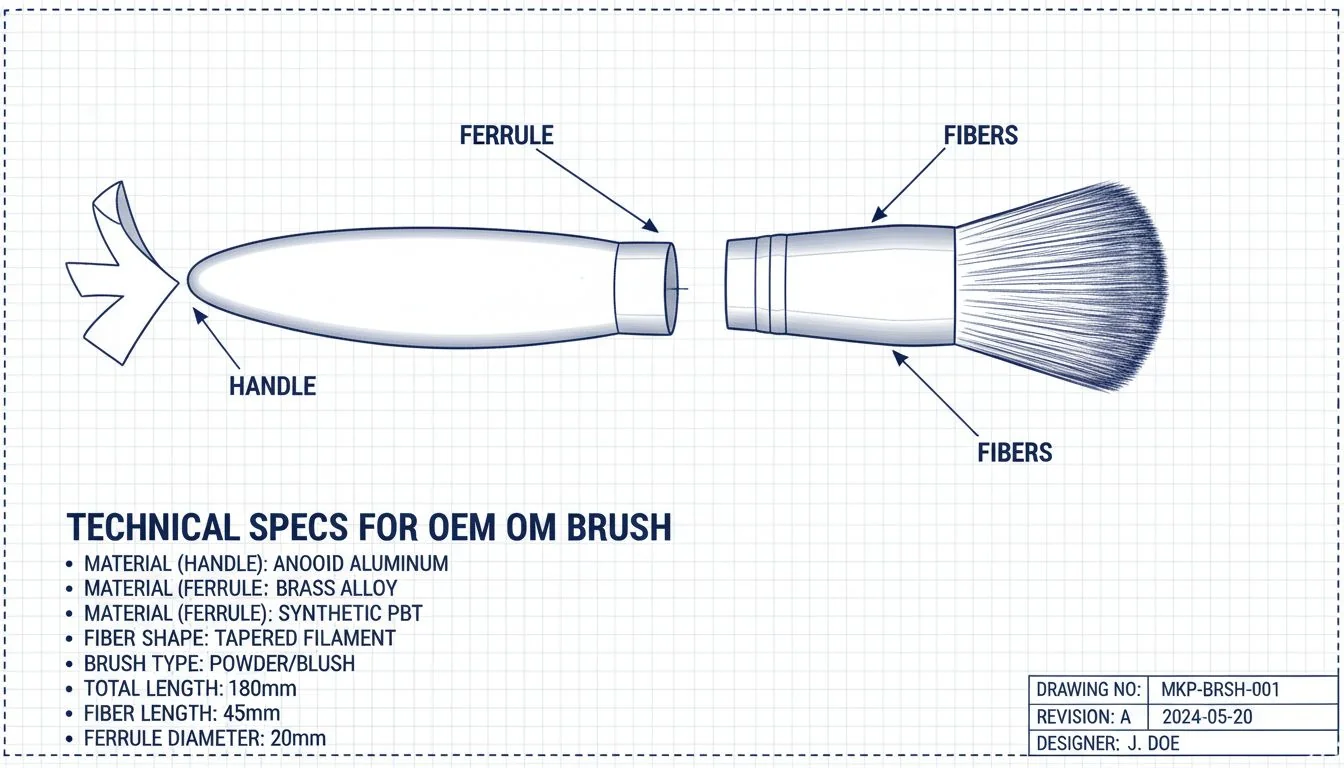
I once worked with a client who wanted a very intricate, deep-carved pattern on a brush handle. It looked amazing in the 3D render. But when we prototyped it, the plastic was too thin in some areas and broke easily. We had to simplify the design to maintain wall thickness, using a shallower emboss instead of a deep carve. This is a classic example of design translation. You have to balance the artistic vision with the physical realities of molding and manufacturing.
From Concept to Component Specs
Let’s break down the "honeycomb aesthetic" into parts a factory can understand.
- Handles: The core of the look. You need to define the material (like FSC-certified wood or ABS plastic), the exact PMS color for the yellow/gold, and the finish. Is it glossy or matte? Specify a gloss unit (GU) level, like 80-90 GU for high gloss. For the honeycomb pattern, an emboss or a subtle engraving is more durable and cost-effective than complex carving.
- Ferrules: This is the metal part. Anodized aluminum in a warm gold color is a great choice. It’s lightweight, durable, and the color won’t chip off. You can laser-etch a simple honeycomb ring pattern here to echo the theme without needing expensive custom stamping tools.
- Fibers: The performance part. For a character collab, you want something that feels premium but is also safe. Vegan PBT/Taklon fibers are hypoallergenic and can be customized. You need to specify the denier per filament (dpf), the taper profile (how thin it gets at the tip), and the crimping pattern to control how it picks up and applies product.
| Component | Key Specification | Manufacturing Consideration | Control de calidad |
|---|---|---|---|
| Handle | PMS 123 C Yellow, 85 GU Gloss | Use UV-stable coating to prevent fading. | Colorimeter check, scratch resistance test. |
| Ferrule | Anodized Aluminum, Warm Gold | Ensure anodizing thickness for corrosion resistance. | Nickel-release test, adhesion test. |
| Fibers | Vegan PBT, 0.07mm dpf, 2-crimp | Control crimping to achieve desired fluffiness. | Shedding test (e.g., <0.2% loss after 5 washes). |
Embossing is always cheaper than laser-etching for adding patterns to brush handles.False
Embossing requires a custom mold or tool, which has a high upfront cost. Laser-etching has a lower setup cost and is better for smaller batches or more detailed patterns, though the per-unit cost can be higher.
PBT/Taklon fibers are a common choice for vegan makeup brushes.True
Polybutylene terephthalate (PBT) is a synthetic polymer used to create soft, durable, and hypoallergenic brush fibers, making it a popular alternative to animal hair.
Compliance & QA: What Tests Must Your Character-Themed Brushes Pass for Global Retail?
Your brushes are manufactured and look perfect. But if they contain banned chemicals or shed bristles, they’ll be rejected by retailers and could even harm your customers. This is a huge risk.
Your brushes must pass a standard panel of tests for major markets like the EU and US. This includes REACH for chemicals, heavy metal limits (lead, cadmium, nickel), low-VOC adhesives, and physical durability tests for shedding and ferrule strength.
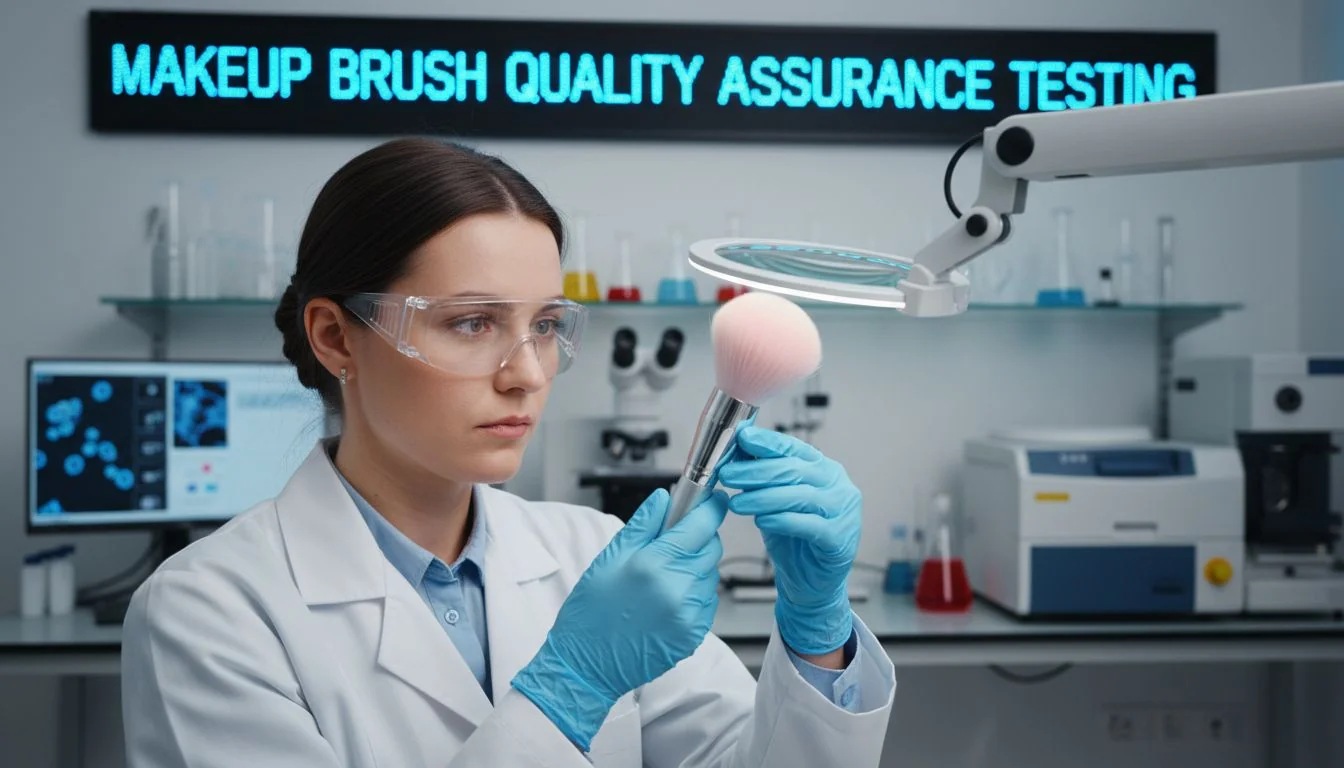
Compliance isn’t just a box to check; it’s your brand’s insurance policy. I remember a case where a client sourced brushes from a new factory to save a few cents per unit. The price was great, but the factory used a cheap adhesive. The entire shipment was held at customs in Germany because the Volatile Organic Compound (VOC) levels were too high. They lost the whole order and damaged their relationship with the retailer. Saving a little money upfront cost them a fortune. That’s why a robust QA plan is non-negotiable.
Building Your Technical File
For every product you make, you need a technical file with all the test reports. This is the first thing a licensor or major retailer will ask for.
- Chemical Safety: Your brushes will be tested against a list of restricted substances. In Europe, this is governed by REACH regulations. This screens for things like phthalates and formaldehyde.
- Heavy Metals: The metal ferrule and any coatings are tested for lead, cadmium, and especially nickel release, as nickel allergies are common.
- Physical Durability: You need to prove the brushes will last. This involves pull tests to ensure the handle and ferrule don’t separate, and wash tests to measure hair shedding. A good target is less than 0.2% hair loss after several washes.
- Sustainability Claims: If you claim the handle is from sustainable wood5, you need the Forest Stewardship Council (FSC) chain of custody documents to prove it.
| Test Category | Specific Test | Standard/Limit | Why It’s Critical |
|---|---|---|---|
| Chemical | REACH SVHC Screen | < 0.1% concentration by weight | Required for EU market access; consumer safety. |
| Heavy Metals | Nickel Release (EN 1811) | < 0.5 µg/cm²/week | Prevents allergic reactions; required for items in prolonged skin contact. |
| Physical | Hair Shedding Test | < 0.2% loss after 5 washes | Ensures product quality and longevity; prevents customer complaints. |
| Microbiological | Hygiene/Bioburden Test | Low/absent microbial count | Ensures product is clean and safe for use on the face upon delivery. |
REACH compliance is only required for products sold in Germany.False
REACH (Registration, Evaluation, Authorisation and Restriction of Chemicals) is a European Union regulation and is required for products sold in all EU member states.
FSC certification guarantees that wood products come from responsibly managed forests.True
The Forest Stewardship Council (FSC) provides a globally recognized standard for forest management, and its certification tracks wood from the forest to the final product.
Go-to-Market Math: How Can You Boost AOV and Sell-Through for Your Licensed Brush Kit?
You’ve made a fantastic, compliant, and beautifully designed brush set. But just launching the product isn’t enough. You need a commercial strategy to make sure it sells well and is profitable.
Increase the Average Order Value (AOV) by bundling the core brush set with themed accessories like a cosmetic pouch, compact mirror, or headband. Drive fast sell-through with a coordinated launch campaign using social media, pop-ups, and user-generated content.
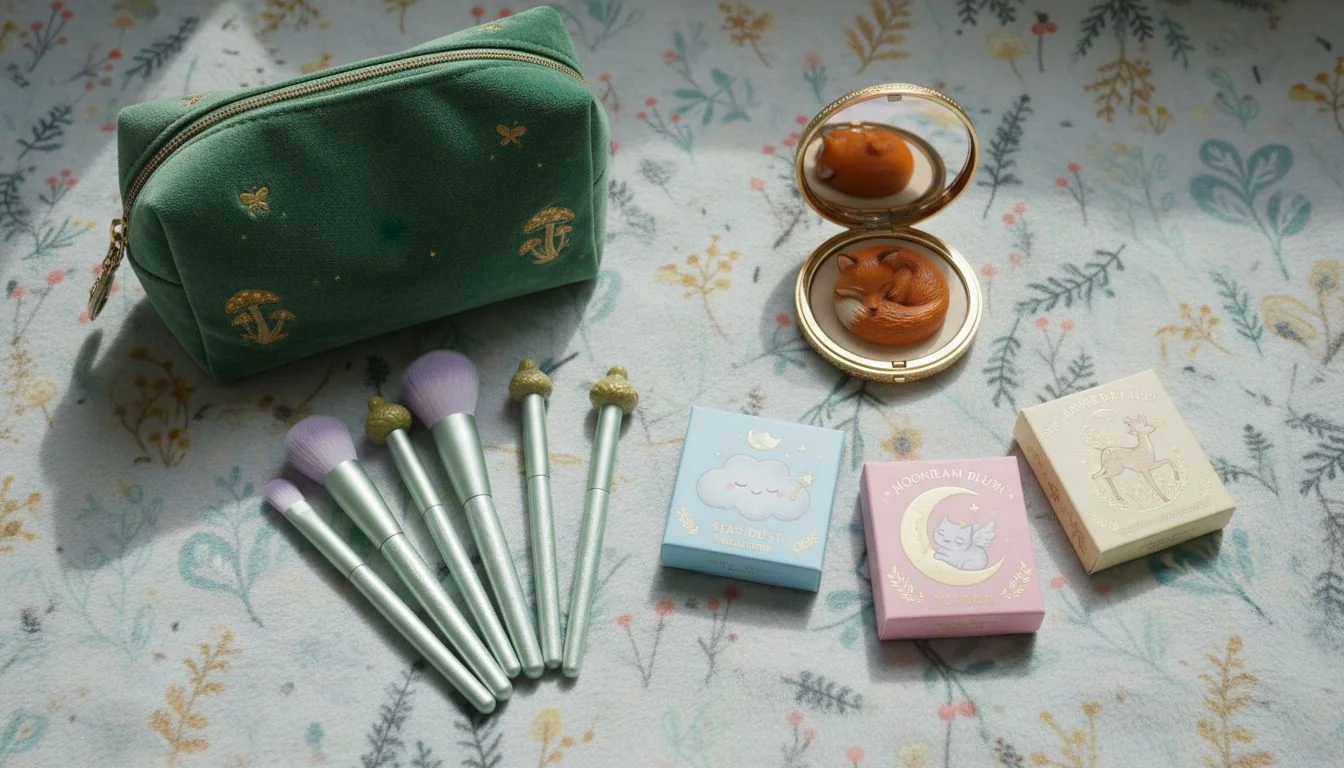
Think about when you buy a gift. Do you just buy one item, or do you look for a complete set? Most people want a full solution. The same logic applies here. A single brush set is a product. A brush set with a matching bag and mirror is a gift. It feels more complete and has a higher perceived value. This is the "go-to-market math" that turns a good product into a commercial success. The goal is to get each customer to spend more and to create excitement that drives quick sales.
Assortment, Bundles, and Activation
The beauty industry is a massive $252 billion market, but it’s also incredibly competitive. A character collaboration helps you stand out, and a smart commercial plan helps you cash in.
- Assortment Build: Don’t just sell one thing. Plan a small collection. The hero product is the brush set. Then, add accessories. These are often easier and cheaper to produce but can significantly increase the total value of a customer’s cart.
- Bundling for AOV: Look at the math. A brush set might sell for $25. A pouch might sell for $15. But a bundle of both for $35 feels like a great deal. Your AOV just went from $25 to $35. This is the easiest way to increase revenue per customer.
- Retail Activation: A launch shouldn’t be quiet. Treat it like a movie premiere. Use social media to tease the collection, partner with influencers for unboxing videos, and create in-store displays or even pop-up shops. This creates urgency and encourages people to buy now.
| Strategy | Basic Offering | Bundled Offering | Commercial Impact |
|---|---|---|---|
| Producto | 5-Piece Brush Set | 5-Piece Brush Set + Pouch + Mirror | Higher perceived value. |
| Retail Price | $25 | $40 | 60% increase in transaction value. |
| Launch Tactic | Standard online listing | Coordinated social media campaign | Creates buzz and faster sell-through. |
Bundling products always leads to higher overall profit.False
While bundling increases revenue and AOV, profitability depends on the margins of the bundled items and the discount offered. If the discount is too steep or the added items have low margins, overall profit could decrease.
Character collaborations in beauty are a proven strategy to drive sales.True
Numerous brands, from mass-market to luxury, repeatedly use character collaborations to attract new customers, leverage fan bases, and generate significant media buzz and sales velocity.
Conclusion
To successfully launch a character-themed brush kit, you must master four areas: secure the IP legally, translate your design into precise factory specs, pass all compliance tests, and bundle products to boost sales.
References
-
Understanding OEM brush kits can help you navigate the manufacturing process and ensure quality. ↩
-
Character collaborations can significantly enhance brand visibility and attract new customers. ↩
-
Exploring public-domain art can provide creative options for your designs without legal issues. ↩
-
Understanding vegan PBT fibers can help you create high-quality, cruelty-free beauty products. ↩
-
Using sustainable wood can improve your brand’s image and appeal to eco-conscious consumers. ↩

 English
  French
  Spanish
  Italian
  German
  Portuguese
  Russian
  Arabic
  Japanese
  Korean
  Czech
Czech  Polish
  Swedish
  Vietnamese
  Thai
Thai  Indonesian