Choosing the right foundation tool1 feels overwhelming. You want a perfect finish for your customers, but the wrong choice can waste product and hurt your brand’s reputation.
Use a brush for faster, fuller coverage and less product waste2. Use a damp sponge to blur texture for a natural, skin-like finish. Clean brushes weekly, sponges after each use, and replace sponges every three months to minimize bacteria.
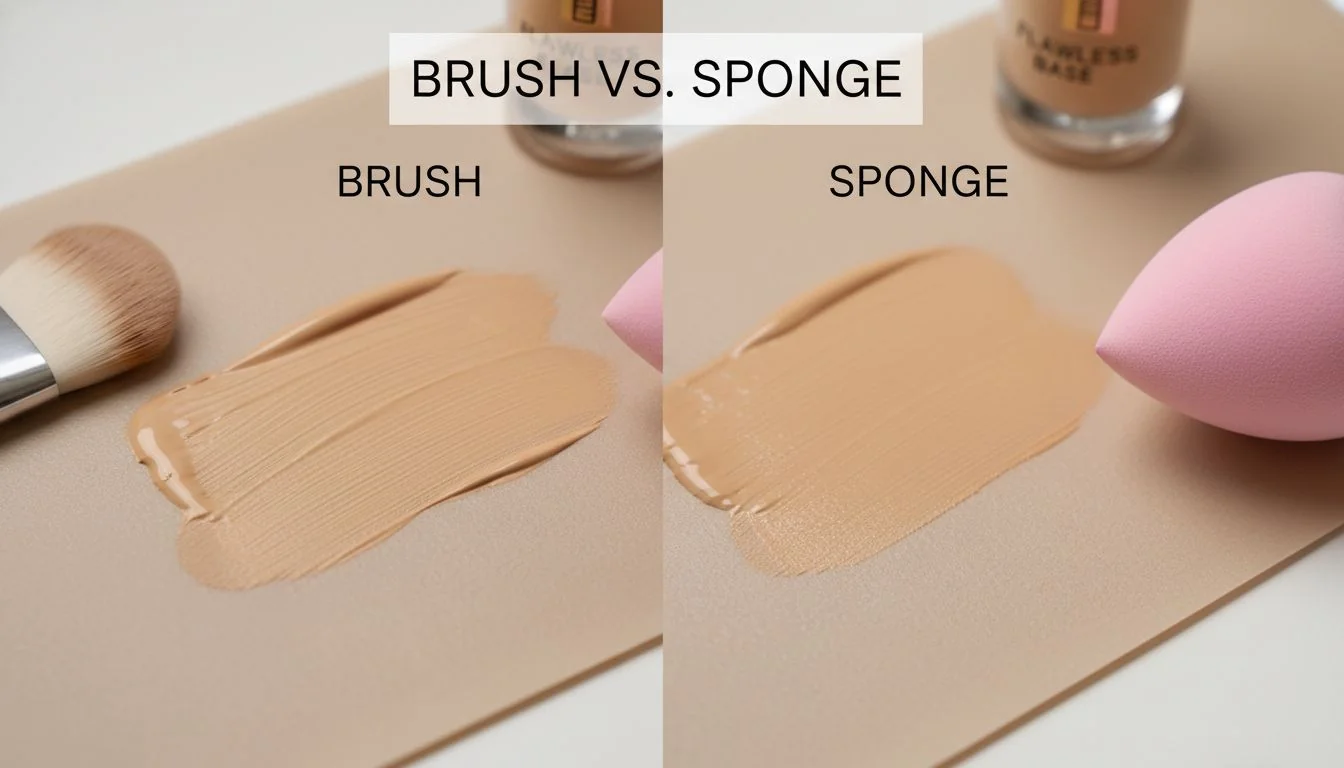
The debate between a foundation brush and a sponge is a big one. As someone who started on the factory floor, I’ve seen exactly how these tools are made. Now, I help brand founders like you create the perfect tools for their lines. The choice is not just about preference. It’s about performance, hygiene3, and even your profit margins. The right tool makes your foundation formula shine and builds customer loyalty. Let’s look at the data so you can make the best decision for your brand and teach your customers how to get the best results.
70-90% of in-use beauty sponges are contaminated with harmful bacteria.True
A 2020 study in the Journal of Applied Microbiology found high rates of contamination, including E. coli and Staphylococcus, on in-use products. Sponges were the most contaminated category.
Makeup brushes only need to be cleaned once a month.False
Brushes also harbor bacteria, oils, and dead skin cells. One study found 44.3% of users rarely clean their tools, which can lead to skin irritation and acne. Weekly cleaning is recommended.
Coverage Control: Brush for Build, Sponge for Blur?
Your customers want perfect coverage, but their foundation looks either too heavy or too sheer. This leads to complaints and makes your product seem flawed. Understand how brushes build and sponges blur.
A brush uses its bristles to paint foundation onto the skin, giving you more control and building coverage quickly. A damp sponge uses a bouncing motion to press foundation in, sheering it out for a seamless, skin-like finish that blurs texture.
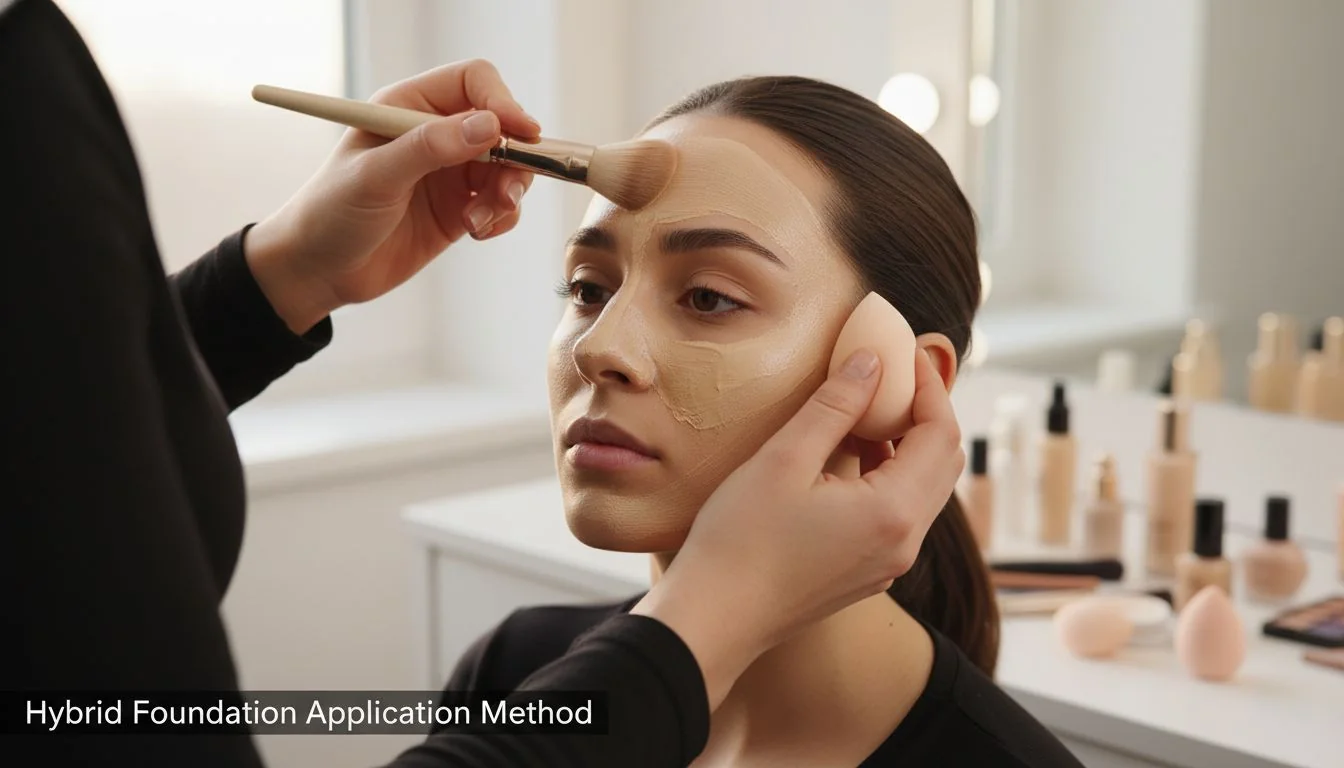
When I work with brands, the first thing we discuss is the desired finish. This determines the ideal tool. A brush is an artist’s paintbrush. Its filaments lay down pigment efficiently. A dense kabuki or flat-top brush is perfect for building full coverage without absorbing much product. A sponge, on the other hand, is for diffusing. When you dampen it, its porous structure helps melt the foundation into the skin, removing excess product to prevent a cakey look.
For your brand, it’s smart to create a simple guide for your customers. A "Tool-Formula Fit Matrix4" on your product page can be very helpful.
Tool & Formula Pairing Guide
| Formula Type | Desired Coverage | Recommended Tool | Why It Works |
|---|---|---|---|
| Liquid/Cream | Full, Buildable | Dense Kabuki Brush | Bristles deposit pigment efficiently with less absorption. |
| Liquid/Cream | Natural, Sheer | Damp Sponge | Porous texture diffuses product for a second-skin finish. |
| Powder | Light to Full | Fluffy or Dense Brush | Bristles pick up and distribute dry powder evenly. |
| Any Formula | Polished Finish | Brush, then Sponge | Apply with a brush for coverage, then bounce a damp sponge to blend edges and remove streaks. |
This "combo method" is a pro secret. Use the brush to do the heavy lifting and the sponge for the final, flawless touch.
You should only use a brush for powder foundation.True
Sponges, especially when damp, will cause powder to clump and apply unevenly. Brushes are designed to pick up and distribute dry pigments smoothly.
A sponge always gives a sheerer finish.False
While a damp sponge sheers out product, a dry sponge can provide heavier coverage. However, a dry sponge will also absorb much more product and can be difficult to blend.
Hygiene by the Numbers: What Are the Contamination Risks?
You probably think your makeup tools are clean enough. But studies show they are breeding grounds for bacteria, which can cause the very skin issues your customers are trying to cover.
Studies find that 70-90% of in-use cosmetic tools are contaminated. Sponges, because they are used damp and often stored in bathrooms, show the highest levels of harmful bacteria and fungi. Clean sponges after each use and brushes weekly to be safe.
The data on tool hygiene is alarming. A 2020 study found that beauty sponges had the highest rates of contamination, including bacteria like Enterobacteriaceae. This is often due to their environment. They are damp, porous, and frequently left in humid bathrooms. Another study showed that nearly 45% of users rarely clean their tools at all.
As a brand founder, this is a huge opportunity to build trust. By educating your customers on proper hygiene, you show that you care about their health, not just their makeup. This is a powerful way to stand out. On your packaging and website, provide a clear maintenance schedule.
Your Tool Maintenance Schedule
| Tool | cleaning frequency5 | Replacement Cadence | Storage Tip |
|---|---|---|---|
| Makeup Sponge | After every use | Every 3 months | Store in a ventilated, dry area. Never in a sealed bag or drawer when damp. |
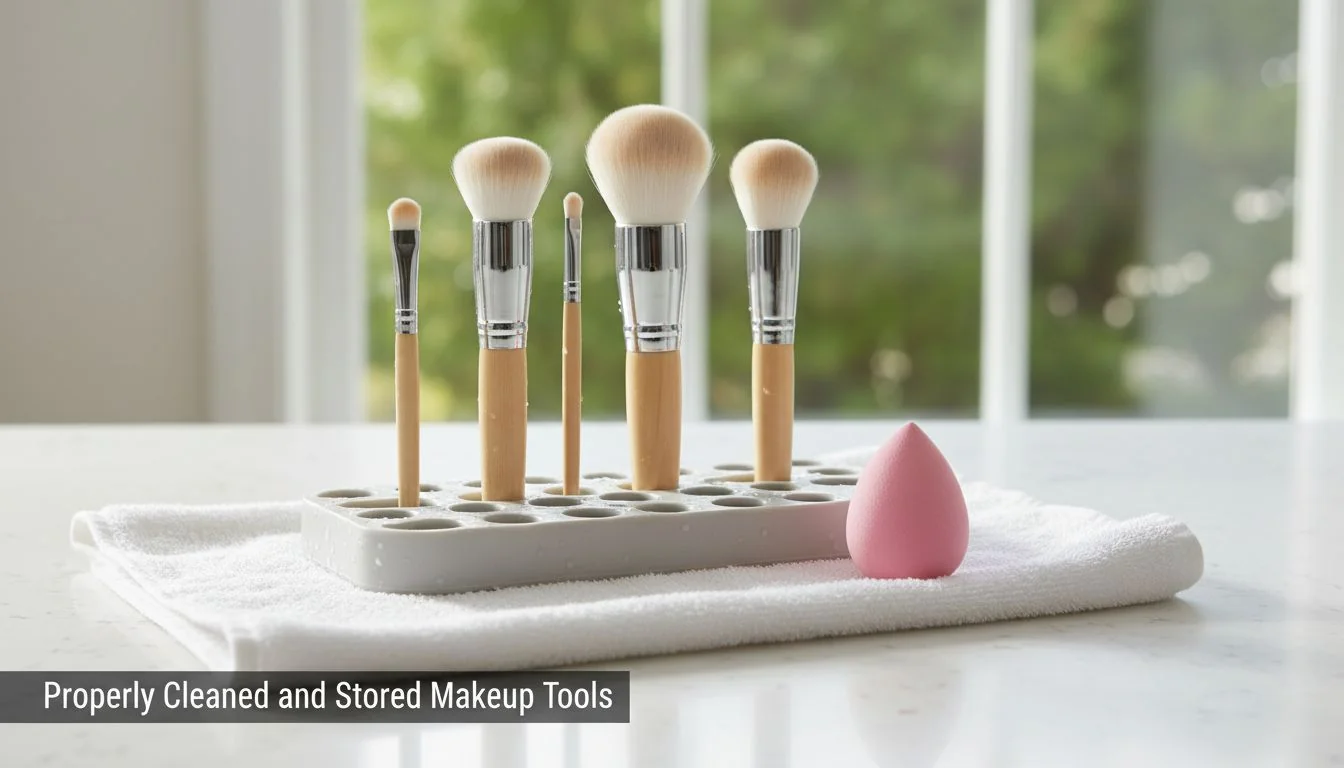
| Foundation Brush | Once per week | When bristles fray or shed | Store upright in a cup or holder, away from bathroom humidity. |
This isn’t just about being clean. It’s about performance. A clean brush applies foundation smoothly without streaks. A clean sponge provides a flawless blend without adding old product or bacteria to the skin.
Washing a makeup sponge once a week is enough.False
Because sponges are used damp, they create an ideal environment for bacteria and mold to grow. Microbiologists and makeup artists recommend washing after every single use.
Storing tools in a bathroom drawer is safe.False
Bathrooms are humid and contain airborne bacteria that can contaminate your tools. It's best to store them in a dry, ventilated area like a bedroom vanity.
Product Economy: How Do You Stop Your Tool from Drinking Your Foundation?
Your expensive foundation seems to disappear right into your applicator. This wastes money for your customers and can make your product seem less valuable, hurting your repurchase rate.
Sponges can absorb a lot of product, especially if they are low-quality or used dry. Dampening them helps them absorb less. Dense, synthetic brushes are generally more economical because they deposit product directly onto the skin with minimal waste.
From my time in the factory, I know that not all tools are created equal. A sponge is like, well, a sponge. If it’s dry, it’s thirsty and will soak up the first liquid it touches—your foundation. When you dampen it correctly (soak it, then squeeze out all excess water until it’s just bouncy), it’s already "full" of water. This means it absorbs far less product.
In contrast, the synthetic filaments6 we use for brushes at Brushino are non-porous. They don’t have tiny holes to trap product. A high-quality, dense brush is designed to pick up foundation and lay it down on the skin, not drink it. This is a major selling point for brands focused on value. You can tell your customers that your brush helps them get more applications per bottle.
How to Maximize Your Foundation
- Always Dampen Your Sponge: A damp sponge blends better and wastes less.
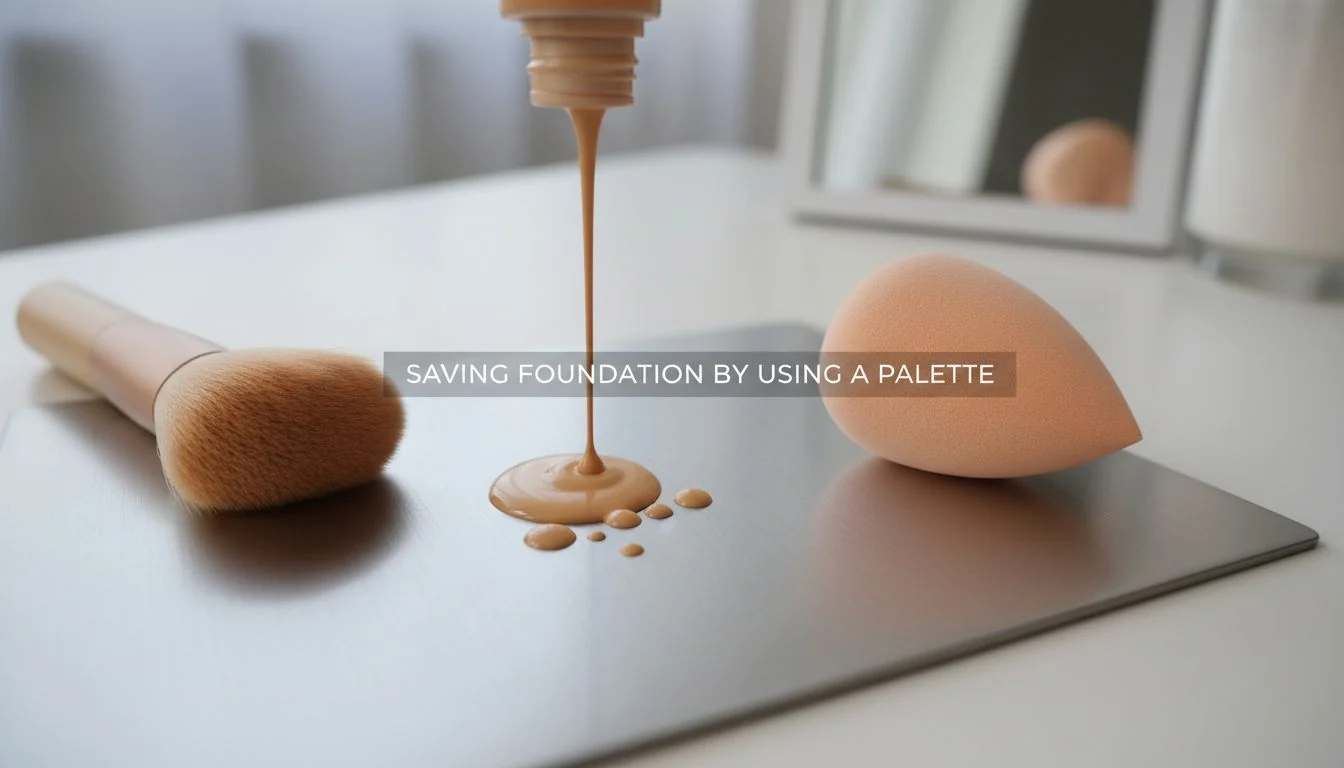
- Use a Palette: Dispense foundation onto the back of your hand or a palette, not directly onto the tool. This gives you control over how much you pick up.
- Apply in Thin Layers: Build coverage slowly. This prevents you from applying too much product and having to blend it away.
For your brand, communicating this is key. You can even sell branded tool cleansers or drying stands to support this hygiene and economy story.
All makeup sponges waste the same amount of foundation.False
The density and material of the sponge matter. Higher-density, quality polyurethane foam sponges, when properly dampened, absorb significantly less product than cheaper, more porous alternatives.
Applying foundation directly to a brush is the most efficient method.False
Dispensing foundation onto the back of your hand or a palette allows you to control the amount you pick up with the tool. This prevents overloading the brush and leads to a more even, less wasteful application.
Materials & Lifecycle: Polyurethane Sponges vs. Synthetic Filaments?
You choose tools based on how they feel, but you don’t know what they’re made of. This means you’re missing key information on performance, durability, and hygiene that impacts your brand’s quality promise.
Most beauty sponges are made of hydrophilic (water-loving) polyurethane foam7. This material is great for blending but requires strict hygiene. Brushes often use synthetic filaments, which are non-porous, easier to clean, and last much longer.
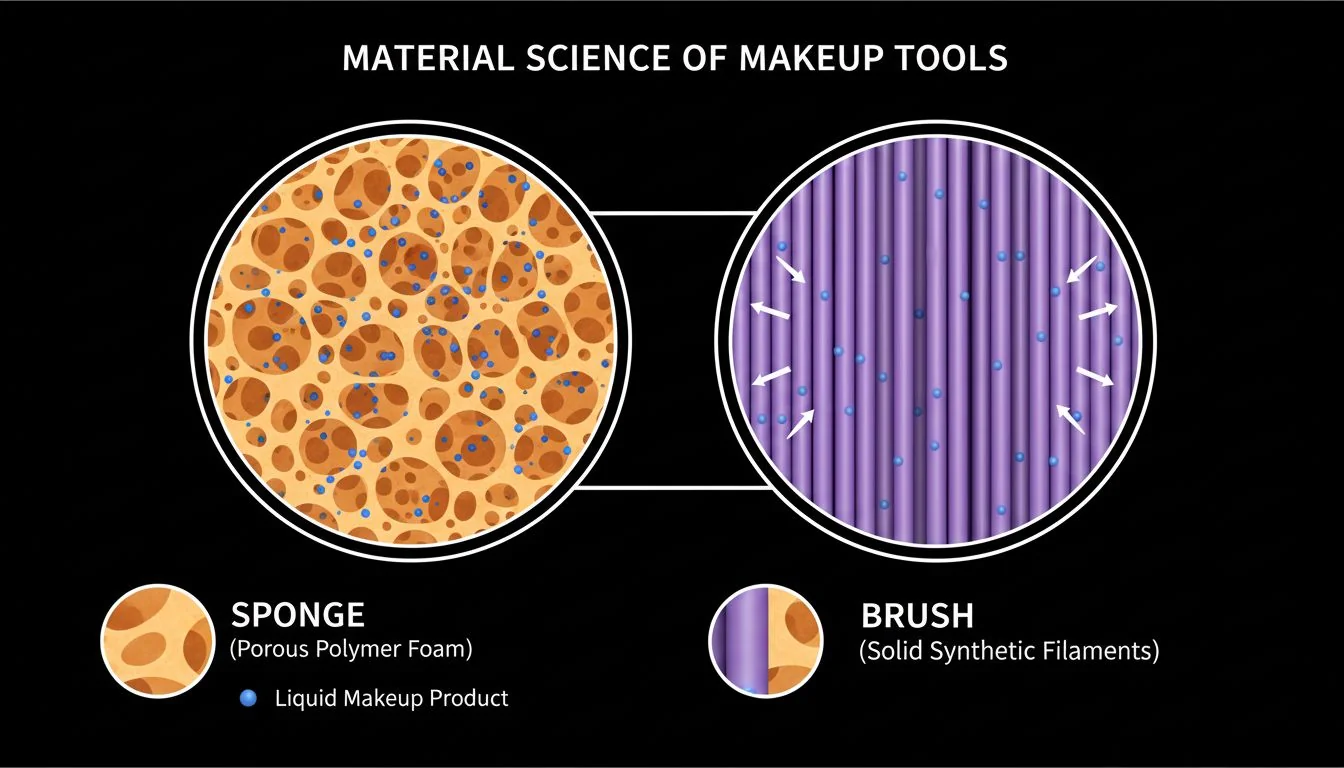
Let’s get into the material science, because this is crucial for brand owners. The magic of a beauty sponge comes from its open-cell polyurethane (PU) foam structure. When you add water, it swells and becomes incredibly soft and bouncy. This is perfect for creating that airbrushed finish. However, that same porous structure is what traps product, water, and bacteria. This is why a sponge’s lifecycle is short—it must be replaced every 3 months to avoid material breakdown and contamination.
Synthetic brush filaments, like Taklon or other proprietary polyesters, are essentially solid plastic strands. They have no pores to absorb product or water. This makes them far easier to clean and more hygienic over time. A well-made brush with a secure ferrule (the metal part) and quality filaments can last for years with proper care.
B2B Sourcing & Marketing Tips
- Be Specific: When sourcing, ask your manufacturer about the PU foam density and if it’s latex-free. For brushes, ask about the filament type and diameter.
- Market the Materials: Use this information in your marketing. "Made with premium, non-porous synthetic filaments for a hygienic, streak-free application."
- Educate on Lifecycle: Be transparent. Tell customers to replace their sponges every 3 months. This builds trust and creates a recurring purchase opportunity for your brand.
A good makeup brush can last for many years.True
With proper weekly cleaning and gentle handling, a well-made brush with a secure ferrule and quality synthetic filaments can maintain its shape and performance for years.
All beauty sponges are made from the same material.False
While most are polyurethane (PU) foam, the quality, density, and whether they are latex-free can vary significantly. This affects performance, feel, and potential for allergic reactions.
Conclusion
Choosing between a brush and a sponge depends on your desired finish and formula. Both are excellent tools when you use and maintain them correctly for your brand’s specific needs.
References
-
Understanding the best foundation tools can enhance your makeup application and improve your overall look. ↩
-
Learning to reduce product waste can save money and improve the efficiency of your makeup routine. ↩
-
Proper hygiene practices for makeup tools are essential for skin health and preventing breakouts. ↩
-
A Tool-Formula Fit Matrix can guide you in choosing the right tools for different foundation types. ↩
-
Knowing the right cleaning frequency for your tools can prevent bacteria buildup and skin issues. ↩
-
Learning about synthetic filaments can inform your choice of brushes for better hygiene and performance. ↩
-
Understanding the materials used in beauty sponges can help you choose high-quality products. ↩

 English
  French
  Spanish
  Italian
  German
  Portuguese
  Russian
  Arabic
  Japanese
  Korean
  Czech
Czech  Polish
  Swedish
  Vietnamese
  Thai
Thai  Indonesian