Your brush designs feel outdated. Competitors are launching innovative tools, leaving you behind. Here’s your guide to the essential OEM specs for 2025’s winning foundation brushes.
From 2022 to 2025, foundation brushes evolved toward denser synthetic fibers, multi-functional shapes1, and sustainable materials. OEM buyers should prioritize specific fiber densities, ergonomic shapes, robust build quality (ferrules, adhesives), and verifiable sustainability certifications to meet consumer and regulatory demands.

I remember a client who struggled with high return rates on a new brush line. The problem wasn’t the design, but the hidden manufacturing details. The market has changed fast. It’s not just about the look anymore; it’s about performance, durability, and sustainability. Let’s dive into the specific details that will make or break your next product launch.
The global cosmetic brush market is projected to reach USD 6.309 billion by 2035.Vrai
Based on market analysis, the CAGR is approximately 4.92% from the 2025 value of USD 3.902 billion.
Natural hair bristles are always better for all types of makeup.Faux
Natural hair is excellent for powders, but synthetic fibers are superior for liquid and cream foundations due to lower product absorption and easier cleaning.
Dense synthetics vs. duo-fiber: which delivers your target coverage for each foundation type?
Confused about which brush fiber to specify for your new foundation line? The wrong choice can ruin the user experience. Here’s how to match fiber type to coverage.
Use dense synthetic bristles for full, even coverage with liquid or cream foundations. Choose duo-fiber (a mix of long and short bristles) for a sheer, airbrushed finish. The density directly controls the level of pigment payoff.
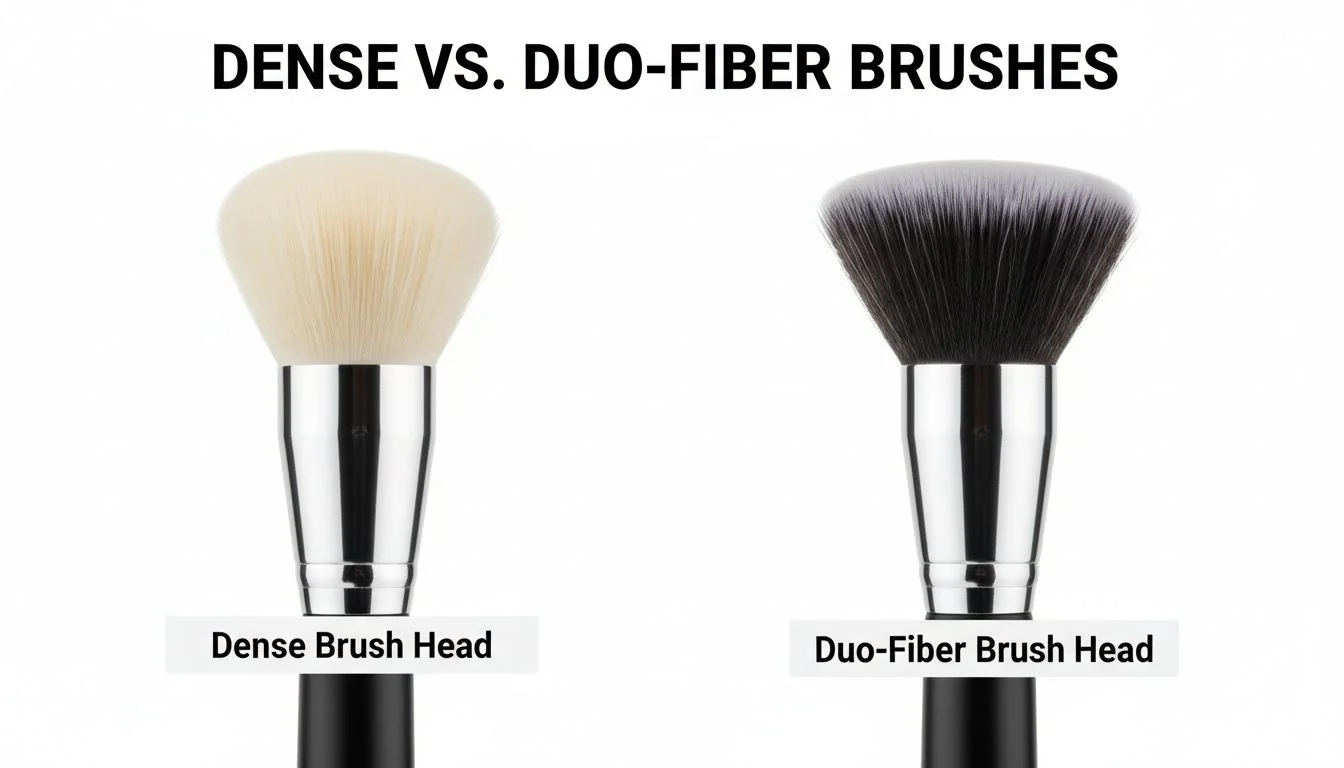
When I work with clients on cosmetic tools, the first thing we discuss is the fiber. It’s the heart of the brush. The shift to synthetic fibers like nylon and taklon isn’t just about being vegan; it’s about performance.
Fiber Specifications for Performance
Modern synthetics are engineered to mimic the best qualities of natural hair without the downsides, like high product absorption. For your RFQ, you need to be specific. A bristle denier of ≤0.06 mm creates that ultra-soft feel and prevents streaking. Tapered tips help lay down product smoothly. But the real game-changer is density. For a brush marketed as "full coverage," you should specify a density of at least 3,500–4,000 bristles per square centimeter. This high density ensures the brush buffs product in, rather than soaking it up.
Matching Fiber to Foundation
Duo-fiber brushes are different. They use two lengths of fibers. The longer, sparser fibers apply a light layer, while the shorter, denser fibers blend it out. This is perfect for sheer foundations or for customers who want a natural, skin-like finish. Here is a simple guide for your OEM specs:
| Foundation Type | Recommended Brush | Key OEM Specification | Desired Finish |
|---|---|---|---|
| Liquid/Cream | Dense Synthetic | ≥3,500 bristles/cm², ≤0.06mm denier | Full, even coverage |
| Sheer Liquid/Tint | Duo-Fiber | Mixed-length bristles, lower density | Airbrushed, natural |
| Powder/Mineral | Dense Kabuki (Synthetic) | Tightly packed, soft, tapered tips | Buildable, buffed coverage |
A bristle density of 4,000 bristles/cm² is ideal for a sheer, natural finish.Faux
High bristle density (≥3,500–4,000 bristles/cm²) is specified for full coverage brushes. Sheer finishes are achieved with lower density or duo-fiber brushes.
Synthetic bristles with a denier of 0.06 mm or less provide a softer, more refined application.Vrai
Finer denier fibers (≤0.06 mm) are softer and less likely to leave streaks, mimicking the feel of high-end natural hair.
Shapes that win in 2025: which flat, angled, kabuki, and palm/oval heads offer the best speed and precision?
Does your brush catalog look the same as it did five years ago? Consumers now demand shapes designed for speed and precision. Here’s how to choose the right head geometry.
Angled and kabuki heads offer fast, buffing application. Flat-top brushes are for precise, high-coverage placement. Palm/oval brushes cover large areas quickly. The winning shapes of 2025 blend these features, offering both speed and precision.
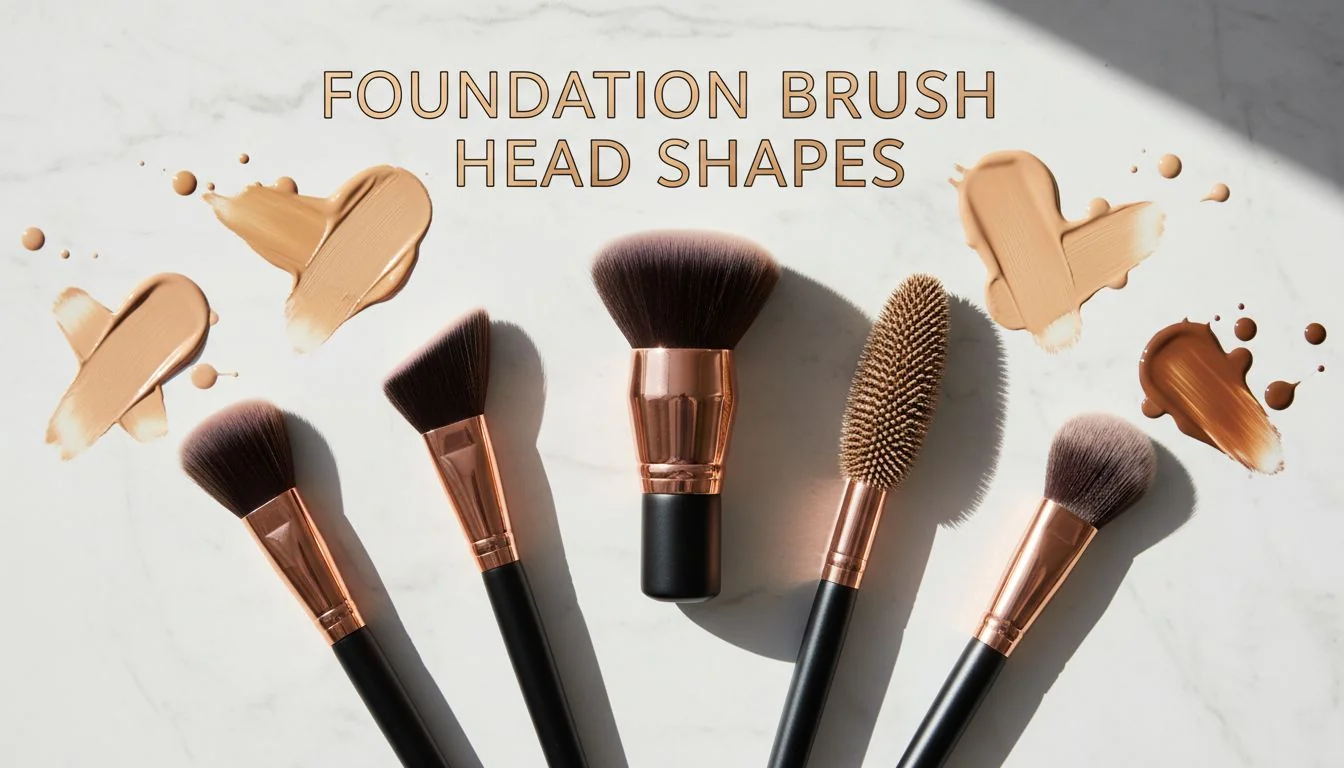
The shape of the brush head is just as important as the bristles. It dictates how the user applies the product. In my experience, a small change in the angle or curve of a brush can completely change its performance.
Function-Driven Geometry
The trend is toward multi-functionality. An angled kabuki, for example, combines the buffing power of a kabuki with the precision of an angled brush, making it great for getting around the nose and under the eyes. Palm or oval brushes, with their large surface area, are all about speed for applying foundation to the whole face quickly. When you’re writing your specs, think about the user’s goal.
Ergonomics and Balance
Don’t forget the handle. An ergonomic handle with an anti-slip finish can be a key selling point. The brush must feel balanced in the hand. I always advise clients to check the center of gravity during prototyping. A top-heavy brush is fatiguing to use. Specify tight tolerances for the head geometry to ensure every brush in the batch performs identically, especially for maintaining a sharp edge for blending.
| Brush Shape | Primary Use | Key Benefit | Target User |
|---|---|---|---|
| Angled Buffing | Blending, Contouring | Reaches facial contours easily | User wanting speed and precision |
| Flat Top/Tapered | Stippling, Layering | Lays down product for high coverage | User seeking a flawless, full finish |
| Round Kabuki | Buffing Powders/Liquids | Fast, circular buffing motion | User wanting an airbrushed look |
| Palm/Oval | All-over application | Maximum surface area for speed | User in a hurry, body makeup |
Flat-top brushes are best for achieving a sheer, natural look.Faux
Flat-top brushes are designed to stipple and lay down product, which builds higher coverage. Round or duo-fiber brushes are better for sheer finishes.
An angled brush head improves application speed and precision around facial contours like the nose.Vrai
The angle allows the brush to fit more easily into the natural curves and angles of the face, providing better control than a flat or round brush.
OEM build quality: how do you ensure ferrule metal, adhesive, and durability meet standards?
Worried about customer complaints of shedding or loose handles? Poor build quality2 can destroy your brand’s reputation. Here are the essential QC tests to demand from your OEM partner.
Ensure quality by specifying nickel-plated brass or stainless steel ferrules for corrosion resistance. Mandate strong adhesives and validate with pull tests (≥1.5 kgf), torque tests, and wash cycle tests (≥50 cycles) to ensure durability.

I’ve seen beautiful brush designs fail because of one simple, hidden component: the glue. Build quality is non-negotiable. It’s what separates a premium product from a disposable one. Your customers will notice, especially after the first few washes.
The Ferrule and Adhesive System
The ferrule is the metal band that connects the bristles to the handle. It has to be strong and corrosion-resistant. I always recommend nickel-plated brass or, for a more premium option, stainless steel. Avoid raw aluminum, as it can corrode and loosen over time. The adhesive system is equally critical. A strong, waterproof epoxy is necessary to prevent "glue creep" and bristle shedding, especially since foundation brushes are washed frequently.
Key Quality Control Tests
You can’t just trust that these components are good; you have to test them. Add these quantifiable metrics to your quality control plan.
| QC Test | Purpose | OEM Specification/Target |
|---|---|---|
| Pull Test | Measures bristle retention | ≥1.5 kgf force with no shedding |
| Torque Test | Checks ferrule-to-handle bond | Resistance to twisting force at the glue joint |
| Wash Cycle Test | Simulates consumer use | ≥50 cycles in neutral detergent with no damage |
| Shedding Rate | Quantifies bristle loss | <0.5 hairs per 100 strokes on a test surface |
By putting these numbers in your RFQ, you tell the factory you are serious about quality.
A pull test of 1.0 kgf is sufficient for a high-quality face brush.Faux
The industry standard for a durable face brush is a pull test of at least 1.5 kgf to ensure strong bristle retention and prevent shedding.
Nickel-plated brass is a good choice for a ferrule because it resists corrosion from water and cleansers.Vrai
The nickel plating protects the underlying brass from oxidation and damage, which is crucial for a tool that is washed frequently.
Sustainability and compliance: how can you verify vegan fibers, REACH/CPSIA/Prop 65, and FSC packaging?
Making sustainability claims without proof is risky. Greenwashing can damage your brand and lead to fines. Here’s how to ensure your brushes are verifiably sustainable and compliant.
Verify by demanding third-party certifications. Specify certified vegan fibers3, REACH-compliant metals, and FSC-certified packaging. Require test reports for CPSIA and Prop 65 to screen for heavy metals and harmful chemicals. This documentation is your proof.
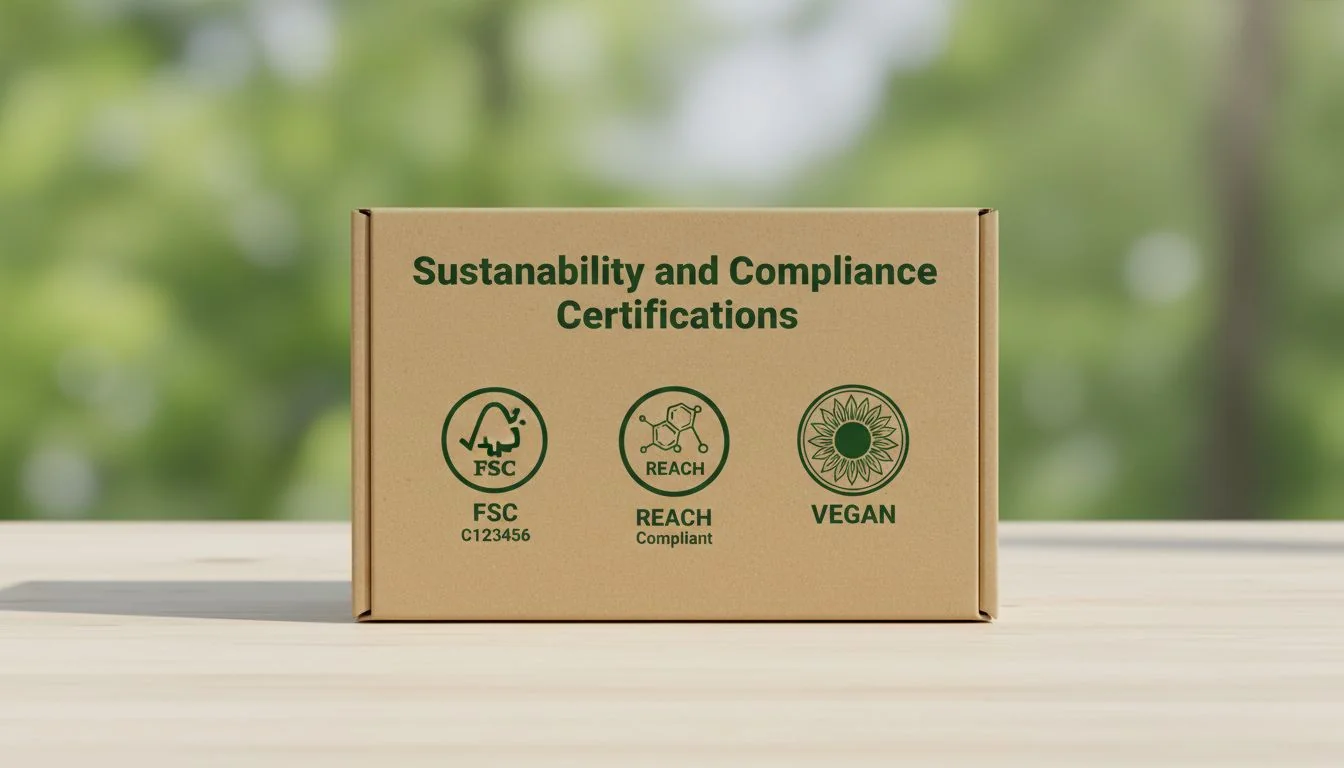
In today’s market, especially with Gen Z and Millennial buyers, sustainability isn’t a bonus—it’s a requirement. As a product designer or buyer, you are responsible for ensuring the claims you make are true. I’ve helped clients navigate this complex landscape. It all comes down to documentation.
Material and Chemical Compliance
You need to be specific about what you mean by "eco-friendly." Specify that all synthetic fibers must be certified vegan. The adhesives used must be formaldehyde- and BPA-free. For the metal ferrule, demand finishes that are compliant with REACH, the European Union’s regulation on chemicals. In the US, you must screen for heavy metals and other restricted substances under CPSIA and California’s Prop 65. Don’t just take the factory’s word for it; require the third-party lab reports.
Packaging and Transparency
Sustainability extends to the packaging. Specifying FSC-certified paper and cardboard ensures the materials come from responsibly managed forests. For brands targeting the "eco-core" consumer, you can even offer options with bamboo handles or aluminum-free components. The key is transparency. Publish your certifications and test reports.
| Compliance Area | Key Regulation/Standard | What to Request from OEM |
|---|---|---|
| Bristles | Vegan Certification | Third-party vegan certificate for fibers |
| Chemicals (EU) | REACH | Test reports showing compliance for all materials |
| Chemicals (US) | CPSIA / Prop 65 | Lab reports screening for lead, phthalates, etc. |
| Packaging | FSC (Forest Stewardship Council) | FSC chain-of-custody certificate for paper/wood |
FSC certification applies to the vegan status of brush bristles.Faux
FSC (Forest Stewardship Council) certification applies to wood and paper products, ensuring they come from responsibly managed forests. It does not apply to synthetic bristles.
REACH is a European Union regulation that restricts the use of certain hazardous chemicals in products.Vrai
REACH (Registration, Evaluation, Authorisation and Restriction of Chemicals) is a key piece of legislation for any product sold in the EU market.
Conclusion
To succeed in 2025, focus on matching brush specs to performance, demanding verifiable quality control, and proving your sustainability claims. These details will define the winning products.

 English
  French
  Spanish
  Italian
  German
  Portuguese
  Russian
  Arabic
  Japanese
  Korean
  Czech
Czech  Polish
  Swedish
  Vietnamese
  Thai
Thai  Indonesian