Choosing the right makeup brush feels complicated. This confusion can lead to a streaky finish and wasted product. I’m here to give you a simple guide for a flawless application.
Use a synthetic buffing or kabuki brush1 for liquid and cream foundation. Use a large fluffy brush to set powder. Choose an angled cheek brush for blush and bronzer. A flat shader places eyeshadow, and a tapered crease brush blends it. Clean liquid-use brushes weekly and powder-use brushes every 1–2 weeks for hygienic, streak-free results.
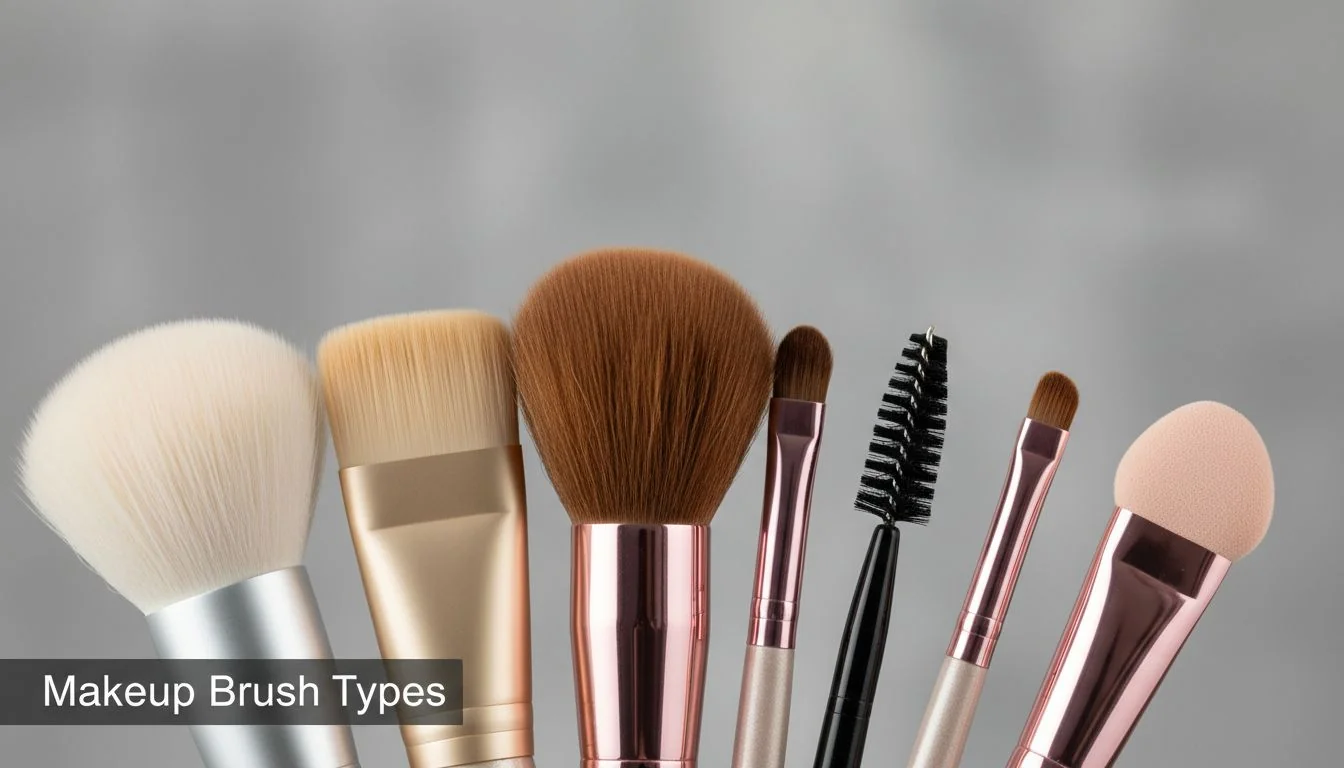
When I first started working on the factory floor, I saw firsthand how the shape, density, and fiber of a brush could completely change a makeup application. It’s not about having hundreds of brushes. It’s about knowing which tool to grab for a specific job. This guide is built on that experience. It’s designed to give you quick, confident answers, whether you’re applying your own makeup or designing a brush line for your brand. Let’s make it simple.
Using the wrong brush can absorb up to 30% more liquid foundation than the correct one.True
Dense synthetic brushes have low absorbency, ensuring more product is transferred to the skin. Fluffy, porous natural brushes can soak up liquid formulas, leading to waste.
All synthetic brush fibers are made from the same type of plastic.False
Synthetic fibers are typically made from Taklon or nylon, but they come in many grades, diameters, and tip profiles, which affects their softness and performance.
The Fast Map: How Do You Match Product to Brush, Motion, and Finish?
You have a product in hand but feel unsure which brush to grab. Using the wrong tool can ruin the look, creating streaks or patchiness. Here is a simple map.
This one-screen guide connects your product to the right brush, the correct motion, and the final look you can expect. It’s a fast decision path to get predictable, professional results every time.
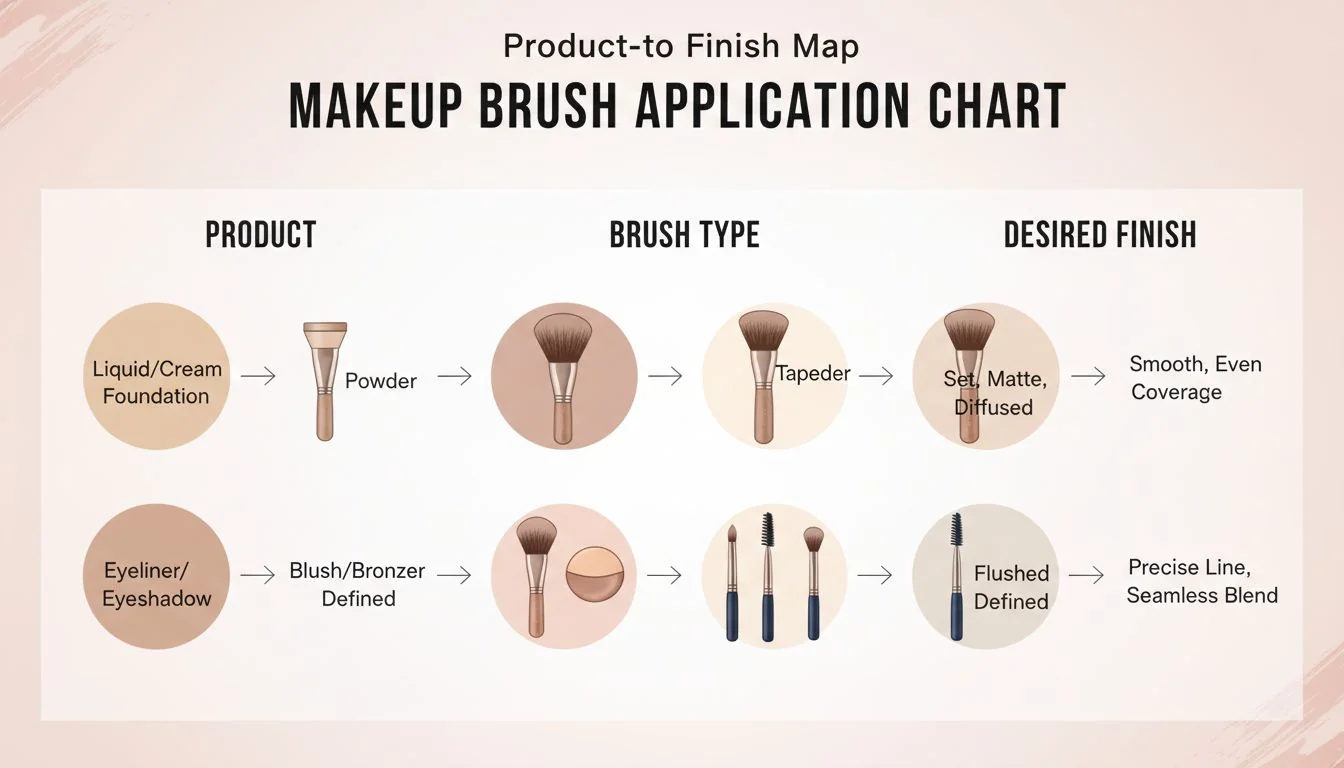
I designed this map to be a cheat sheet. In the factory, we test brushes for specific outcomes, and this table summarizes thousands of hours of testing. It’s the core knowledge you need, simplified. Think of it as your direct path from product to perfect finish. You don’t need to guess anymore. Just find your product in the first column and follow the steps across. This is how professionals achieve consistency. For brand owners, this is the exact logic you can use to build a cohesive, high-performance brush set for your customers. It removes the guesswork and builds trust in your products.
Your One-Screen Decision Map
| Product | Brush Type | Motion | Finish |
|---|---|---|---|
| Foundation | Dense Synthetic Buffing/Kabuki | Stipple to place, then buff in circles | Medium, streak-free coverage |
| Concealer | Small Synthetic Flat/Rounded | Tap to place, micro-buff edges | Precise, high coverage |
| Setting Powder | Large Fluffy | Light sweep or press-and-roll | Soft-focus, set makeup |
| Blush/Bronzer | Medium Dome or Angled Cheek | Deposit on cheeks, diffuse in circles | Seamless, natural warmth |
| Highlighter | Small Tapered or Fan | Light, targeted sweeps on high points | Controlled, luminous sheen |
| Eyeshadow | Flat Shader, Tapered Crease, Fluffy Blender | Pack color, define crease, smooth edges | Layered, well-blended look |
Stippling foundation before buffing uses less product.True
Stippling (tapping) deposits product without pulling it, while buffing blends it. This two-step motion provides even coverage without over-applying or causing streaks.
Fan brushes are only for highlighter.False
While excellent for a light dusting of highlighter, fan brushes are also great for sweeping away eyeshadow fallout without smudging makeup underneath.
Fibers That Fit Your Formula: Is Synthetic or Natural Better?
The "synthetic vs. natural" debate is confusing. Choosing the wrong fiber can waste your expensive formulas or compromise your brand’s ethical promises. Here is a simple rule to follow.
Default to high-quality synthetic fibers2 for your entire kit. They excel with modern liquid and cream formulas, are easy to clean, and are cruelty-free. Natural hair is an option for powders but is no longer a necessity.

Years ago, natural hair brushes were the only choice for a luxury feel, especially with powders. But technology has changed everything. Today’s best synthetic fibers, like the ultra-soft Taklon we source, are incredible. They have very low absorption, which means your liquid and cream products go on your face, not into the brush. This saves money and product. They are also much easier to sanitize, which is critical for clear skin and professional use. For brand owners, the choice is even clearer. Synthetic fibers allow you to confidently claim "vegan" and "cruelty-free," which is a non-negotiable for many customers today. While natural hair from goat or sable is still great for diffusing powders, modern synthetics now perform just as well. My practical rule is this: build your core line with synthetics. Only consider natural fibers if it’s a specific request that aligns with a very particular brand story.
Natural hair brushes are always better for blending powder eyeshadow.False
Modern tapered synthetic blending brushes are designed to mimic the texture and diffusion of natural hair, offering comparable blending performance with the added benefits of durability and easier cleaning.
Synthetic brushes can be made from recycled materials.True
Some manufacturers offer synthetic brush fibers and aluminum ferrules made from post-consumer recycled (PCR) materials, supporting a more sustainable production model.
Clean Tools, Clear Skin: What’s the Right Way to Clean and Store Your Brushes?
You know you should clean your brushes, but how often? Infrequent or improper cleaning can lead to breakouts, infections, and a damaged brush collection. Let’s set up a simple, effective routine.
Clean brushes used with liquids or creams weekly. Clean powder brushes every one to two weeks. Use a gentle cleanser, rinse well, and always dry them with the bristles pointing down or horizontal.
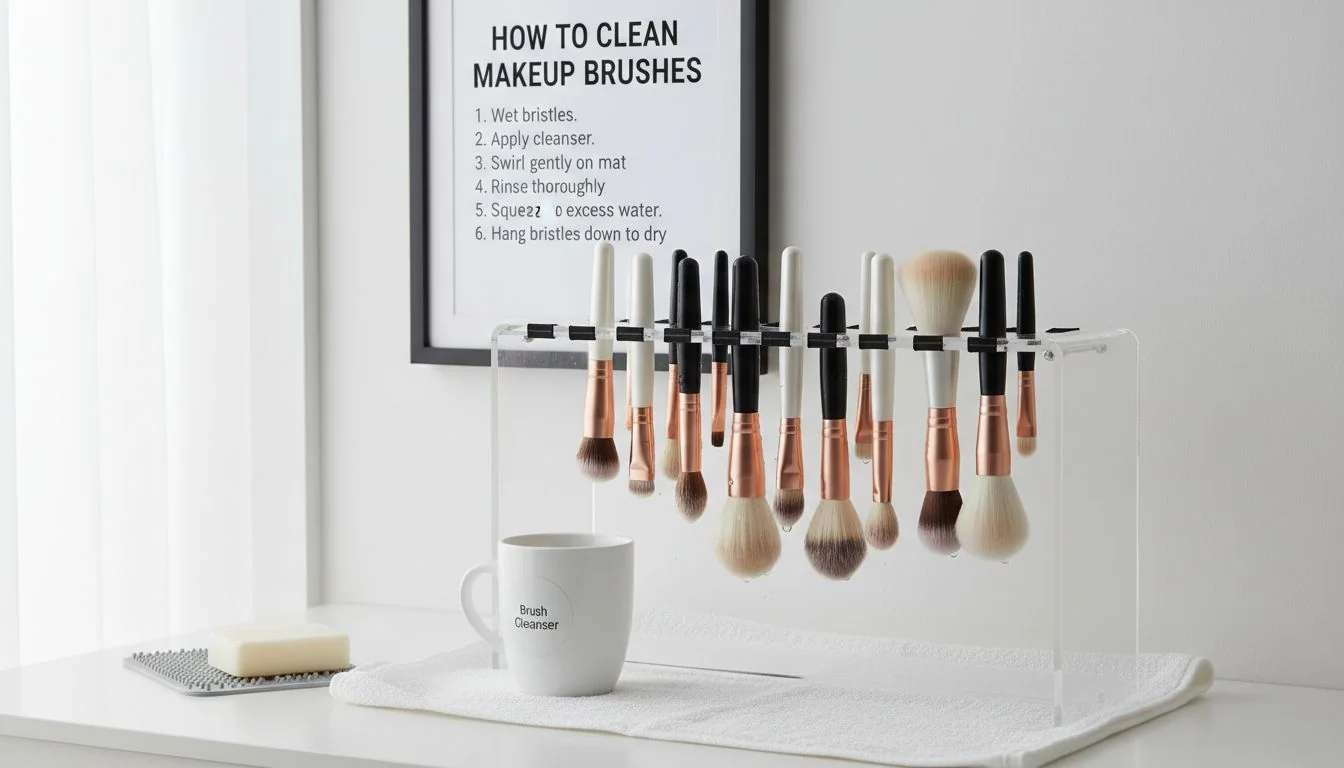
Protecting your brushes is just as important as choosing them. The glue that holds the bristles in the ferrule (the metal part) is the brush’s weak point. When you wash your brushes and let them dry upright in a cup, water seeps into the ferrule. This dissolves the glue over time, causing shedding and ruining your investment. That’s why drying them bristles-down or flat on a towel is so important. For cleaning, a gentle soap or a dedicated brush cleanser with lukewarm water is perfect. Avoid harsh detergents. Between deep cleans, you can quickly sanitize synthetic brushes with a light mist of 70% isopropyl alcohol, but don’t soak the base of the bristles. When it comes to storage, let them breathe. A cup, a roll-up case, or a breathable bag works great. Avoid tossing damp brushes into a sealed makeup bag, as this is a perfect environment for bacteria to grow.
You should clean your makeup brushes with dish soap.False
Harsh detergents like dish soap can strip natural hair brushes of their essential oils, making them brittle. They can also be too aggressive for the glues used in the ferrule. A gentle baby shampoo or a dedicated brush cleanser is safer.
Drying brushes with a hairdryer will ruin them.True
High heat can melt synthetic fibers, damage natural hairs, and weaken the glue in the ferrule, leading to shedding and a shortened lifespan for the brush.
The Pro Minimalist Kit: Which 6 Brushes Do It All, and When Should You Add More?
Building a brush collection is overwhelming and expensive. You see kits with 20+ brushes and wonder if you need them all. The truth is, you don’t.
A core set of six versatile brushes can handle about 90% of all makeup looks. This minimalist kit is all you need to start for professional-grade results.
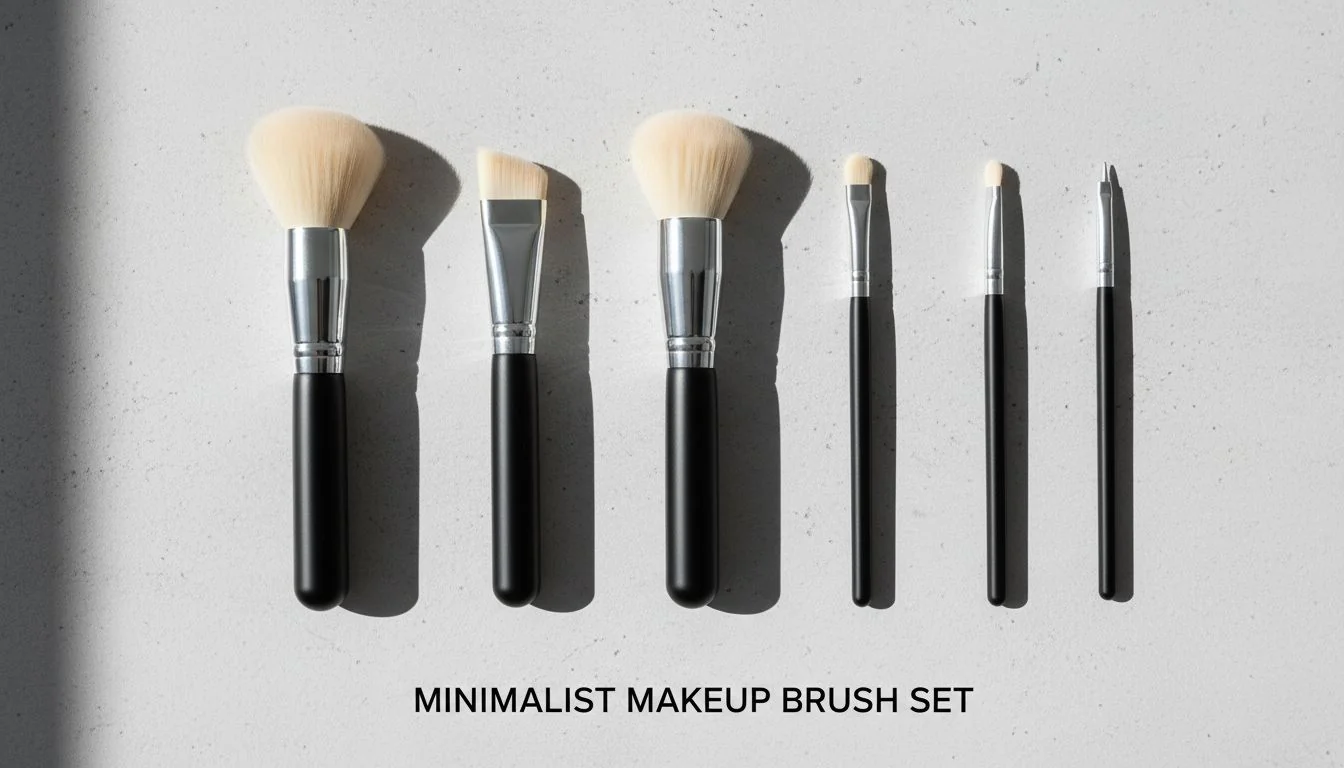
As a brand founder, you want to offer your customers real value, not confusion. A massive, complicated brush set is often impractical. I always advise my clients to start with a strong, curated collection that covers the essentials. This approach is more sustainable, cost-effective, and user-friendly. A six-piece kit empowers your customers to achieve a full face of makeup without feeling overwhelmed. It’s the perfect foundation for any brand. From there, you can offer specialized add-on brushes. For example, if your brand launches a new gel eyeliner, you can introduce a dedicated angled eyeliner brush. This strategy allows your product line to grow with purpose.
The Six Core Brushes
- Foundation/Buffing Brush: A dense synthetic brush for liquids and creams.
- Small Concealer Brush: A small, flat synthetic brush for precise application.
- Large Powder Brush: A big, fluffy brush for setting powder.
- angled cheek brush3: For perfect placement of blush and bronzer.
- Flat Shader Brush: To pack eyeshadow onto the lid.
- Tapered Crease/Blender Brush: To blend and diffuse eyeshadow in the crease.
When to Add More
- Angled Eyeliner/Brow Brush: Add for precision with gels, creams, or powders.
- Small Tapered Highlighter Brush: Add for a more targeted, intense highlight.
- Lip Brush: Add for crisp, clean lipstick application, especially with bold colors.
A Note for Brand Founders: What to Look for in a Brush Manufacturer?
Finding a reliable OEM/ODM partner is one of the biggest challenges for a beauty brand. You worry about quality, communication, and whether a factory will take your vision seriously.
Look for a partner who is transparent about materials, quality control, and certifications. They should offer low MOQs, clear communication, and a proven process from sampling to shipment.

I built my business to solve the exact problems I saw brand founders face. Many factories have high MOQs that are impossible for startups. They lack design input and don’t provide the certifications you need for markets like the EU and US. Here is what you should demand from a manufacturing partner:
- Materials & Manufacturing: Ask about fiber grades, ferrule materials (aluminum vs. copper), and handle options (FSC-certified wood, bamboo, acrylic). A good factory controls details like knot density, glue temperature, and crimping standards. They should be able to provide data from pull tests and shedding tests.
- Quality Control (QC): A transparent partner will share their QC workflow. This should include inspecting incoming raw materials, checking knot weight, testing ferrule strength, and performing final visual inspections.
- Compliance & Ethics: Don’t just accept a "vegan" claim. Ask for official declarations and documentation. For European markets, ensure they can provide REACH or Prop 65 statements. Look for partners offering sustainable options like FSC-certified packaging or recycled aluminum.
- Commercials & Service: A partner invested in your growth will offer low MOQ tiers, a clear sampling process (SLA), and transparent lead times. They should have a simple system for customizing logos and packaging. This is the foundation of a partnership, not just a transaction.
FAQs
Which brush is best for liquid foundation?
A dense synthetic buffing or kabuki brush. Stipple the product on first to place it, then use circular buffing motions to blend it for a streak-free finish.
Do I need natural hair brushes for powder?
Not anymore. Modern synthetic fibers are engineered to pick up and diffuse powder just as effectively as natural hair, with the added benefits of being more hygienic, durable, and cruelty-free.
How often should I clean my makeup brushes?
Clean brushes used for liquids and creams weekly to prevent bacteria buildup. Brushes used only for powders can be cleaned every 1–2 weeks. Always dry them thoroughly with bristles facing down or flat.
Why do my brushes shed or smell bad?
Shedding can be caused by poor build quality, harsh cleaning, or heat damage. A bad smell is usually from bacteria and oil residue due to infrequent cleaning or not allowing the brush to dry completely.
What is the minimum number of brushes I need?
A core set of six brushes is enough for a full-face look: foundation, concealer, powder, angled cheek, a flat eyeshadow shader, and a tapered crease blender. You can add an eyeliner or brow brush as needed.
Conclusion
Mastering these core brushes and techniques empowers you to create any look, build a smarter kit, and source products for your brand with total confidence and clarity.
References
-
Discover how synthetic buffing and kabuki brushes enhance liquid foundation application for a flawless finish. ↩
-
Understand the advantages of high-quality synthetic fibers for modern makeup applications and their benefits. ↩
-
Learn the best techniques for using an angled cheek brush to achieve perfectly blended blush and bronzer. ↩

 English
  French
  Spanish
  Italian
  German
  Portuguese
  Russian
  Arabic
  Japanese
  Korean
  Czech
Czech  Polish
  Swedish
  Vietnamese
  Thai
Thai  Indonesian