Struggling to choose the right foundation brush1? The wrong tool leads to a streaky finish and wasted product, frustrating customers and hurting your brand’s reputation.
Match your brush to your formula. Use flat or buffing brushes for liquids/creams. Use stippling brushes for an airbrushed look. Use angled heads for contours, precision brushes for spots, and kabuki brushes for powders. synthetic fibers2 are best for liquids and easier cleaning.
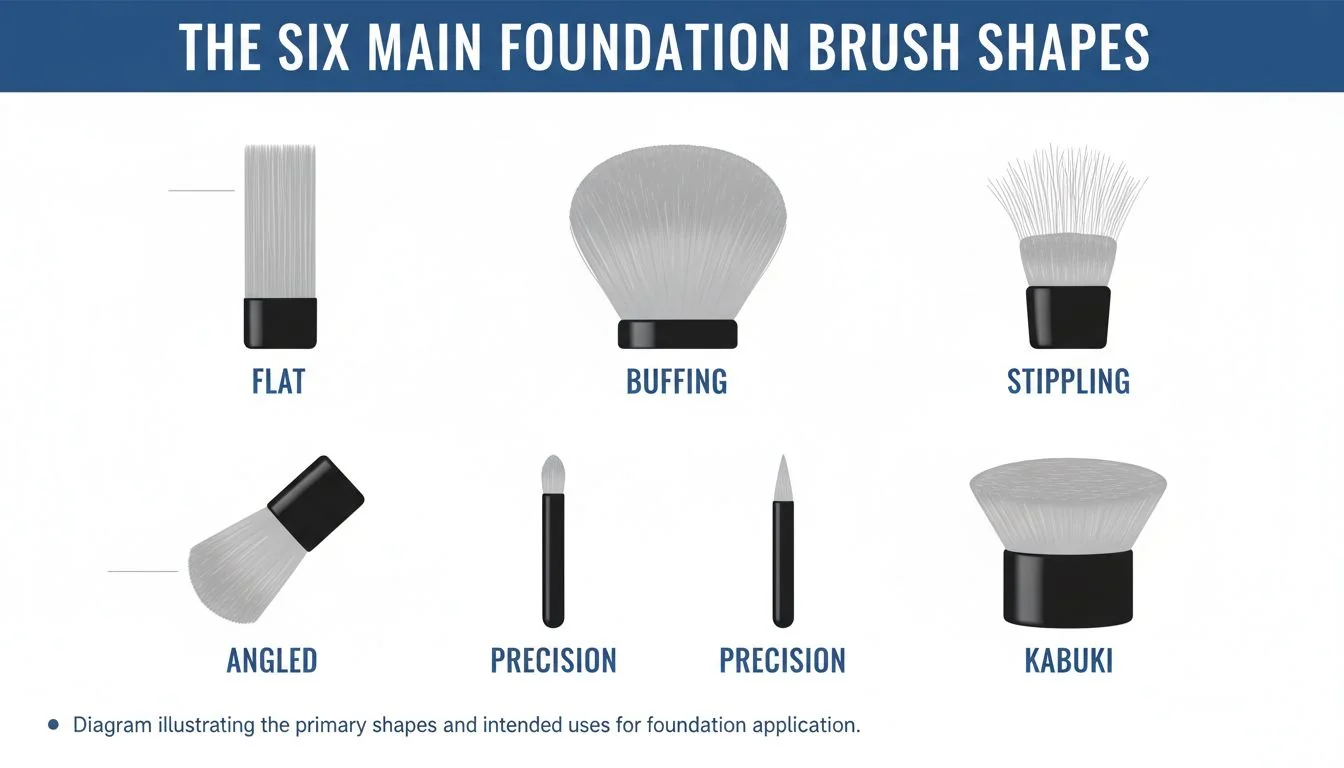
When I first started in manufacturing, I thought a brush was just a brush. I quickly learned that for product designers and brand owners, the details are everything. A tiny change in fiber density3 or handle length can be the difference between a best-selling product and a clearance-bin failure. Understanding this taxonomy isn’t just for makeup artists; it’s for us, the creators. It’s how we engineer a flawless user experience from the ground up. Let’s break down what you need to know to source or design the perfect foundation brush.
The global makeup brush market is projected to grow at a 6.3% CAGR, reaching nearly $13 billion by 2034.True
Industry analysis reports confirm this growth trend, driven by rising beauty consciousness and innovation in cosmetic tools.
Natural hair bristles are always superior to synthetic options for all types of makeup.False
While natural bristles excel at picking up powder, synthetic bristles are far better for liquid and cream products as they don't absorb the formula and are easier to clean.
Bold Basics: Which brush shape fits your foundation formula and coverage goals?
Choosing a brush shape4 feels overwhelming. Pick the wrong one, and your foundation looks cakey or uneven. Let’s match the shape to your desired result and formula.
The brush shape directly controls the application and finish. Liquids and creams work best with flat, buffing, or stippling brushes for controlled placement. Powders need a kabuki or fluffy brush to diffuse product evenly.
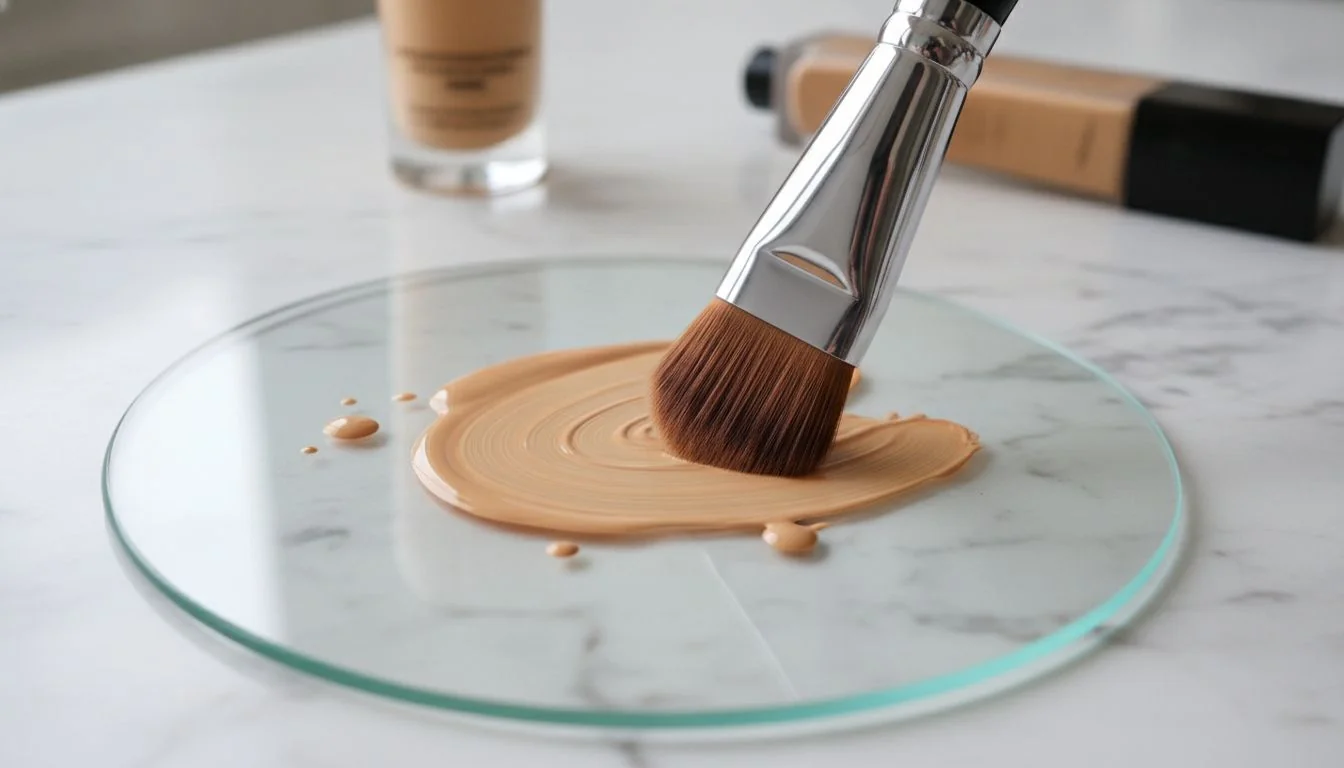
As a designer, your first decision is matching the brush head’s geometry to its intended use. This is the foundation of a good product specification. I’ve seen projects fail because the chosen shape was a poor match for the brand’s hero foundation formula. You have six core shapes to work with, each with a specific purpose. Getting this right ensures the end-user achieves their desired coverage, from a sheer, natural tint to a full, flawless finish. It also minimizes common complaints like streaking or patchiness. Think of these shapes as different tools in a toolkit, each engineered for a precise job. Your task is to provide the customer with the exact right tool.
A Quick Guide to Brush Shapes
| Brush Type | Best For (Formula) | Coverage Level | Primary Motion |
|---|---|---|---|
| Flat (Paddle) | Liquids, Creams | Medium to Full | Painting, Sweeping |
| Buffing (Dome) | Liquids, Creams, Powders | Medium to Full | Circular Buffing |
| Stippling (Duo-Fiber) | Liquids, Creams | Sheer to Medium | Tapping, Stippling |
| Angled | Liquids, Creams | Medium to Full | Sweeping, Blending |
| Precision (Tapered) | Liquids, Creams | Buildable (Spot) | Tapping, Patting |
| Kabuki | Powders, Mineral | Sheer to Medium | Buffing, Sweeping |
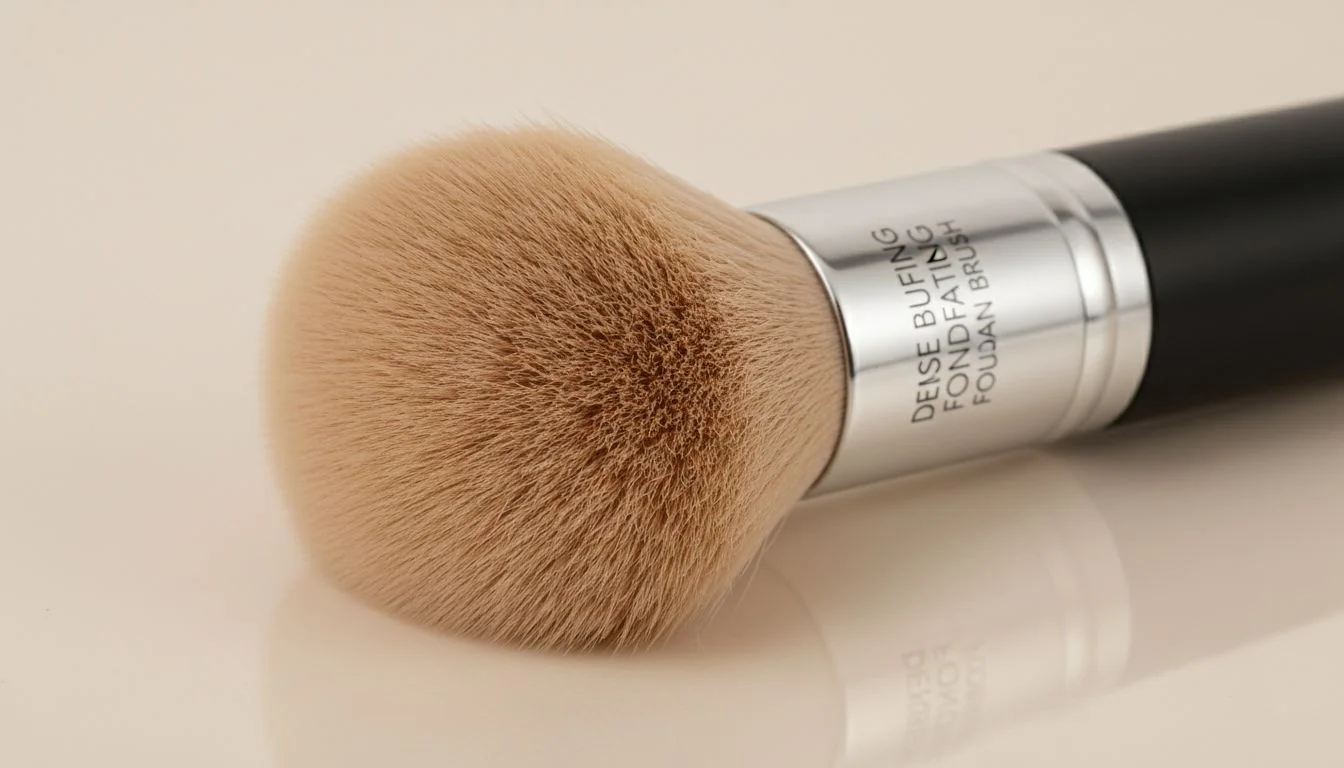


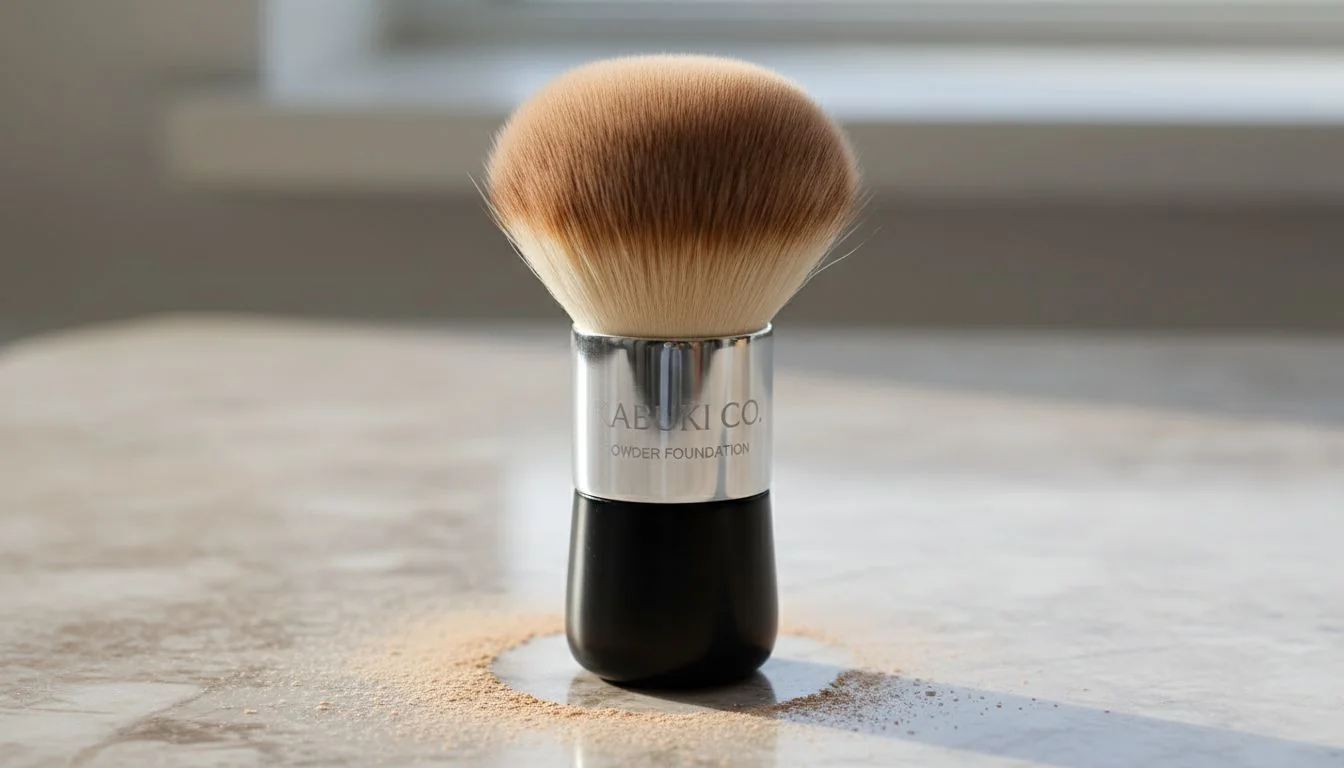
Flat-top kabuki brushes are only suitable for powder foundations.False
While traditional kabukis are for powder, modern flat-top kabukis with dense synthetic bristles are excellent for buffing liquid foundation to an airbrushed finish.
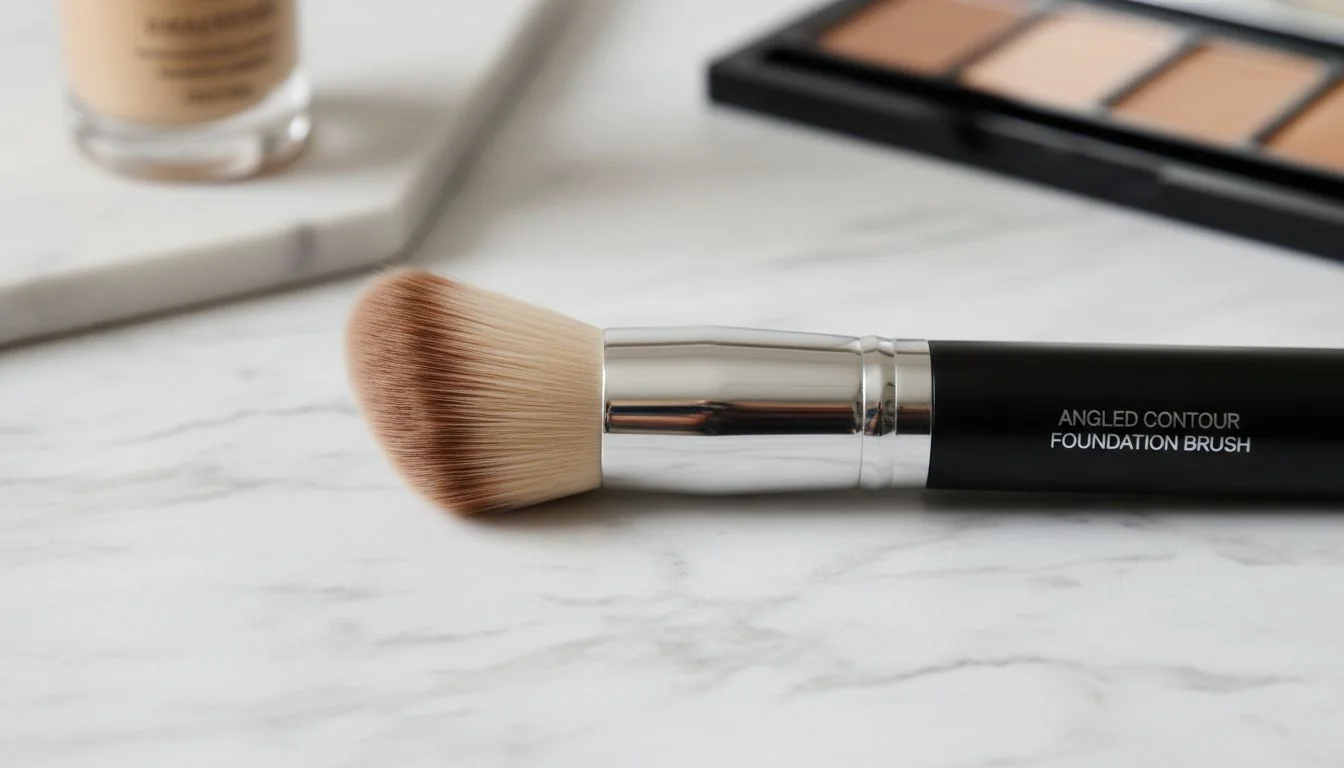
Using an angled brush can help create a more defined contour along the jawline and cheekbones.True
The slanted shape of an angled brush naturally fits the planes of the face, allowing for more controlled and precise application of foundation or contour products.
Fiber Science: Synthetic vs. natural vs. hybrid—how bristle materials change the finish?
Natural or synthetic bristles? This choice seems small but dramatically changes the application. The wrong fiber wastes product and can irritate the skin. Let’s demystify the materials.
Synthetic fibers, like PBT or Taklon, are best for liquids and creams because they are non-porous and don’t absorb product. Natural bristles excel at picking up and diffusing powders. Hybrids aim to offer softness with durability.
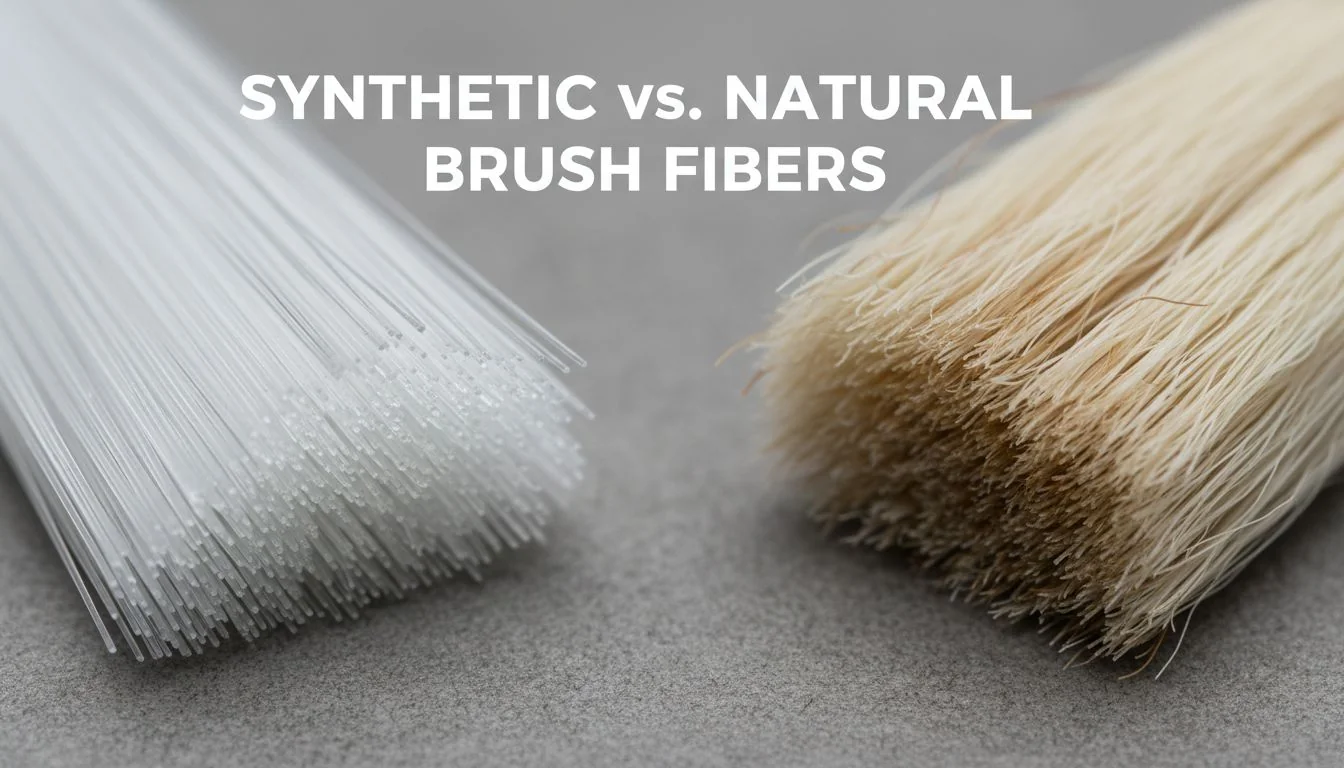
When we specify materials for a mold, we consider factors like durability and chemical resistance. The same logic applies to brush fibers. The material science here is critical for performance. Synthetic fibers have become the industry standard for liquid and cream foundations for a simple reason: they are hydrophobic. They don’t soak up water or oil-based formulas, meaning more product goes on the user’s face and less is wasted in the brush. This also makes them far more hygienic and easier to clean. In my experience, this is a huge selling point. The market data backs this up, with synthetics now holding over 51% of the market share. Natural hairs, like goat, are great for powders because their textured cuticles grip and distribute dry particles beautifully. Hybrids are an interesting innovation, often blending both to get the powder-pickup of natural hair with the smooth application of synthetics.
Fiber Properties at a Glance
| Fiber Type | Best For | Pros | Cons | OEM Notes |
|---|---|---|---|---|
| Synthetic (PBT, Nylon) | Liquids, Creams | Hygienic, durable, no absorption, vegan | Can feel less luxurious | Specify fine deniers (e.g., 0.07mm) for softness |
| Natural (Goat, Squirrel) | Powders | Excellent powder pickup, very soft | Absorbs liquids, harder to clean, potential allergens | Requires gentle cleansing protocols, sourcing ethics can be a concern |
| Hybrid (Duo-Fiber) | Liquids, Creams | Airbrushed finish, buildable | Can be tricky for beginners | Use mixed deniers; soft tips over a stiff base |
Synthetic makeup brushes now account for over half of the market share.True
Market data from 2024 shows synthetic brushes hold approximately 51% of the market, valued at around $1.5 billion, due to their performance with liquid makeup and vegan-friendly appeal.
All synthetic fibers are the same quality.False
There is a wide range in the quality of synthetic fibers. High-end PBT or Taklon fibers are engineered to be extremely soft and fine, mimicking natural hair, while lower-grade nylon can be stiff and prone to streaking.
Motion Matters: Paint, buff, stipple, or sweep—the right technique per brush type?
You have the right brush, but the finish is still wrong. Your application technique5 is the missing piece. Using the wrong motion creates streaks and unevenness.
Paint with flat brushes for coverage. Buff in circles with dome brushes to blur pores. Stipple (tap and swirl) with duo-fiber brushes for an airbrushed look. Sweep powders with a kabuki.
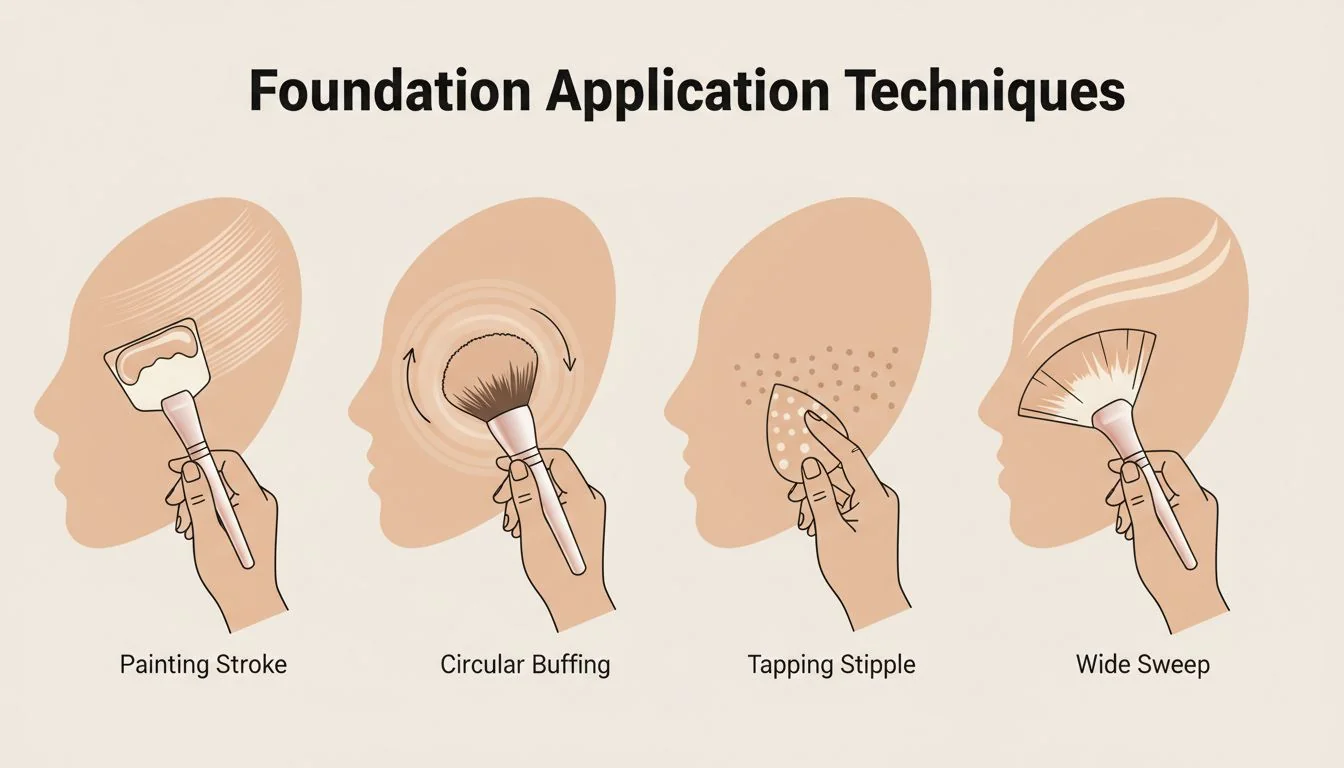
A well-designed tool should feel intuitive, but guiding the user on technique is part of good product development. The motion used is just as important as the brush shape and fiber. When we design a product, we run user trials. For brushes, this means testing application methods. I learned that a brush designed for buffing will cause streaks if used in a painting motion. It’s our job to understand this relationship and communicate it. For example, the "stippling" motion—a gentle tapping—is perfect for building sheer layers without disturbing the makeup underneath. This is achieved with a duo-fiber brush whose long, sparse bristles deposit product while the dense base prevents it from being pushed around. Circular buffing with a dense dome brush is fantastic for a poreless, airbrushed effect because the motion works the product into the skin’s texture.
Matching Motion to Brush and Goal
| Motion | Brush Type | Resulting Finish | Pro-Tip for Designers |
|---|---|---|---|
| Painting/Sweeping | Flat Paddle | Full, even coverage | Use downward strokes to avoid highlighting facial hair. The brush must have enough density to prevent streaking. |
| Circular Buffing | Buffing Dome, Flat-Top Kabuki | Airbrushed, seamless, pore-blurring | The dense, rounded head is key. Test with different densities to find the sweet spot between coverage and blending. |
| Stippling (Tapping) | Stippling (Duo-Fiber) | Sheer, buildable, natural | The magic is in the dual-length fibers. Ensure the tips are soft and polished to avoid irritating the skin. |
| Sweeping | Kabuki, Large Powder Brush | Light, diffused, setting | Best for powders. The goal is to set makeup without moving the liquid base. A fluffy, less dense head works best. |
Stippling is the best technique for achieving full, opaque coverage quickly.False
Stippling is a technique used to build up sheer, light layers of product for a natural, airbrushed finish. For quick, full coverage, painting with a flat brush or buffing with a dense brush is more effective.
You should always buff foundation in circles to get the smoothest finish.True
Circular buffing motions help work the product into the skin, blurring edges, filling pores, and creating a seamless, airbrushed effect that avoids streaks.
OEM Playbook: Spec templates for private label orders?
Ready to manufacture your own brush line? Sourcing can be a nightmare of technical jargon. Misunderstanding specs leads to costly production errors and a subpar product.
For OEM orders, you must specify fiber type (e.g., PBT), loft (bristle height), density, ferrule (the metal part), and handle. These technical specs determine the brush’s performance, quality, and cost.
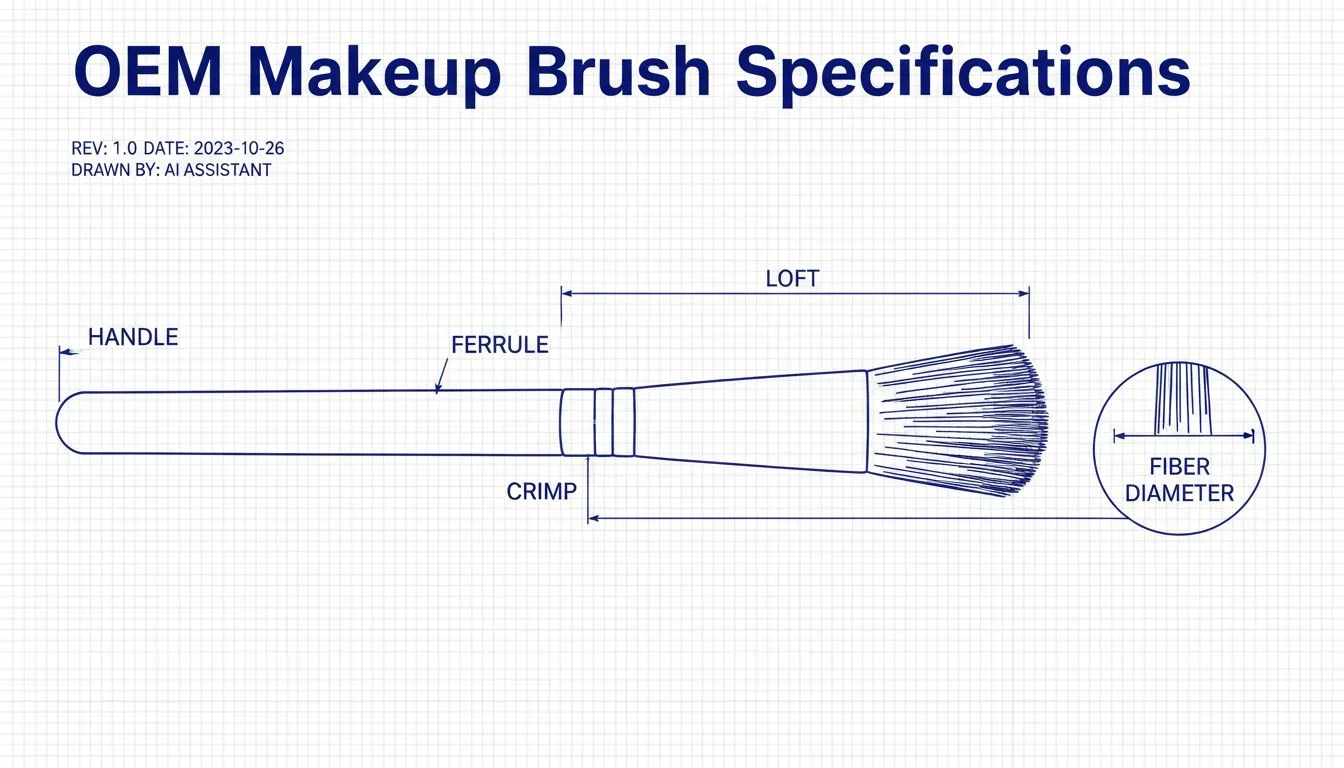
This is where my experience in manufacturing really comes into play. Getting the technical sheet right is everything. For anyone like Jacky looking to source a private label brush line, this is your playbook. You can’t just ask for a "buffing brush." You need to specify the details. For example, a 5% change in pack density can be the difference between a brush that buffs flawlessly and one that leaves streaks. We run "finish trials" using the client’s actual foundation to dial this in. The ferrule—the metal band—is also critical. A double-crimped copper ferrule is more secure and feels more premium than a single-crimped aluminum one. Handle ergonomics matter too; a short, thick handle on a kabuki provides torque for fast buffing, ideal for a retail setting. A long, thin handle offers precision and control, better for studio artists. Nailing these specs is how you build a high-quality product and capitalize on the market’s 6.3% annual growth.
OEM Specification Template
| Component | Specification | Impact on Performance & Cost |
|---|---|---|
| Fiber | Type: PBT/Taklon. Diameter: 0.07mm (soft) – 0.10mm (stiff). Tip: Polished/Tapered. | Finer diameter is softer but more expensive. PBT is best for liquids. |
| Head | Loft (Height): 18-26mm. Density: 55-70%. Cut: Flat, Dome, Angled (10-15°). | Higher density = more coverage. Loft affects flexibility. Cut determines application area. |
| Ferrule | Material: Aluminum (standard) or Copper (premium). Crimp: Single or Double. | Copper is heavier and more durable. Double crimping prevents shedding. |
| Handle | Material: Wood, Bamboo, Plastic, Resin. Length: Short (torque) or Long (reach). | Material choice affects weight, feel, and cost. Ergonomics impact user experience. |
A brush's loft, or bristle height, has no effect on its performance.False
Loft is critical. A shorter loft creates a stiffer, denser brush head for more coverage, while a longer loft provides more flexibility for a lighter, more blended application.
The material of the ferrule, the metal part of the brush, is purely cosmetic.False
Ferrule material (e.g., aluminum vs. copper) and construction (e.g., double crimping) directly impact the brush's durability, weight, balance, and resistance to shedding.
Conclusion
Choosing the right foundation brush means matching its shape, fiber, and motion to your needs. For manufacturers, mastering these technical specs is the key to creating a successful product line.
References
-
Understanding the various types of foundation brushes can help you choose the right one for your makeup needs. ↩
-
Explore the advantages of synthetic fibers, which are crucial for achieving a flawless makeup application. ↩
-
Fiber density plays a crucial role in the performance of makeup brushes; learn how it impacts application. ↩
-
Learn how different brush shapes can impact your foundation application and overall makeup look. ↩
-
Mastering application techniques can significantly improve your makeup results and enhance your skills. ↩

 English
  French
  Spanish
  Italian
  German
  Portuguese
  Russian
  Arabic
  Japanese
  Korean
  Czech
Czech  Polish
  Swedish
  Vietnamese
  Thai
Thai  Indonesian