You see a makeup artist’s kit and wonder what magic lies inside. It’s a confusing mix of brands, and you want to know which ones are truly worth it.
Professionals don’t use just one brand. They mix Japanese fude1 for powders (Hakuhodo, Surratt, Sonia G) and durable synthetics for creams/liquids (Hourglass, MAC, Bobbi Brown, Sigma, Real Techniques). Natural hair excels at powder diffusion; synthetic fibers are best for hygienic, low-shed performance with liquids.
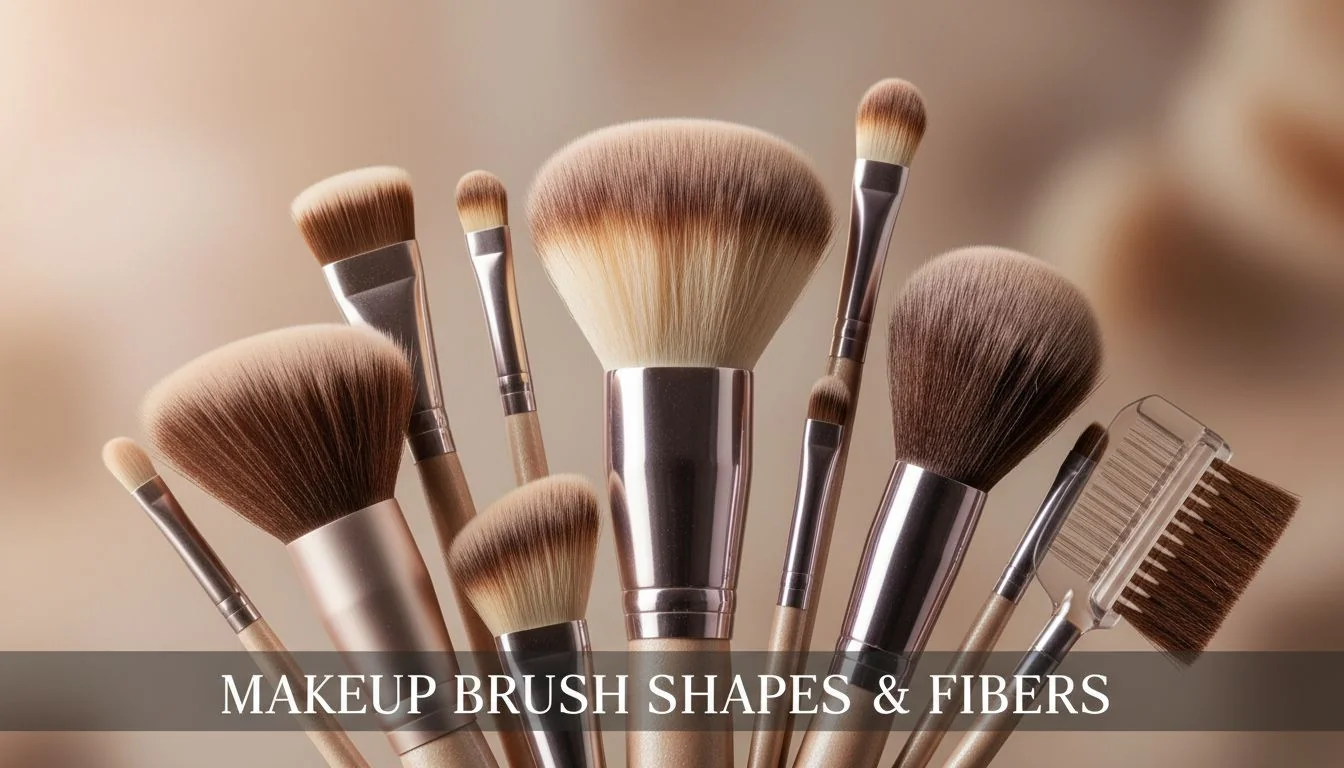
Walking into a store or browsing online for brushes can feel overwhelming. You see luxury brands next to budget-friendly ones, and they all promise a flawless finish. But what do the people who use these tools for a living actually buy? It’s not about loyalty to a single name. It’s about building a team of specialist tools, where each brush has a specific job. I’ve learned in my own career that having the right tool is non-negotiable, whether you’re building a business or a face. Let’s pull back the curtain and see what the pros really use and why.
All professional makeup artists exclusively use brushes made from natural animal hair.False
Most professionals use a mix of natural hair brushes for powders and synthetic brushes for liquids and creams due to performance and hygiene reasons.
The global market for makeup brushes and tools was valued at approximately USD 7.0 billion in 2024.True
Market data indicates significant growth in this sector, driven by professional demand, social commerce, and innovation in synthetic fibers.
Pro Kits, Real Picks: What Brands Do MUAs Actually Reach For?
You want to build a kit like a professional makeup artist (MUA). But the sheer number of brands is confusing, from high-end luxury to affordable workhorses. Here’s what they actually use.
Pros don’t stick to one brand. They curate a mix, choosing artisanal Japanese fude brushes like Hakuhodo or Sonia G for powders, and reliable synthetic workhorses like MAC, Sigma, or Hourglass for creams and liquids.
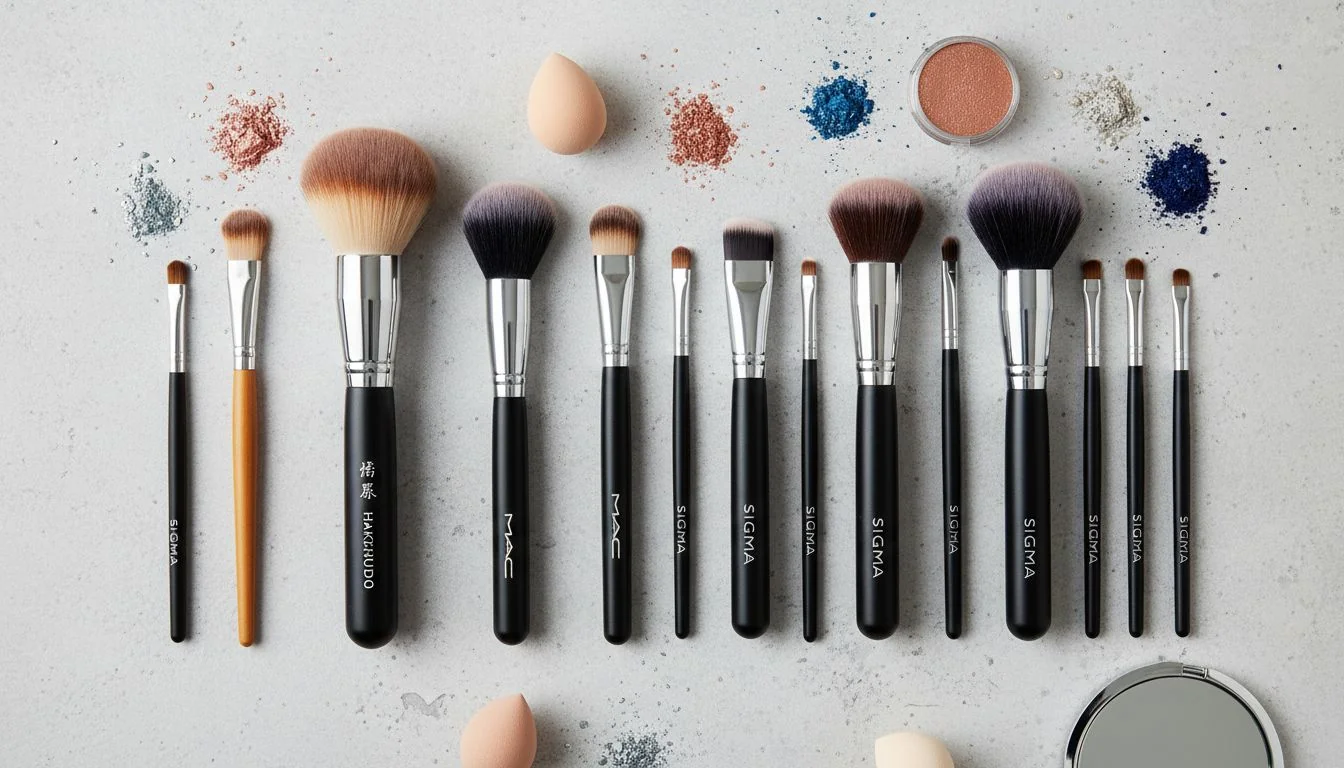
When I first started building my own business, I learned quickly that investing in the right tools saved me time and money. It’s the same for makeup artists. Their kits are not built on brand names, but on performance. They break their tools down into two main categories: the artists and the workhorses. One is for delicate, nuanced work, while the other is for reliable, heavy-duty application. Pros will tell you that the shape, density, and fiber type are more important than the logo on the handle. They need tools that hold their shape, don’t shed, and feel balanced in the hand during long studio sessions. This practical approach is why you’ll see a $100+ Japanese brush right next to a $10 Real Techniques brush in the same kit.
The Two Pillars of a Pro Kit
| Category | Primary Use | Key Characteristics | Example Brands |
|---|---|---|---|
| Japanese Fude | Powders (blush, eyeshadow, setting) | Handcrafted, natural hair, exceptional blending, soft diffusion | Hakuhodo, Surratt, Wayne Goss, Sonia G |
| Synthetic Workhorses | Liquids & Creams (foundation, concealer) | Durable, easy to clean, no product absorption, hygienic | MAC, Hourglass, Sigma, Bobbi Brown, Real Techniques |
MAC brushes are often cited by professionals for their decade-plus durability.True
Many long-time makeup artists report that their MAC brushes, particularly older, well-maintained ones, have lasted for over 10 years, making them a staple for longevity.
Real Techniques brushes are considered a luxury, high-end brand.False
Real Techniques is widely known as a high-quality, budget-friendly 'workhorse' brand that offers excellent performance and value, making it a favorite for both pros and consumers.
Brush Science: What Hair Types, Ferrules, and Ergonomics Affect Performance?
You see two brushes that look almost identical, but one costs five times more. You’re paying for the hidden science: the hair, the metal, and the handle design.
Natural hair (goat, squirrel) grabs and diffuses powder perfectly. Synthetic fibers (taklon, nylon) don’t absorb liquids, making them ideal for creams and hygiene. A heavy brass ferrule and balanced handle prevent fatigue and add control.
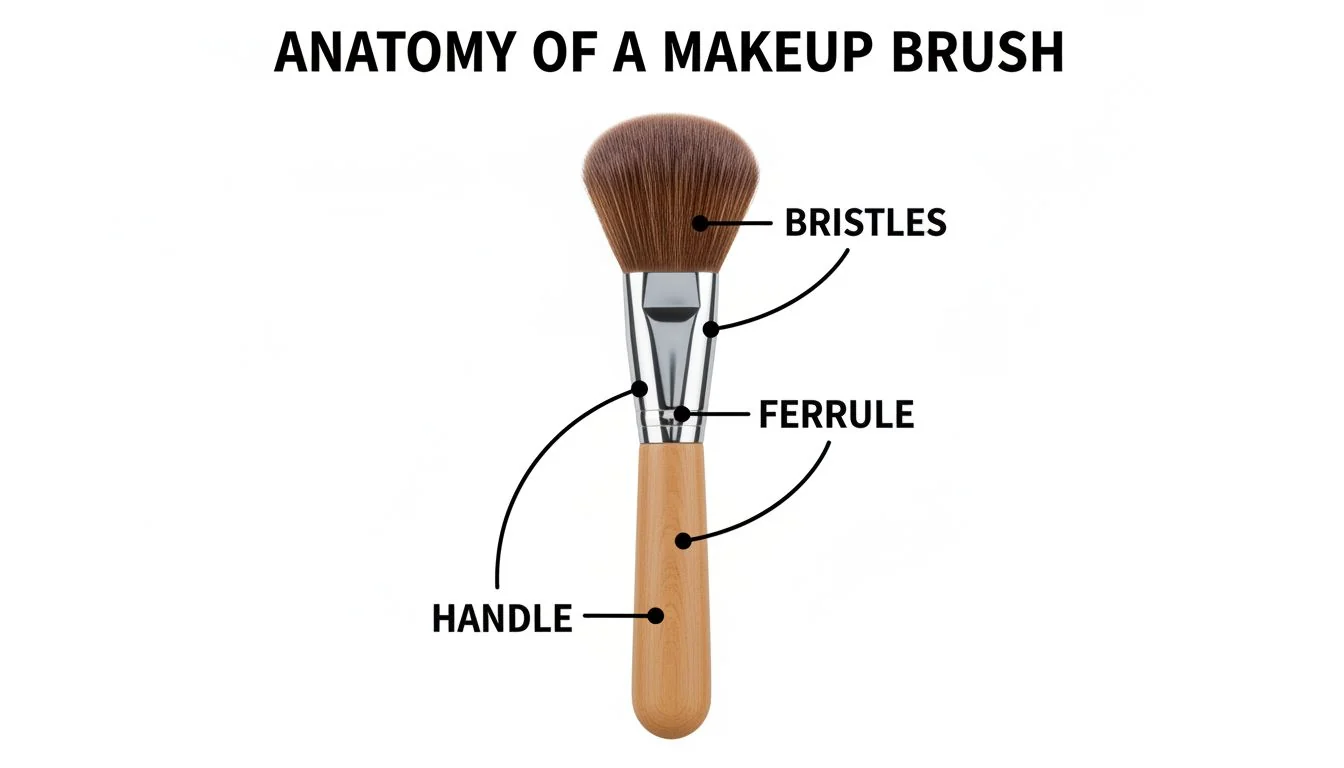
Understanding a brush is like understanding any precision tool. It’s not just one part, but how all the parts work together. I’ve always believed that quality is in the details. A cheap tool might work once, but a well-made one performs consistently for years. For brushes, this comes down to three things. First is the fiber—is it designed to pick up powder or push around liquid? Second is the ferrule, the metal part that holds it all together. A cheap one will rust or loosen, and the brush will fall apart. Third is the handle. A poorly balanced handle can cause fatigue in your hand over a long day. Pros know this, and they choose brushes where every element is designed for performance and longevity.
Breaking Down Brush Components
| Component | High-Performance Choice | Low-Performance Choice | Why It Matters |
|---|---|---|---|
| Fibers (Hair) | Natural (Powder), Synthetic (Cream) | Poorly cut, shedding fibers | Determines product pickup, application, and finish. |
| Ferrule (Metal) | Seamless Brass or Nickel-Plated | Glued Aluminum | Resists rust, holds bristles securely, adds balance. |
| Handle | Weighted, Ergonomic Wood/Resin | Lightweight Plastic | Provides balance, control, and reduces hand fatigue. |
Brass ferrules are superior to aluminum because they are more resistant to corrosion and denting.True
Brass is a heavier, more durable alloy that holds its shape and resists damage from water and cleaning solutions better than the lighter, softer aluminum.
Synthetic brushes absorb more product than natural hair brushes.False
Synthetic fibers are non-porous, meaning they don't absorb liquids or creams. Natural hair has a cuticle structure that can absorb some product.
How Do You Build Your Pro Kit by Job: Studio, Bridal, and Travel-Ready Sets?
You need a set of brushes, but a one-size-fits-all kit won’t cut it for professional work. The job dictates the tools, so you need a modular approach to be prepared.
For studio work, mix large natural powder brushes with various synthetics. For bridal, prioritize hygienic, fast-drying synthetics for multi-client sanitation. For travel, pack compact, multi-use brushes2 like an angled foundation brush and a tapered powder brush.

Efficiency is everything when you’re on the job. You can’t carry every tool you own to every gig. I learned to pack my toolkit based on the specific project I was working on that day. Makeup artists do the same. A studio shoot might require a wide range of artistic brushes for detailed effects. A bridal appointment with multiple bridesmaids demands tools that can be cleaned and sanitized quickly between clients, making synthetics the star player. And when you’re flying to a location, every inch of space in your luggage counts, so multi-functional tools are key. A lean but effective kit for most jobs can be built with just 8 to 12 core brushes, as long as you choose them wisely.
Sample Pro Brush Kits
| Job Type | Key Focus | Essential Brushes |
|---|---|---|
| Studio/Commercial | Versatility & Artistry | Large powder, multiple base/cream synthetics, precision eye blenders, detail liner. |
| Bridal/Multi-Client | Hygiene & Speed | All-synthetic kit for creams/liquids, dual-ended tools, spot-clean friendly brushes. |
| Travel/On-Location | Compact & Multipurpose | Angled foundation, tapered powder/highlighter, small eye trio (shader, blender, liner), sponge. |
A complete professional brush kit must contain at least 30 brushes.False
Many professionals work effectively with a core kit of 8-12 high-quality, versatile brushes, adding specialty tools only as needed for specific jobs.
For multi-client jobs like bridal makeup, synthetic brushes are preferred for their hygienic properties.True
Synthetic brushes do not absorb product, can be quickly spot-cleaned and sanitized between clients, and dry faster than natural hair, making them ideal for maintaining hygiene standards.
Proof in Numbers: What Durability, Shedding, and Market Trends Can You Trust?
You want to invest in brushes that will last. But how can you judge quality beyond a brand’s marketing claims? The proof is in the numbers and real-world performance tests.
The makeup brush market3 is projected to hit $2.7B by 2033, with growth driven by pro-grade synthetics. True durability is measured by low shedding after 10+ washes, no ferrule looseness, and bristles that don’t splay.

In my industry, we rely on data and performance metrics, not just feelings. The same logic applies to makeup tools. The market is growing fast, with a projected compound annual growth rate (CAGR) of around 5.1%. This growth isn’t just from more people buying brushes; it’s from a demand for better quality. The rise of vegan and cruelty-free movements has pushed manufacturers to create synthetic fibers that mimic the performance of natural hair. When I’m evaluating a tool, I look for signs of longevity. Does it hold up to repeated use and cleaning? For brushes, this means checking for shedding, seeing if the ferrule wiggles, and making sure the bristles keep their original shape. Brands like Hourglass and Sigma are known for their durability, and some pros have used the same MAC brushes for over a decade. That’s a real return on investment.
How to Test Brush Quality
| Durability Metric | What to Look For | Why It Matters |
|---|---|---|
| Shedding | Fewer than 3-5 bristles lost after 10 deep washes. | Indicates the bristles are securely crimped in the ferrule. |
| Ferrule Looseness | No wiggling or rattling when shaken. | A loose ferrule means the glue is failing and the brush will fall apart. |
| Splaying | Bristles return to their original shape after washing and drying. | Shape fidelity is crucial for precise application. |
The makeup brush sub-market is projected to reach nearly $2.7 billion by 2033.True
Market analysis reports project a compound annual growth rate (CAGR) of around 5.1% for the makeup brush market, driven by e-commerce, tutorials, and fiber innovation.
Brushes should be replaced every six months, regardless of quality.False
With proper care, cleaning, and storage, high-quality professional brushes can last for many years, with some pros reporting over a decade of use from premium brands.
Conclusion
Building a pro brush kit means mixing Japanese fude for powders with durable synthetics for creams. Focus on the job, brush science, and durability to create a collection that performs.
References
-
Explore the unique craftsmanship and performance of Japanese fude brushes, favored by professionals for their exceptional quality. ↩
-
Find out how multi-use brushes can save space and enhance efficiency in your makeup routine. ↩
-
Discover the growth and innovation in the makeup brush market, driven by professional demand and synthetic fiber advancements. ↩

 English
  French
  Spanish
  Italian
  German
  Portuguese
  Russian
  Arabic
  Japanese
  Korean
  Czech
Czech  Polish
  Swedish
  Vietnamese
  Thai
Thai  Indonesian