Achieving a flawless foundation finish is tough. Streaks and uneven patches can be frustrating. A buffing brush is the tool designed to solve this, giving you a seamless, airbrushed look.
A buffing brush is a dense, soft face brush. You use it in circular motions to blend liquid, cream, and powder foundations. It smooths texture and diffuses edges for a natural, streak-free, airbrushed finish.
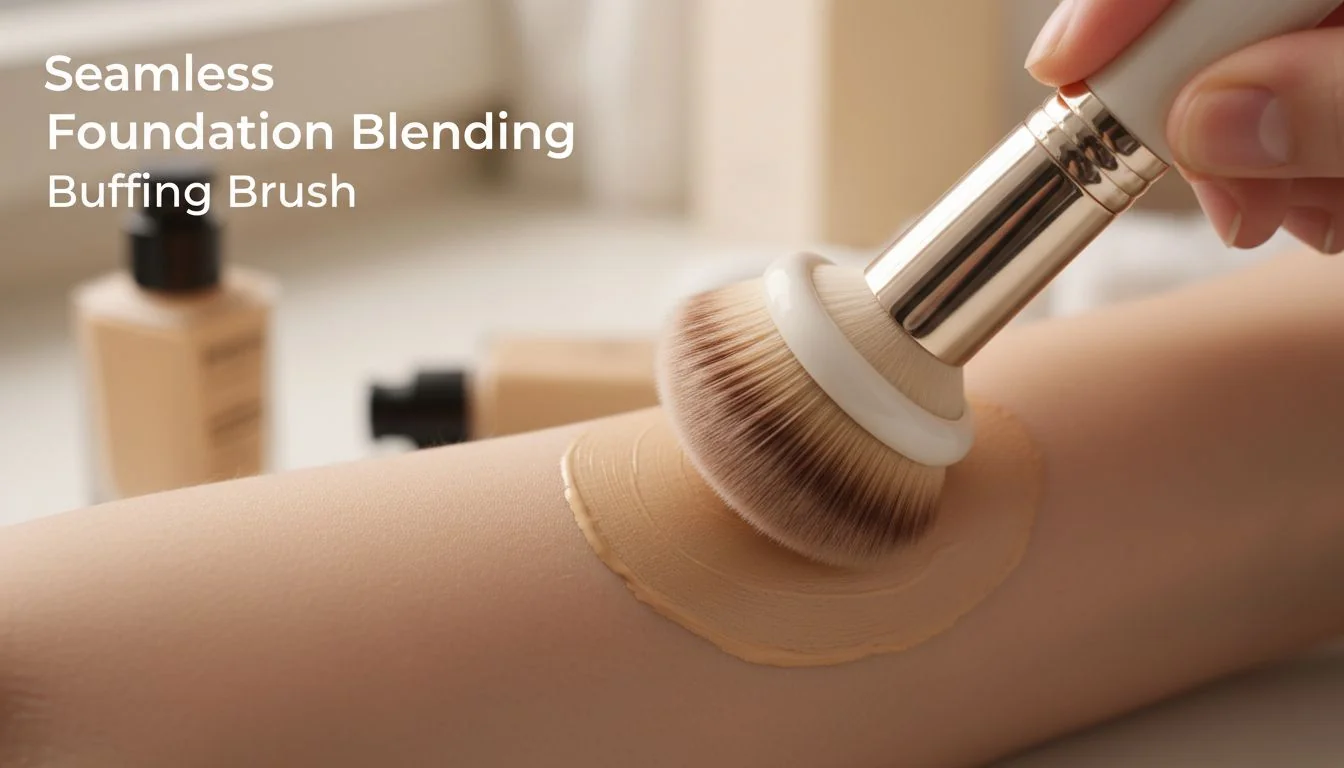
So, a buffing brush blends makeup. Simple enough. But as someone who has spent his life in manufacturing, I know the real magic is in the design details. The shape, the density, and the materials all work together to create the final effect. Understanding these elements is key to seeing why this tool is so effective, whether you’re using it or designing it. Let’s break down how these choices change everything.
Buffing brushes are only effective for applying powder foundations.False
Buffing brushes are highly effective for liquid and cream foundations as well, with dense synthetic bristles designed to blend these formulas without absorbing too much product.
The density of a buffing brush's bristles directly impacts the level of coverage it provides.True
Denser bristles pick up and apply more product, leading to fuller coverage. Looser bristles provide a lighter, more diffused application.
Coverage Control: How Bristle Density and Head Shape Change Your Finish?
You want controlled coverage, from sheer to full. But using the wrong brush can lead to a heavy, unnatural look. The brush’s density and shape are designed to give you precise control.
Dense, rounded heads give medium-to-full coverage with liquids and creams. Looser, larger heads are better for a light powder application. The head’s shape also helps, with domes reaching facial contours better than flat tops.
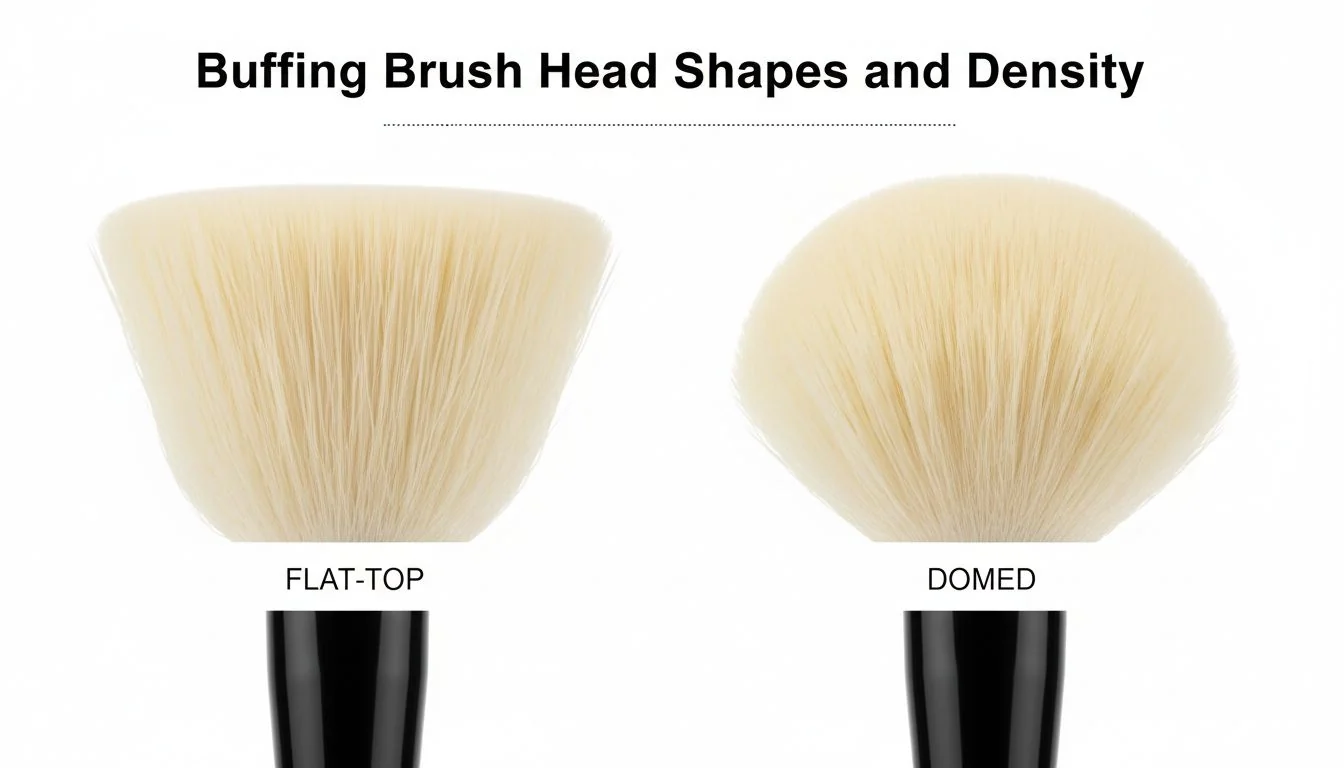
When I look at a tool, I see its design specifications. For a buffing brush, two specs are critical: Bristle Density1 and head geometry. These are not just aesthetic choices; they are functional decisions that dictate the tool’s performance and the final finish on the skin.
Bristle Density: The Coverage Engine
Think of bristle density as the engine for coverage. The more bristles packed tightly into the ferrule, the less product gets trapped deep inside the brush. This means more foundation is transferred and blended onto your skin, creating fuller coverage. A less dense brush allows for a lighter, more airy application, which is ideal for setting powders or bronzer. From a manufacturing standpoint, controlling density is how you can create a product line with distinct SKUs for different coverage tiers.
Head Shape: The Precision Tool
The shape of the brush head determines its precision. A flat-top brush is great for buffing on flat planes like the cheeks and forehead. However, a domed or rounded head is more versatile. It mimics the natural 3D contours of the face, making it much easier to blend foundation around the nose and under the eyes. This Ergonomic Design2 prevents blotchiness in hard-to-reach areas.
Here’s a simple breakdown for product designers:
| Brush Spec | Best For | Resulting Finish |
|---|---|---|
| High Density, Domed | Liquids, Creams | Medium-to-Full, Seamless |
| High Density, Flat | Liquids, Powders | Full, Airbrushed (on flat areas) |
| Lower Density, Large | Powders, Bronzers | Sheer, Diffused |
A flat-top buffing brush is the best shape for all areas of the face.False
While great for flat areas like the forehead and cheeks, a flat-top brush can be less precise around the nose and under the eyes. A domed head offers better maneuverability in these contoured areas.
You can use a single buffing brush for both light and full coverage by adjusting your technique.True
By using a lighter touch and less product, a dense buffing brush can achieve a sheerer finish. Applying more product with more pressure will build fuller coverage.
Liquid vs. Powder: When a Buffing Brush Outperforms Sponges and Kabukis?
Sponges, kabukis, buffing brushes—it’s hard to know which to use. Choosing the wrong tool can waste product or give a poor finish. A buffing brush is a versatile workhorse that excels with both liquids and powders.
For liquids, a buffing brush blends without absorbing too much product like a sponge can. For powders, its dense bristles press product into the skin for better adherence than a fluffy kabuki, giving more coverage.
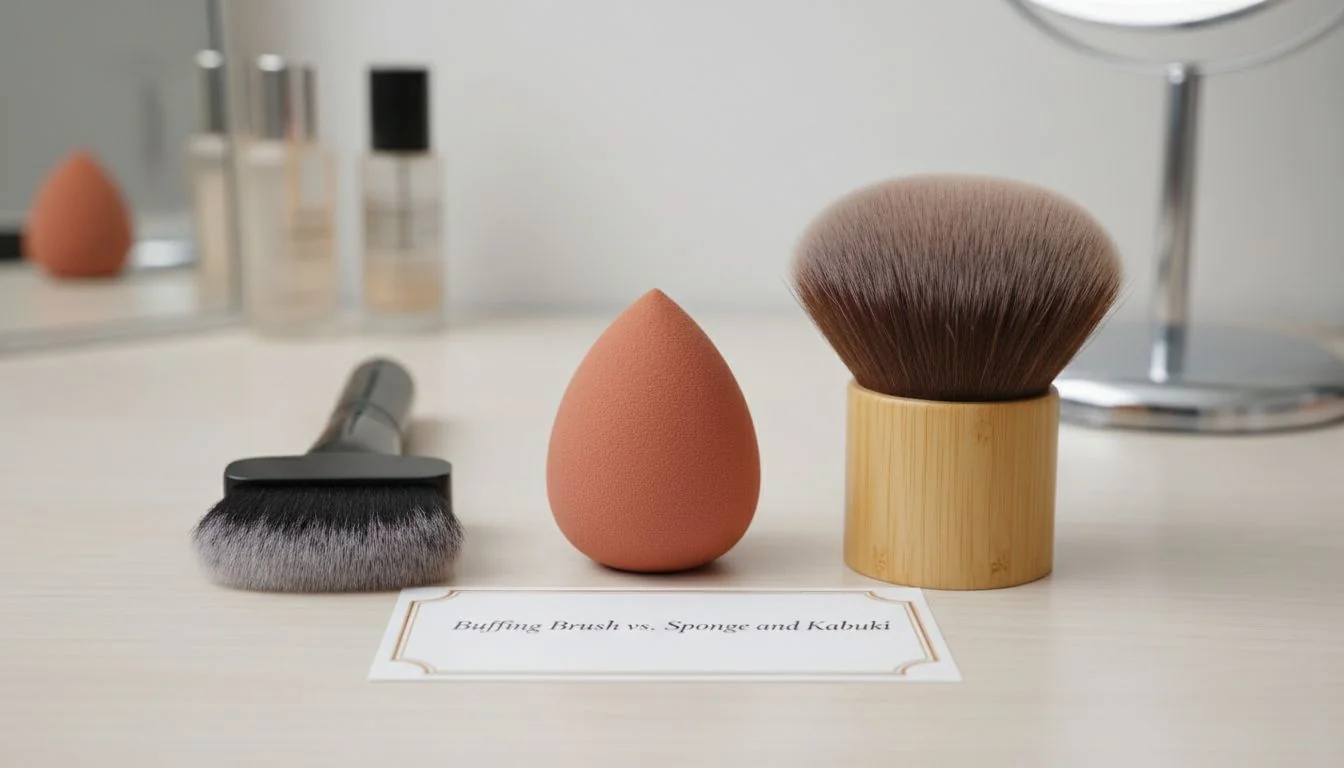
In manufacturing, you choose a specific tool for a specific job. The same is true for makeup application. A buffing brush isn’t always the only answer, but it has key advantages over other popular tools like sponges and kabuki brushes, especially when you need control and efficiency.
Buffing Brush vs. Sponges
Sponges are great for a dewy, skin-like finish, especially when used damp. However, their porous nature means they absorb a significant amount of liquid foundation. From my perspective, this is product waste. A dense synthetic buffing brush, on the other hand, is non-porous. It picks up product and lays it on the skin, not in the tool. This gives you more coverage with less product, which is simply a more efficient process.
Buffing Brush vs. Kabuki Brushes
Kabuki brushes are typically larger, fluffier, and less dense than buffing brushes. I think of them as finishing tools. They are perfect for a quick, light dusting of setting powder or bronzer over a large area. A buffing brush is more of a construction tool. Its shorter, denser bristles give you more control to build coverage and really work the product into the skin, whether it’s a powder or a liquid foundation.
Here’s how they stack up:
| Tool | Best Product | Primary Action | Coverage |
|---|---|---|---|
| Buffing Brush | Liquid, Cream, Powder | Blend & Build | Medium to Full |
| Sponge | Liquid, Cream | Press & Bounce | Sheer to Medium |
| Kabuki Brush | Powder | Dust & Sweep | Sheer to Light |
Makeup sponges always provide more coverage than buffing brushes.False
Sponges, especially when damp, tend to sheer out foundation and absorb product, often resulting in lighter coverage than a dense buffing brush, which is designed to build coverage.
A kabuki brush is generally better for a fast, all-over application of finishing powder than a buffing brush.True
The large, less-dense head of a kabuki brush is designed to quickly and lightly dust powder over broad areas of the face, making it ideal for setting makeup.
Technique That Matters: Circular Buffing for Seamless, Streak-Free Skin?
Even with the best brush, you can still get a streaky finish. It’s frustrating when the tool doesn’t perform as expected. The secret is in the technique: small, circular motions make all the difference.
Start with a small amount of product. Use light, circular motions to blend and diffuse, especially on the cheeks and jaw. Use short strokes around the nose and eyes. A clean brush can fix over-applied areas.
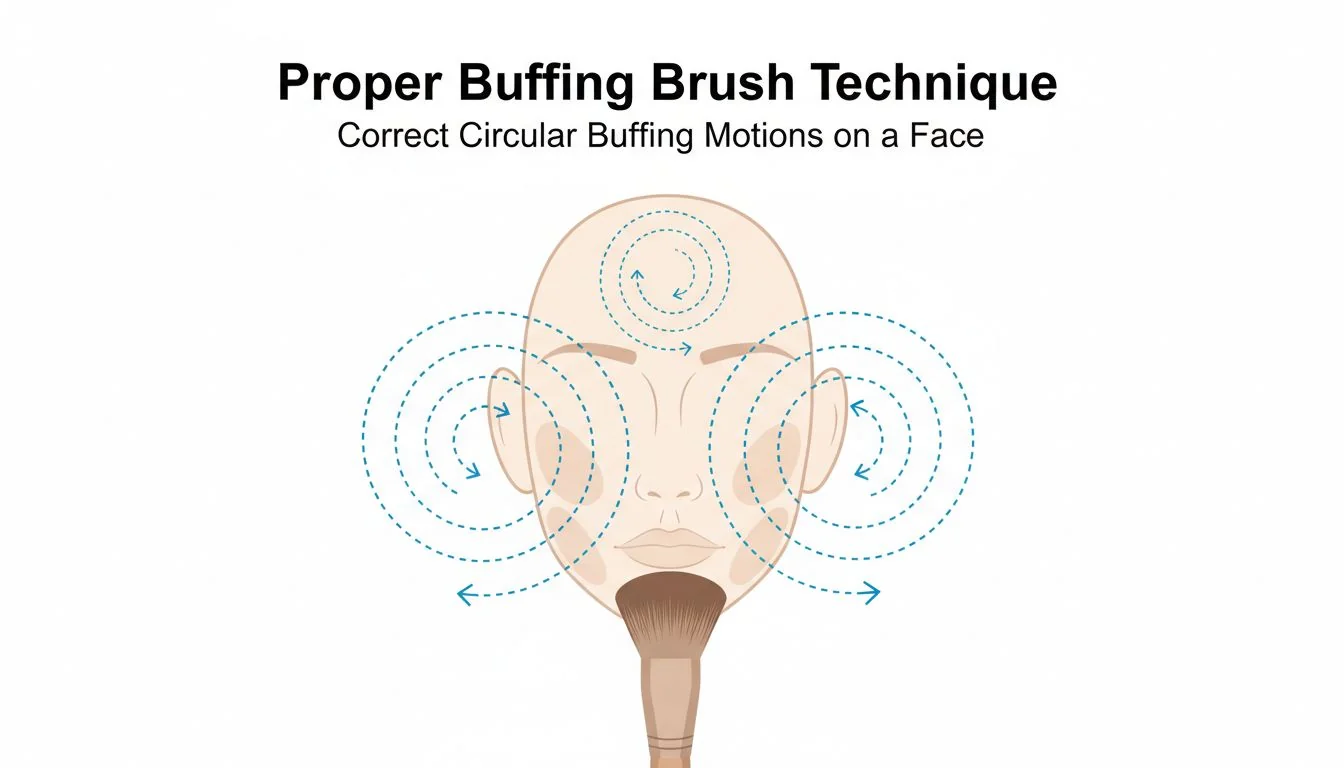
A well-designed tool is only half the equation. Proper usage is what unlocks its full potential. I’ve seen this in machine shops my whole life, and it’s just as true with makeup brushes. The "buffing" technique is simple but precise, and it’s what prevents streaks and creates that desired airbrushed look.
The Core Motion: Small Circles
The primary technique is buffing in small, overlapping circles. Why circles? Unlike back-and-forth strokes that can create visible lines, circular motions blend the product in every direction at once. This diffuses the edges of the foundation seamlessly into your skin. You should use light to medium pressure. Pushing too hard will just move the product around and can cause streaking by itself.
Building, Not Painting
Always start with less product than you think you need. It is much easier to add more than to take it away. I recommend applying a few dots of foundation to your face, not directly onto the brush. Then, use the brush to work from the center of your face outward. This ensures the most product is placed where you typically need more coverage (like around the nose and on the cheeks) and fades out naturally toward the hairline and jaw.
The Clean Brush Trick
Here’s a pro tip I’ve picked up that reminds me of finishing a part. Keep a second, clean buffing brush handy. If you’ve applied too much bronzer or your contour looks too harsh, you can use the clean brush to go over the area. The clean, dense bristles will pick up and sheer out the excess pigment without disturbing the foundation underneath. It’s like a magic eraser for your face.
You should apply foundation directly to the buffing brush for the best results.False
Applying foundation directly to the face in small dots and then blending with the brush provides more even distribution and prevents the brush from soaking up too much product at once.
Using a clean buffing brush can help blend away harsh lines from contour or blush.True
A clean, dense brush can diffuse and soften over-applied powder or cream products by gently blending them into the base makeup without adding more pigment.
Spec’ing Your OEM Buffing Brush: Fibers, Loft, Ferrule, and Cut That Win Reviews?
You’re developing a new brush line for your brand. The competition is fierce, and a poorly designed brush will fail. Focusing on the right manufacturing specifications is the key to a 5-star product.
For a winning OEM brush, specify high-quality Synthetic Fibers3 for versatility. Use a moderate loft with high density for controlled coverage. A domed cut improves contouring, and a durable aluminum ferrule prevents corrosion and shedding.
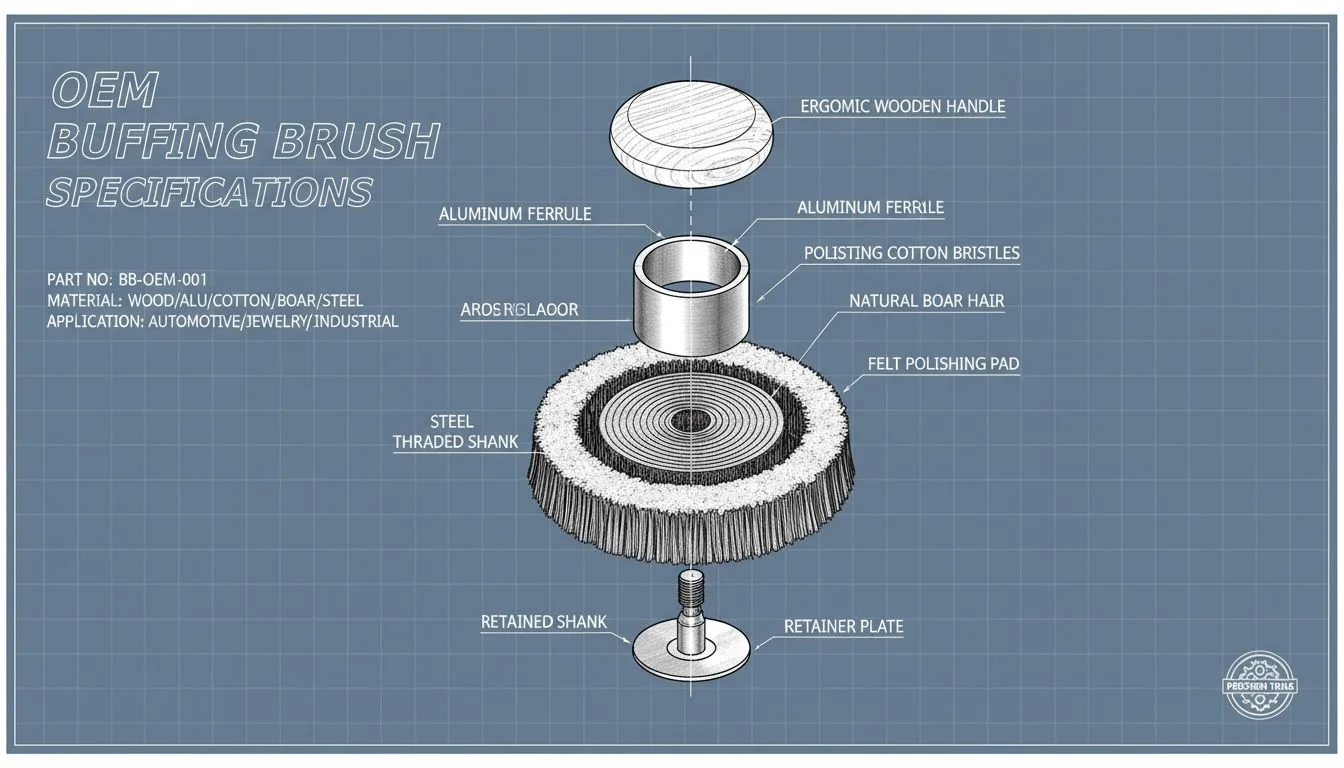
This is where my background in manufacturing and design gets really interesting. For product designers like Jacky, creating a successful product means getting the specifications right from the start. A buffing brush is no different from any other molded or assembled consumer good. The materials and design choices directly impact user experience, durability, and ultimately, customer reviews and sales.
Fibers: The Modern Standard
The industry has moved to synthetic fibers, and for good reason. High-grade synthetics (often marketed as "vegan" or with brand names like UltraPlush) are superior for buffing brushes. They are less porous than natural hair, so they don’t absorb liquid or cream products. They are also more durable, easier to clean, and cruelty-free. For any OEM buyer, specifying a high-quality synthetic is a non-negotiable for performance and market appeal.
Design Geometry: Loft, Density, and Cut
These three factors work together to define performance.
- Loft: This is the visible length of the bristles. For a buffing brush, a moderate loft provides the right balance of flexibility and control.
- Density: This is the most critical spec for performance. High packing density is essential for buffing liquids and achieving full coverage.
- Cut: A rounded dome cut is the most versatile, allowing the brush to hug facial contours for a perfect blend.
Construction: Ferrule and Handle
Don’t overlook the basic construction. The ferrule—the metal part that connects the head to the handle—should be made of a corrosion-resistant material like aluminum and be double-crimped to prevent shedding. The handle should be ergonomic, with a weight and shape that feels balanced and stable during the circular buffing motions.
| Component | Recommended Specification | Rationale |
|---|---|---|
| Fibers | High-Quality Synthetic (e.g., Taklon) | Durability, hygiene, performance with liquids/creams |
| Density | High | Provides fuller coverage, prevents product absorption |
| Cut | Domed/Rounded | Follows facial contours for seamless blending |
| Ferrule | Double-Crimped Aluminum | Prevents shedding, resists corrosion |
| Handle | Ergonomic, Weighted | Provides stability and control during use |
Natural animal hair is the best material for buffing brush bristles.False
Modern synthetic fibers are now the standard for buffing brushes as they are non-porous (better for liquids), more durable, easier to clean, and cruelty-free.
The ferrule's quality is important for a brush's longevity and to prevent shedding.True
A well-constructed, double-crimped ferrule securely holds the bristles in place, preventing them from falling out during application and washing, which is a common complaint with low-quality brushes.
Conclusion
A buffing brush is a key tool for a flawless finish. Its effectiveness comes from smart design, the right product pairing, and proper Circular Buffing Technique4.
References
-
Understanding bristle density can help you choose the right brush for your desired coverage and finish. ↩
-
An ergonomic design enhances comfort and control during application, making it easier to achieve a flawless finish. ↩
-
Exploring the benefits of synthetic fibers can help you understand their advantages over natural hair in makeup brushes. ↩
-
Mastering the circular buffing technique can lead to a seamless, streak-free finish in your makeup. ↩

 English
  French
  Spanish
  Italian
  German
  Portuguese
  Russian
  Arabic
  Japanese
  Korean
  Czech
Czech  Polish
  Swedish
  Vietnamese
  Thai
Thai  Indonesian