Choosing between a sponge and a brush feels confusing. You want a flawless finish, but the wrong tool can cause caking, breakouts, or waste product. Let’s fix that.
Use a brush for oily or acne-prone skin1 to build controlled coverage and avoid added moisture. Use a damp sponge for dry or textured skin to diffuse and hydrate water-based liquids. Clean tools every 7–10 days to reduce bacteria that can irritate skin and cause breakouts.
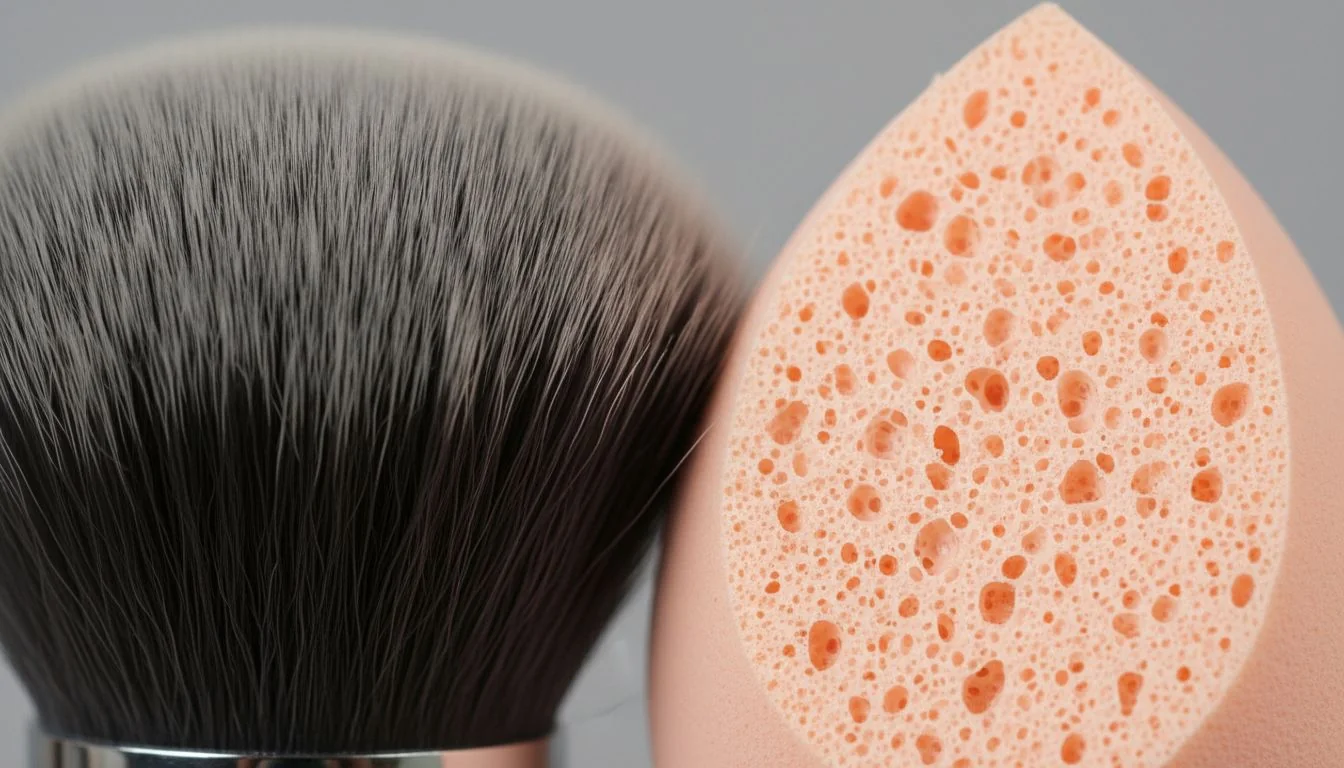
The debate isn’t just about personal preference. It’s about chemistry, skin science, and getting predictable results. As someone who has spent years on the factory floor developing brushes, I can tell you that the right tool is a non-negotiable part of a high-performance makeup routine. It’s the key to unlocking the best finish from your foundation. Let’s break down exactly which tool you need and why.
Using a dirty makeup sponge can cause staph infections.True
The American Academy of Dermatology warns that uncleaned tools can harbor harmful bacteria, including Staphylococcus, which can lead to serious skin infections.
Natural hair brushes are always better than synthetic ones for foundation.False
Synthetic brushes are superior for liquid and cream products as they are less porous, absorb less product, are easier to clean, and are cruelty-free. Natural hairs are better suited for powders.
Skin-Type Matchmaker: Brush or Sponge for Oily, Dry, Sensitive, and Acne-Prone Skin?
Your skin has unique needs. Using a tool that works against your skin type can highlight texture, add unwanted shine, or cause irritation. Let’s find your perfect match.
Oily and acne-prone skin benefit from a synthetic brush for controlled, hygienic application. Dry and textured skin pair best with a damp sponge for a hydrated, diffused finish. For sensitive skin2, an ultra-soft, clean brush is key to minimizing friction and irritation.
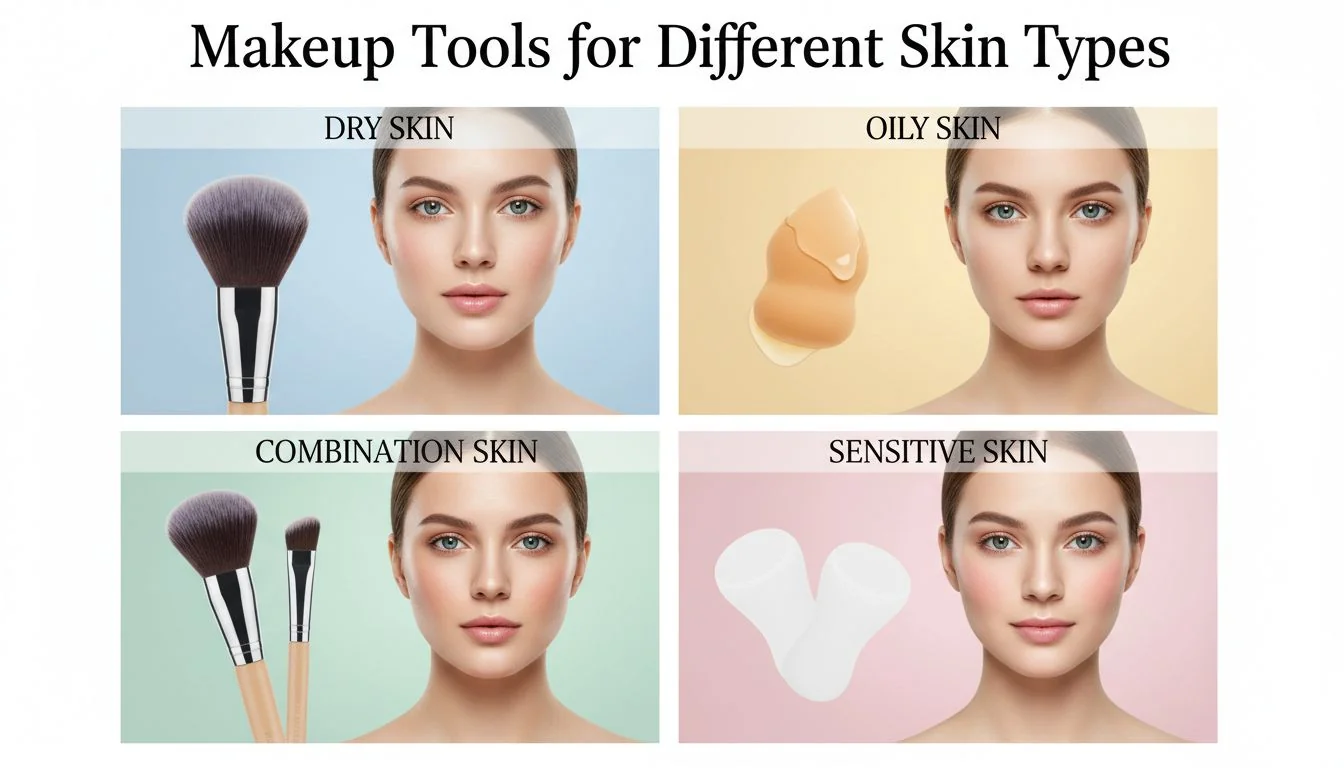
Choosing the right applicator is the first step to a flawless base. It’s not about which tool is "better" overall, but which is better for you. Here’s a quick decision guide based on my experience helping brands develop tools for specific customer needs.
Your Skin-Type Decision Card
-
- Tool: Dense Synthetic Brush (e.g., Kabuki).
- Why: It applies foundation without adding extra moisture from a damp sponge. This gives you more control over coverage and shine.
- Pro Tip: Press and buff in thin layers to build coverage that lasts.
-
For Dry or Textured Skin:
- Tool: Damp makeup sponge4.
- Why: The moisture helps blend foundation seamlessly and adds a touch of hydration. The bouncing motion diffuses product, preventing it from catching on dry patches or texture.
- Pro Tip: Use with water-based foundations for the best blend.
-
For Sensitive Skin:
- Tool: Ultra-Soft Synthetic Brush.
- Why: High-quality, fine-tipped synthetic fibers reduce friction and micro-irritation. Sponges can be too porous and harder to keep perfectly clean, risking irritation from bacteria.
- Pro Tip for Brands: When sourcing, specify synthetic fibers with a diameter of 0.07–0.10 mm and ultra-fine tapered tips. My factory tests show this significantly reduces irritation risk.
-
For Acne-Prone Skin:
- Tool: Synthetic Brush (cleaned meticulously).
- Why: Brushes are far easier to deep-clean than porous sponges, reducing the risk of transferring acne-causing bacteria with each use.
- Pro Tip: Dedicate a specific brush for foundation and clean it every 7 days, without fail.
You should always use a damp sponge for foundation.False
A damp sponge should not be used with oil- or silicone-based foundations, as water and oil repel each other, leading to a patchy application.
Ultra-soft synthetic brushes can be better for sensitive skin than some sponges.True
High-quality synthetic brushes with fine, tapered tips minimize physical friction. A dirty or low-quality sponge can be more abrasive and harbor more irritants.
Finish vs Formula: How Coverage Goals and Foundation Chemistry Decide Your Tool?
You bought a full-coverage foundation but it looks sheer. Or your skin tint disappears into your sponge. The problem isn’t the makeup, it’s the tool’s interaction with it.
Brushes offer precision and buildable coverage, absorbing minimal product. They are ideal for full-coverage looks. Sponges provide a sheer, skin-like finish by absorbing excess product. They work best for natural looks but are inefficient with thin formulas. Match your tool to your desired finish.

The finish you get depends on two things: how much product the tool absorbs and how it interacts with the foundation’s formula. In my OEM sampling work, we run tests for batch-to-batch consistency. A dense synthetic brush delivers a much more repeatable amount of product than a porous sponge. The sponge inevitably "builds down" the coverage by soaking up liquid, which is great for a natural look but wastes product if you want full coverage. This is why community feedback often says brushes give more coverage. It’s not just perception; it’s physics. Also, consider the foundation’s base. Water and oil don’t mix. Using a damp sponge with an oil-based foundation is a recipe for a streaky, separated mess.
Tool & Formula Pairing Guide
| Feature | Dense Synthetic Brush | Makeup Sponge |
|---|---|---|
| Coverage | Medium to Full | Sheer to Medium |
| Finish | Airbrushed, Polished | Natural, Skin-like, Dewy |
| product absorption5 | Minimal | High (absorbs excess) |
| Best For Formulas | Liquids, Creams, Powders | Water-based Liquids, Creams |
| Avoid With | – | Oil/Silicone-based Foundations (if damp) |
| Technique | Press, Buff, Stipple | Bounce, Pat, Dab |
Sponges waste more foundation than brushes.True
The porous nature of a sponge means it absorbs a significant amount of liquid product. While this helps create a sheer finish, it is less product-efficient than a non-porous synthetic brush.
You can use any brush for any foundation.False
Tool and formula pairing is critical. For example, using a damp sponge with an oil-based foundation can cause separation and patchiness due to water/oil incompatibility.
Hygiene & Breakouts: Dermatologist-Backed Cleaning Cadence and Contamination Risks?
Are your makeup tools6 causing your breakouts? A dirty brush or sponge is a breeding ground for bacteria that can wreak havoc on your skin. It’s time for a clean routine.
To prevent breakouts and skin irritation, clean your makeup brushes every 7–10 days, as recommended by the American Academy of Dermatology. Sponges, being harder to fully sanitize, should be cleaned after every use and replaced every 1-3 months to minimize bacterial growth.
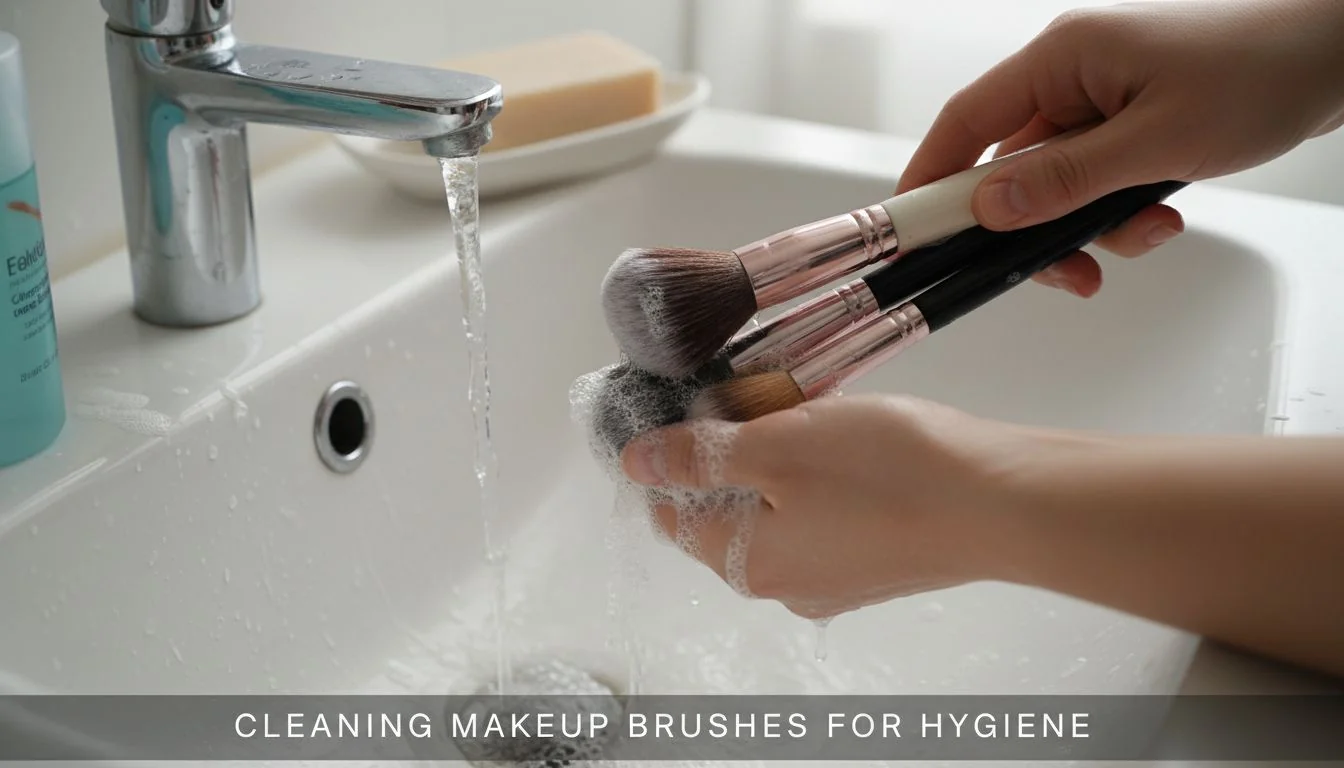
hygiene7 isn’t just about preventing breakouts; it’s a performance variable. From my quality control experience, I know a dirty brush doesn’t perform well. Product buildup on the bristles creates drag, causing streaks and patchy application, especially on dry or textured skin. We’ve seen in tests that brushes used for more than 10 days show significantly higher drag. This aligns perfectly with dermatologist guidance. A clean tool glides better, blends better, and is safer for your skin. For brand owners, this is a crucial customer education point. For your own routine, think of cleaning as essential maintenance for predictable results.
Your Weekly Tool Maintenance Schedule
| Tool | Cleaning Frequency | Replacement | Why It Matters |
|---|---|---|---|
| Foundation Brush | Every 7–10 days | When bristles fray or shed | Prevents bacteria buildup (acne, irritation) and ensures smooth, streak-free application. |
| Makeup Sponge | After every use (rinse) | Every 1–3 months | The porous, damp environment is a perfect breeding ground for bacteria and mold. Replace if it has nicks or tears. |
| Powder Brushes | Every 1–2 weeks | When bristles fray or shed | Less frequent cleaning is needed as dry products are less prone to bacterial growth, but oil transfer still occurs. |
| Eye Brushes | Every 7–10 days | When bristles fray or shed | The eye area is extremely sensitive; regular cleaning prevents irritation and infections. |
A Note for Brand Owners: Emphasize tool hygiene in your product instructions. For B2B clients, a simple compliance checklist for your MUA team or retail staff can ensure tools are always clean, protecting both customers and your brand’s reputation.
Rinsing a makeup sponge with water is enough to clean it.False
Water alone does not remove oil-based makeup, dead skin cells, and bacteria. A proper cleanser (like soap or a dedicated tool cleanser) is required to sanitize the sponge effectively.
You should wash makeup brushes every 7–10 days.True
This guidance comes directly from the American Academy of Dermatology to reduce the buildup of harmful bacteria that can cause acne, skin irritation, and even infections.
Pro Routines: Step-by-Step Tool Techniques That Prevent Streaks, Caking, and Waste?
Having the right tool is only half the battle. Using the wrong technique can lead to streaks, caking, and a messy finish. Let’s master the application for flawless results.
For a streak-free brush application, work in thin layers, pressing product into the skin before buffing. For a seamless sponge application, use a damp sponge with a bouncing or patting motion. Never drag the sponge, as this will lift product and cause streaks.

The secret to a professional finish is a repeatable technique. Pro artists don’t just randomly swipe and hope for the best. They use specific motions to control coverage and texture. A common mistake I see is aggressive buffing from the start, which just moves product around instead of blending it. Another is dragging a sponge across the face, which erases the very coverage you just applied. These simple, step-by-step routines are designed to give you consistent, beautiful results every time.
Pro Routine 1: The Brush Method (For Oily/Acne-Prone Skin)
This technique builds flawless, lasting coverage.
- Prep: Start with a clean, moisturized, and primed face.
- Apply Product: Dot a small amount of foundation on your forehead, cheeks, nose, and chin. Don’t apply it directly to the brush to avoid waste.
- Press: Use a dense, clean synthetic brush to gently press or stipple the foundation into your skin. This deposits the product for maximum coverage in key areas.
- Buff: Once the product is distributed, use light, circular buffing motions to blend the edges. This creates a seamless, airbrushed finish without streaks.
- Set: Lightly set with powder to control oil and lock in your look.
Pro Routine 2: The Damp Sponge Method (For Dry/Textured Skin)
This technique creates a hydrated, second-skin finish.
- Prep: Run your sponge under water until it expands, then squeeze out all excess water firmly. It should be damp, not wet.
- Apply Product: Apply foundation to the back of your hand. Pick up a small amount with the damp sponge.
- Bounce: Gently bounce or pat the sponge across your skin. Use the larger, rounded end for broad areas like cheeks and the pointed tip for around the nose and eyes.
- Build: This motion diffuses the product beautifully. For more coverage, repeat the bouncing motion with another thin layer. Do not drag or swipe.
You should always buff your foundation in circles.False
For initial application and building coverage, a pressing or stippling motion is more effective. Buffing should be used as a final step to blend edges, as over-buffing can cause streaks.
A wet sponge works better than a damp one.False
A sponge that is too wet will dilute your foundation, shear out the coverage too much, and can leave a streaky finish. It should be damp, with all excess water squeezed out.
Conclusion
Choosing the right tool is simple: use a brush for coverage and control, and a damp sponge for a sheer, hydrated finish. Clean tools weekly for healthy skin.
References
-
Learn how to select makeup tools that help prevent breakouts and promote clear skin. ↩
-
Understand which makeup tools minimize irritation for sensitive skin types. ↩
-
Discover the best makeup tools specifically designed for oily skin to prevent shine and breakouts. ↩
-
Explore how a makeup sponge can enhance your foundation application for a flawless finish. ↩
-
Understand the impact of product absorption on your makeup application and finish. ↩
-
Find out which makeup tools are essential for beginners to create a flawless look. ↩
-
Explore effective cleaning methods to maintain hygiene and prevent skin issues from makeup tools. ↩

 English
  French
  Spanish
  Italian
  German
  Portuguese
  Russian
  Arabic
  Japanese
  Korean
  Czech
Czech  Polish
  Swedish
  Vietnamese
  Thai
Thai  Indonesian