Feeling lost in a sea of makeup brushes? This confusion leads to buying tools you don’t need and creating a product line that doesn’t sell. I’ll help you build a smart collection.
For a professional-level kit, you only need six core brushes. Use synthetics for liquids and creams, and naturals for powders. Your essential six are: a Foundation brush1, a multi-use Blush/Powder brush, an Angled Contour brush, a Flat Shader, a Blending brush, and an Eyeliner brush.

When I first started on the factory floor, I saw firsthand how the right tool can completely change a product’s performance. A great foundation can look streaky with the wrong brush, and a beautiful eyeshadow can look muddy without a good blender. It’s not just about the makeup; it’s about the application. For brand founders like you, understanding this is the key to creating a brush line that your customers will love and use every single day. It’s my mission to make this process transparent and simple for you. Let’s decode the world of makeup brushes together, so you can source and sell with total confidence.
Synthetic brushes are always better than natural brushes for all types of makeup.False
This is false. Synthetic brushes excel with liquid and cream products because they don't absorb much product. However, natural brushes are often superior for powder products because their hair cuticles pick up and diffuse powders more smoothly.
Using a dedicated foundation brush can help you use less product compared to a sponge.True
This is true. High-quality synthetic foundation brushes are designed to be non-porous, meaning they apply product to your skin without absorbing it. This leads to less product waste over time.
Brush Names Decoded: The 20 Most-Used Makeup Brushes and What Each Does?
Staring at a list of brushes with names like "kabuki" and "stippling" feels like learning a new language. This jargon makes it hard to create a simple, user-friendly collection for your brand. Let’s break down the most common brushes into simple terms.
To decode brushes, think in three categories: Face brushes create your canvas, Eye brushes add detail and definition, and Lip brushes provide precision. Each tool has a specific job, from buffing foundation to packing on eyeshadow, ensuring a flawless application every time.
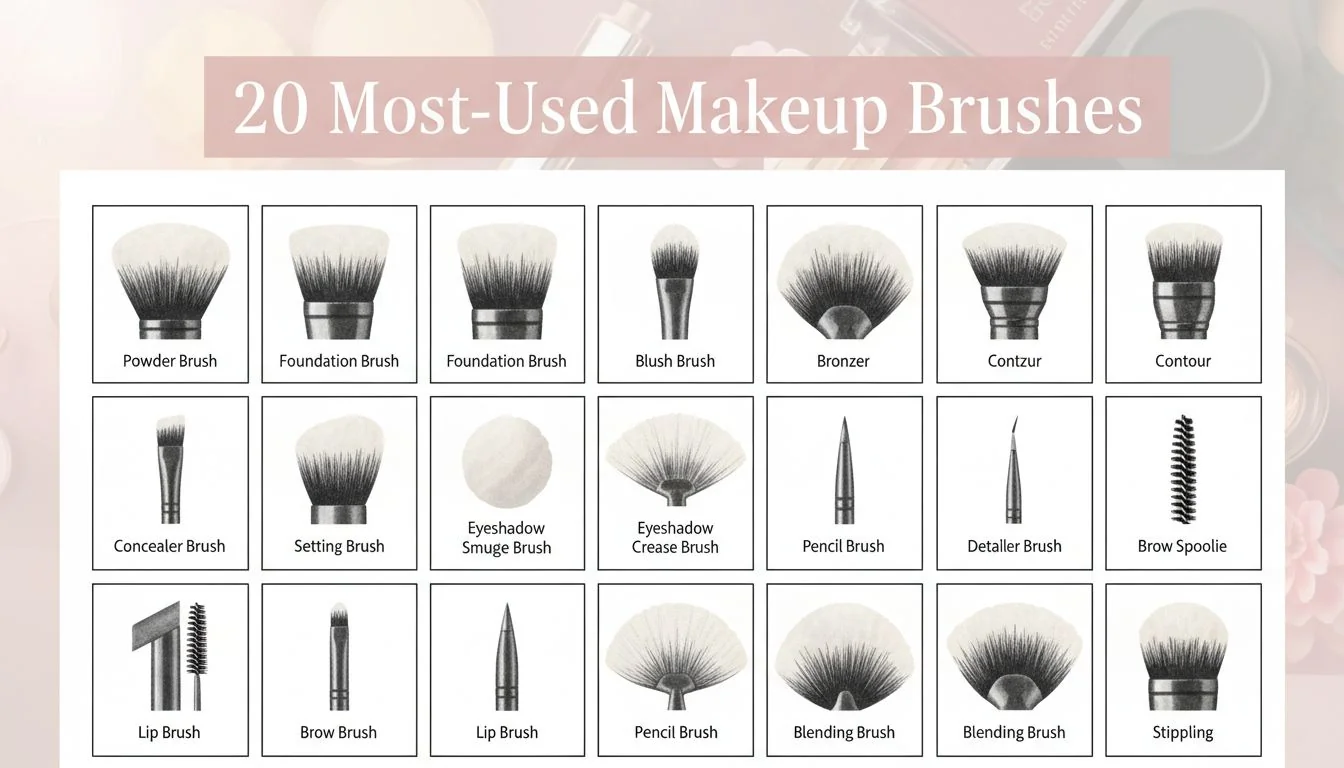
I’ve seen hundreds of brush designs come through my factory, but the truth is, a core set of about 20 shapes handles almost every makeup task imaginable. Understanding these core functions is the first step to building a smart, non-redundant product line. Instead of offering 10 different eye brushes that confuse customers, you can curate a powerful selection that makes sense. Let’s map them out clearly.
Face Brushes
These are the tools for creating a smooth, even base.
| Brush Name | Best For | How to Use (Technique Key) |
|---|---|---|
| Powder Brush | Setting powders, bronzers | Swirl in powder, tap off excess, and sweep lightly over the face. |
| Tapered Foundation | Liquid/cream foundation | Apply product to the face, then use the brush to blend outwards. |
| Stippling Brush | Creams for an airbrushed finish | Dip tips in product, then "stipple" or tap onto the skin. |
| Kabuki Brush | Buffing mineral foundation, body powder | Use circular motions to buff product into the skin for full coverage. |
| Angled Contour | Powder/cream contour | Place the angled edge into the hollows of your cheeks to sculpt. |
| Fan Brush | Precise highlighting, fallout cleanup | Lightly sweep highlighter on high points or dust away eyeshadow fallout. |
| Blush Brush | Powder blush | Smile, then apply color to the apples of the cheeks, blending upwards. |
| Flat Top Foundation | Full-coverage buffing | Use circular buffing motions for a seamless, full-coverage finish. |
Eye & Brow Brushes
These smaller brushes are for detail work, from eyeshadow to brows.
| Brush Name | Best For | How to Use (Technique Key) |
|---|---|---|
| Flat Shader | Packing eyeshadow on the lid | Pat color directly onto the eyelid for maximum pigment. |
| Blending/Crease | Diffusing eyeshadow | Use windshield-wiper motions in the crease to soften harsh lines. |
| Angled Shader | Outer corner "V" shaping | Use the angled tip to apply and blend dark shades in the outer V. |
| Pencil Brush | Smudging liner, inner corner highlight | Use the pointed tip to smudge liner or place a dot of highlight. |
| Eyeliner Brush | Gel or powder liner | Push gel or powder into the lash line for a tight, defined look. |
| Spoolie | Grooming brows, de-clumping mascara | Brush brows upwards before filling; comb through lashes after mascara. |
| Angled Brow | Filling and defining brows | Use short, hair-like strokes with powder or pomade to fill in brows. |
Lip Brushes
For ultimate control and a long-lasting finish.
| Brush Name | Best For | How to Use (Technique Key) |
|---|---|---|
| Lip Brush | Precise lipstick application | Outline lips with the tip, then fill in with the flat side. |
| Lip Liner Brush | Shaping and smoothing edges | Use with a liner or lipstick to create a sharp, clean lip line. |
A fan brush is only useful for applying highlighter.False
This is false. While excellent for a soft highlight application, a fan brush is also a professional tool for gently sweeping away eyeshadow fallout from under the eyes without smearing it.
A spoolie is one of the most essential and multi-functional brow tools.True
This is true. It grooms brow hairs into place before filling, blends out harsh pencil lines for a natural look, and can even be used to de-clump mascara or tame flyaways with hairspray.
Fewer, Better Tools: How Can You Build a 6-Brush Core Set That Covers 90% of Looks?
Your customers don’t need a 20-piece brush set, and neither does your budget. Offering too many options leads to confusion, low sales on certain items, and wasted inventory. I’ll show you how to create a powerful 6-piece set that delivers professional results.
Focus on a versatile 6-brush set: one Foundation, one Blush/Powder, one Angled Contour, one Flat Shader, one Blending/Crease, and one push-style Eyeliner brush. This minimal kit handles base, color, contour, and detailed eye looks, covering most daily and special occasion needs with professional efficiency.
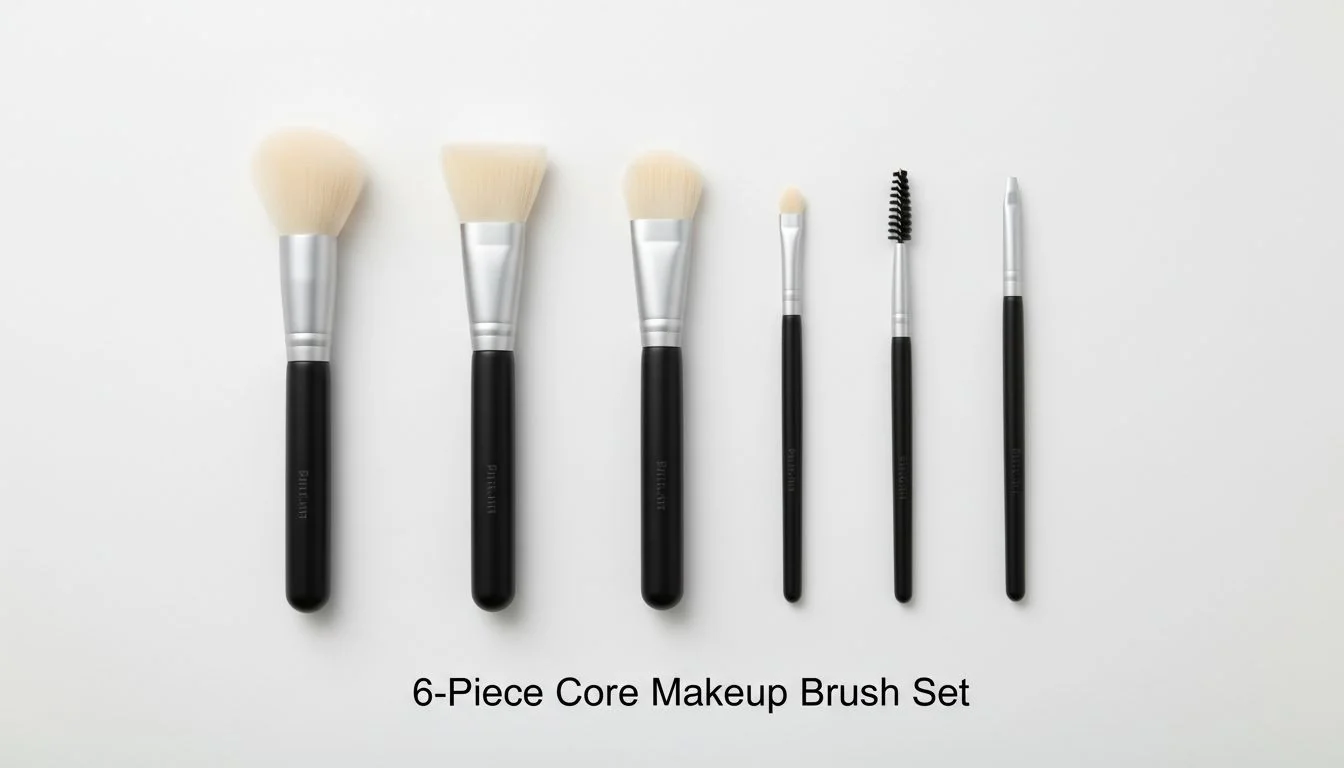
The secret to a successful brush line isn’t about having the most brushes; it’s about having the right brushes. I’ve worked with countless brand founders, and the ones who succeed focus on value and performance. A consolidated set is easier to market, more affordable for the customer, and simpler for you to source. The logic is to choose multi-functional shapes that can do the job of several other, more niche brushes. This "one-to-many" approach is what makes a brush set truly valuable.
Here is the professional-grade core set I recommend to almost every brand I work with:
- Foundation Brush (Flat Top or Tapered): Your choice here depends on the foundation formulas you sell. A flat top is amazing for buffing in liquid or cream for full coverage. A tapered brush is great for more controlled placement and blending around the nose and eyes.
- Medium Dome Brush (for Blush/Powder): This is a workhorse. Its size and shape are perfect for applying blush to the apples of the cheeks, sweeping on setting powder, or applying a soft wash of bronzer. It replaces three separate brushes.
- Angled Contour brush2: The angle on this brush is non-negotiable for creating believable shadows. It fits perfectly into the hollows of the cheeks, along the jawline, and down the sides of the nose.
- Flat Shader Brush: For eyes, this is essential. It’s designed to pack pigment onto the lid with minimal fallout. You can also use its tip for smudging liner under the eye.
- Blending/Crease Brush: If you could only have one eye brush, this would be it. A fluffy Blending brush3 diffuses harsh lines and creates seamless transitions between colors.
- Angled Eyeliner/Brow Brush: Another dual-purpose hero. The sharp, angled shape can create a crisp winged liner with gel or powder, and it’s also the perfect shape for filling in brows with hair-like strokes.
This set empowers your customers to achieve 90% of all makeup looks, from a simple daily face to a dramatic evening look.
You need at least 15 different brushes to achieve a professional makeup look.False
This is false. A curated set of 6 high-quality, multi-functional brushes can cover foundation, powder, blush, contour, and detailed eye looks, which is sufficient for most professional applications.
A good blending brush can be used to both apply and diffuse eyeshadow.True
This is true. You can use the tip of a fluffy blending brush to place color in the crease and then use the sides of the brush with a lighter touch to blend it out, making it a highly versatile tool.
Fibers That Fit Your Formulas: Should You Choose Synthetic or Natural Brushes?
Choosing between synthetic and natural fibers can feel like a technical decision you’re not ready to make. But making the wrong choice can lead to wasted product, poor application, and brushes that don’t align with your brand’s values. Here is a simple framework to match the right fiber to your products.
Choose Synthetic brushes4 (made from taklon or nylon) for all your liquid and cream products. They absorb less product and are easier to clean. Use natural hair brushes (from goat or squirrel) for powders, as their natural cuticles excel at picking up and diffusing pigment for a soft, blended finish.
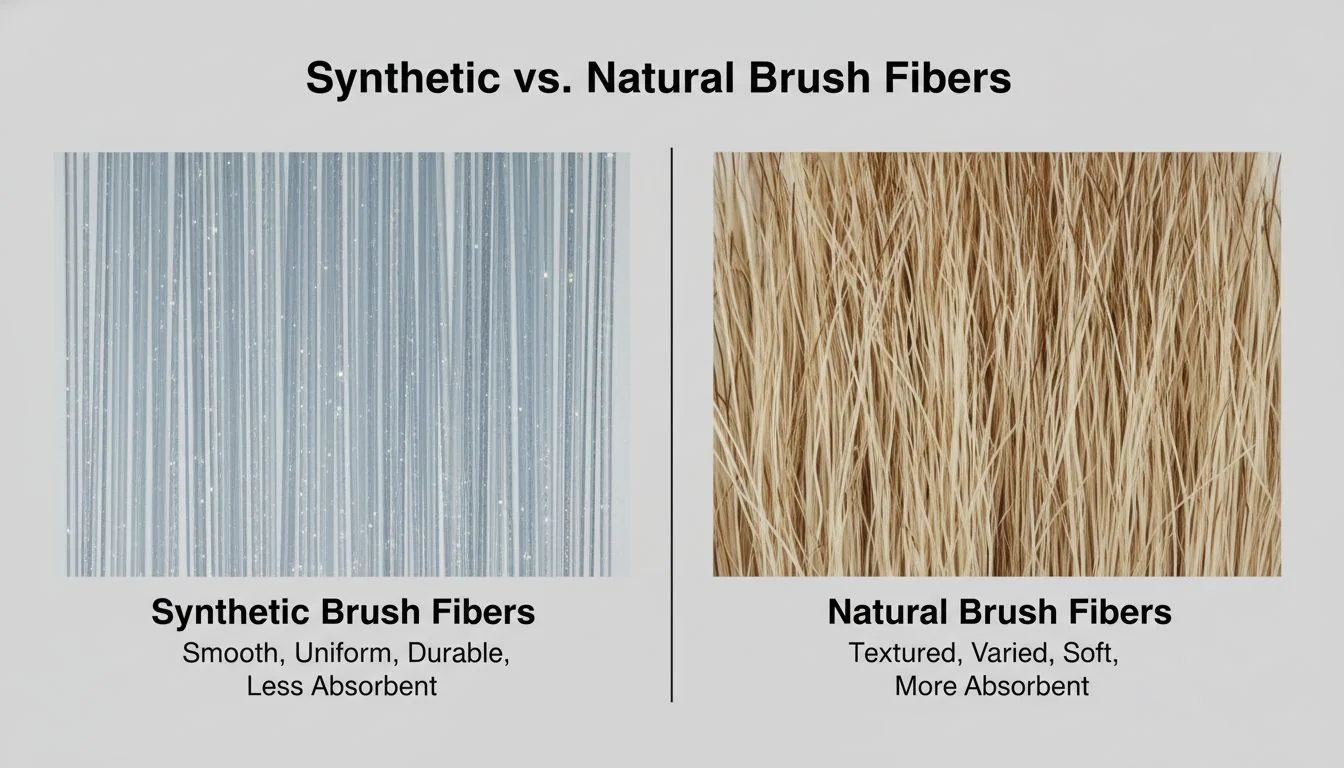
As a factory owner, I handle these materials every day. The difference in performance is real, and it directly impacts how your customer experiences your makeup. A liquid foundation applied with a thirsty natural brush will waste product and can look streaky. A finishing powder applied with a slick synthetic brush might not diffuse as softly. Aligning the fiber with the formula is a mark of a truly professional-quality tool. For brand owners, this decision also ties into your brand story—especially around ethics and sustainability. Let’s break it down with a simple performance matrix.
Fiber-Performance Matrix
| Feature | Synthetic Fibers (Nylon, Taklon) | Natural Fibers (Goat, Squirrel, etc.) |
|---|---|---|
| Best for Formula | Liquids, Creams, Gels | Powders (Setting, Blush, Bronzer, Eyeshadow) |
| Product Absorption | Low (Saves product) | Higher (Picks up powder efficiently) |
| Durability & Cleaning | High (Resists frequent, deep cleaning) | Moderate (Requires gentle cleaning to preserve hairs) |
| Vegan Status | Yes (Man-made materials) | No (Animal-derived) |
| Typical Cost Tier | $-$$ | $$-$$$ |
For a brand founder like Emily, this matrix is a decision-making tool. If your hero product is a cream blush, you must source a high-quality synthetic stippling or dense dome brush to sell with it. If you are launching a line of finely milled mineral powders, investing in a premium natural hair powder brush will give your customers the best possible result and justify a higher price point. It’s about creating a perfect pairing between your formula and your tool.
All synthetic brushes are certified vegan.False
This is a common misconception. While the bristles are man-made, the glue used in the ferrule or materials in the handle may not be. For a truly vegan product, brands must seek certification that covers all components of the brush.
Synthetic brush technology has advanced so much that high-end synthetics can now mimic the performance of natural hair for powder application.True
This is true. Modern, high-performance synthetic fibers are now textured to mimic the cuticle of natural hair, allowing them to pick up and diffuse powder more effectively than older synthetic versions, offering a cruelty-free alternative for powder application.
Market Signals to Source Smart: What Do Trends Tell Us About Sourcing Brushes for 2024–2034?
You want to build a brush line with lasting power, not just follow a fleeting trend. Sourcing the wrong products means getting stuck with inventory that doesn’t align with growing consumer demands for sustainability and multi-functionality. Let’s look at the market data to guide your sourcing strategy.
The Cosmetic brush market5 is projected to grow from $7.5 billion to $11.5 billion by 2034, with a steady 4.5% annual growth rate. This growth is driven by demand for sustainable, multi-use synthetic brushes, signaling a smart sourcing strategy for private label brands.
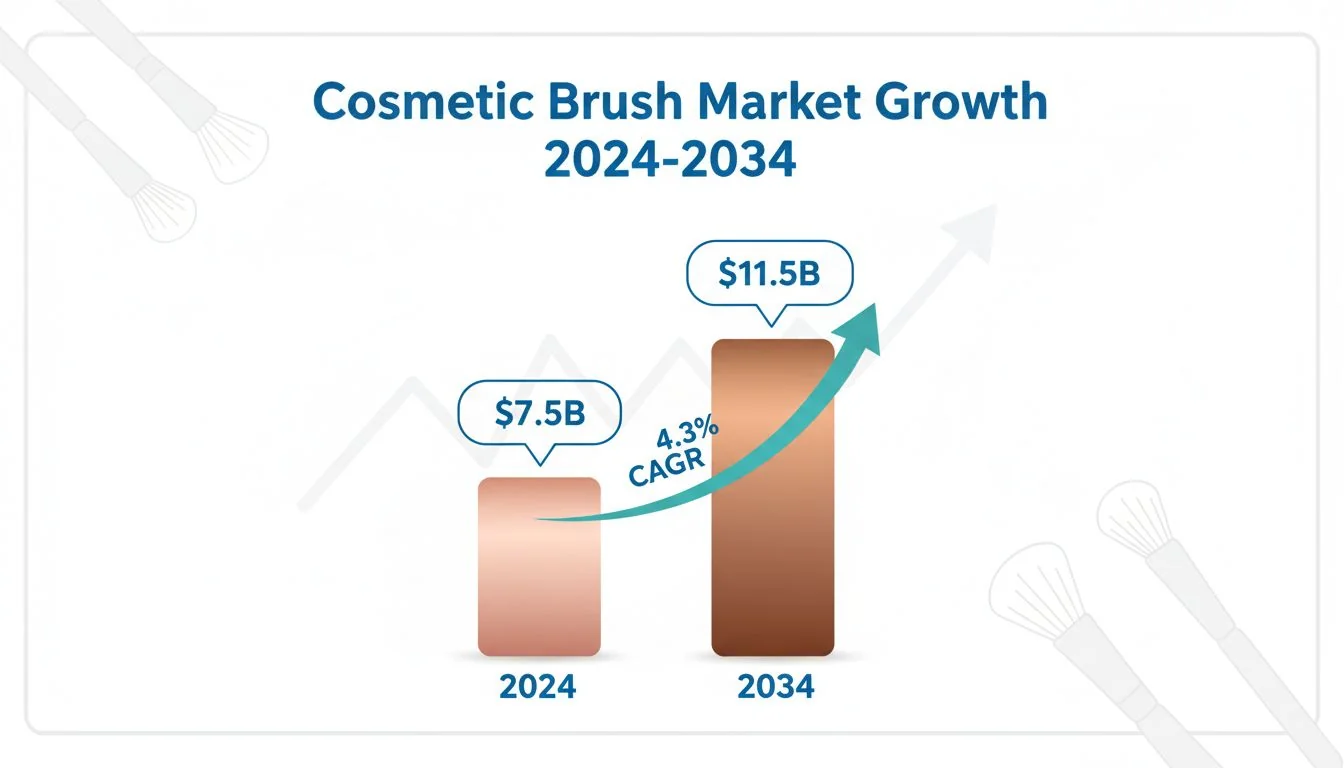
I watch these numbers closely because they tell a story about what customers want and where the industry is headed. A 4.5% compound annual growth rate (CAGR) is a strong signal of sustained demand. People are not giving up on quality tools. For a brand owner, this means there is a stable, growing market for your products if you align with the key trends driving that growth.
Cosmetic Brush Market Forecast
| Year | Market Value (USD) |
|---|---|
| 2024 | $7.5 Billion |
| 2034 (Forecast) | $11.5 Billion |
| CAGR (2025-2034) | 4.5% |
So, what are the sourcing implications for your brand?
- Sustainability is Non-Negotiable: The demand for cruelty-free and vegan products is a primary market driver. This is why high-performance synthetics are gaining so much ground. When sourcing, ask your manufacturer for certifications (like Vegan, Cruelty-Free, and FSC for wooden handles). This is a pain point I solve for my clients every day by providing transparent documentation.
- Multi-Use is Smart Business: The "fewer, better tools" philosophy isn’t just good for consumers; it’s a smart SKU strategy for you. It reduces inventory complexity and creates a higher-value proposition. Low-MOQ sets featuring multi-purpose synthetic brushes are a perfect entry point for new brands.
- A Hybrid Strategy Wins: The data doesn’t suggest natural hair is disappearing, but that its use is becoming more specialized. The smartest sourcing strategy is a hybrid one. Build your core collection with versatile, sustainable synthetic brushes. Then, add one or two premium Natural hair brushes6 specifically for your powder products (like a finishing powder brush or a blender). This balances performance, ethics, and cost perfectly.
The cosmetic brush market is shrinking due to the popularity of makeup sponges.False
This is false. The market is projected to grow steadily at a 4.5% CAGR through 2034, indicating sustained demand for brushes alongside other applicators.
Consumer interest in sustainability is a major factor driving the growth of the synthetic brush market.True
This is true. As consumers become more eco-conscious and concerned with animal welfare, the demand for high-quality, cruelty-free, and vegan synthetic brushes has increased significantly, fueling market growth.
Conclusion
Building the right brush set is about smart choices, not more tools. Focus on function, fiber, and future trends to create a collection that performs, aligns with your brand, and sells.
References
-
Discover the importance of a quality foundation brush for achieving a flawless makeup base. ↩
-
Explore the benefits of using an angled contour brush for sculpting and defining your features. ↩
-
Learn how a blending brush can enhance your eyeshadow application for a seamless finish. ↩
-
Understand why synthetic brushes are preferred for liquid and cream products in makeup application. ↩
-
Stay informed about the growth and trends in the cosmetic brush market to make smart sourcing decisions. ↩
-
Find out how natural hair brushes excel in applying powder products for a smooth finish. ↩

 English
  French
  Spanish
  Italian
  German
  Portuguese
  Russian
  Arabic
  Japanese
  Korean
  Czech
Czech  Polish
  Swedish
  Vietnamese
  Thai
Thai  Indonesian