You want to launch a best-selling flat-top kabuki brush1. But navigating OEM specs feels overwhelming, and one wrong choice can lead to bad reviews, returns, and a damaged brand reputation.
Flat‑top kabuki brushes use a dense, flat head to stipple and buff liquid or cream foundation, delivering medium‑to‑full, streak‑free, airbrushed coverage. For OEM, prioritize synthetic filaments2, corrosion‑resistant ferrules, and waterproof handles to ensure durability, performance, and compliance.
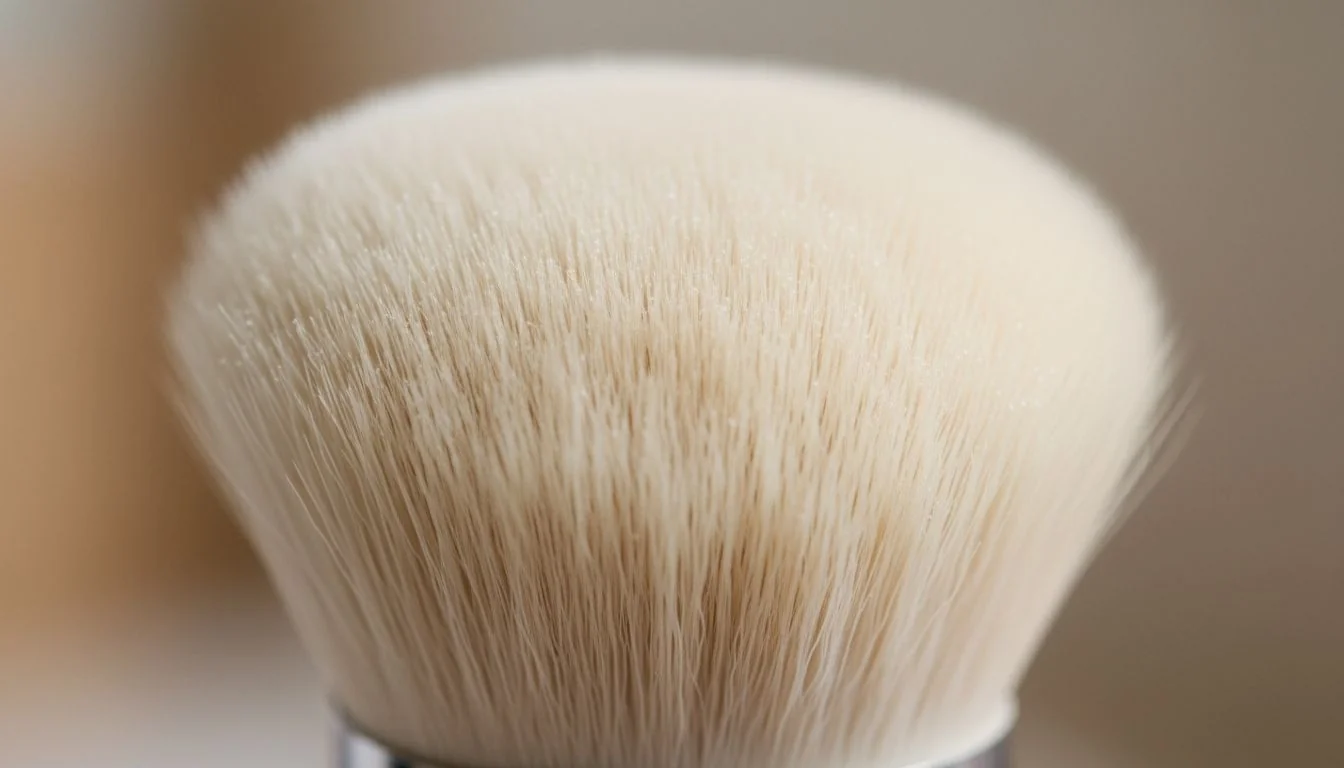
I talk to brand founders like you every day. You have a vision for a high-performance brush, but turning that vision into a physical product that gets 5-star reviews is the real challenge. It’s not just about finding a factory; it’s about making the right technical decisions that directly impact your customer’s experience and your brand’s credibility. The difference between a hit product and a flop often comes down to the small details in your spec sheet.
In this guide, I’ll walk you through the four critical areas you need to master. We’ll connect the dots from the brush’s geometry to your listing’s conversion rate3. Let’s break down how to spec a winning flat-top kabuki brush and build a product page that sells.
The global makeup brush market is projected to grow steadily through 2033.True
Industry analysis confirms that consumer demand for high-quality makeup tools, especially those with synthetic and cruelty-free features, is increasing, justifying investment in premium product development.
All synthetic brush fibers offer the same performance.False
Performance varies greatly based on the filament material (e.g., PBT vs. nylon), tip treatment, denier, and crimping. High-end synthetics are engineered for specific applications.
Geometry to Finish: How a Dense, Flat Head Improves Coverage, Speed, and Streak‑Free Results?
Your customers are complaining about streaky, uneven foundation application. You thought you sourced a good brush, but the reviews say it doesn’t deliver that flawless, airbrushed look they want.
The secret is in the geometry. A flat, dense kabuki head is specifically designed for two application methods: stippling (patting) and circular buffing. This combination builds medium-to-full coverage with liquid or cream products, eliminating streaks for a smooth, airbrushed finish4 that customers love.
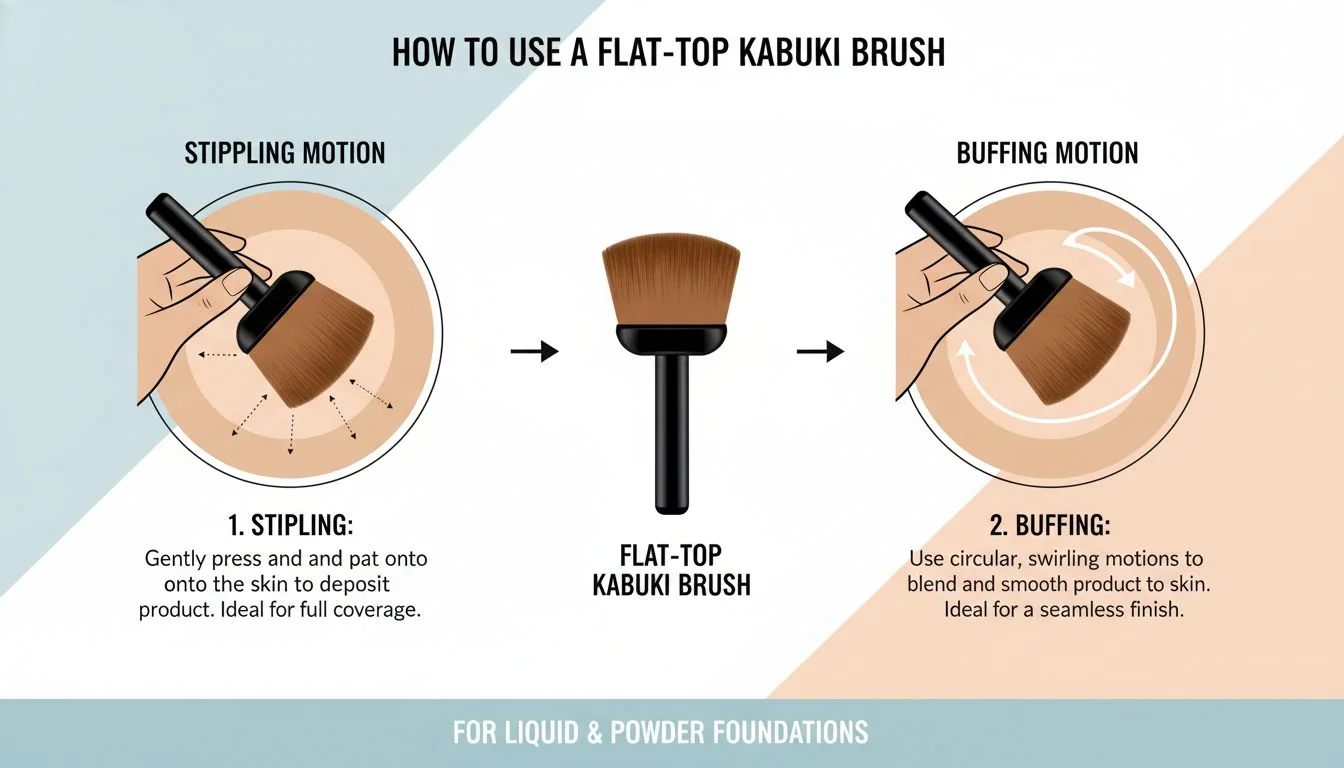
When I work with brands, the first thing we discuss is the end-user experience. What do you want your customer to feel? For a foundation brush, the answer is usually "a flawless, quick, and easy application." The flat-top kabuki is engineered for exactly that. The flat surface is perfect for stippling, which presses foundation into the skin to cover texture and blemishes without wiping product away. The dense bristles then allow for buffing in small circles, which blends the product seamlessly for that coveted airbrushed effect. This dual-functionality is what makes it a top seller. To achieve this, you must translate these user benefits into precise technical specifications for your manufacturer.
From User Benefit to OEM Spec
Here’s how we map the desired customer experience5 to the Bill of Materials (BOM):
| Desired Benefit | Application Technique | Key OEM Specification | Why It Matters |
|---|---|---|---|
| Airbrushed Finish | Circular Buffing | High Bristle Density | More bristles mean smoother blending and no gaps for streaks to form. |
| Full Coverage | Stippling | Flat Head Shape | Provides a solid surface to press product into the skin effectively. |
| Control & Speed | Stippling + Buffing | Short Loft Height | Shorter bristles give more control and prevent the brush from splaying out. |
| No Product Waste | Application | Medium-Firm Rigidity | The brush head is firm enough to not absorb excess product but flexible enough to blend. |
Getting this geometry right is the first step to creating a brush that doesn’t just look good, but actually performs.
A flat-top kabuki brush is only for liquid foundation.False
While ideal for liquids and creams, a dense flat-top can also be used to buff mineral or powder foundation for fuller coverage.
From Fiber to Ferrule: OEM Specs That Control Shedding, Absorption, and Lifespan?
You’ve received a new batch of brushes, but the handles feel cheap, and worse, the bristles are already shedding. Negative reviews are starting to pop up, killing your brand’s reputation before it even gets going.
To build a brush that lasts, you must focus on its core components. High-quality synthetic fibers, strong corrosion-resistant ferrules6, and waterproof handles are non-negotiable specs that prevent shedding, reduce product waste, and give your brush a long lifespan.
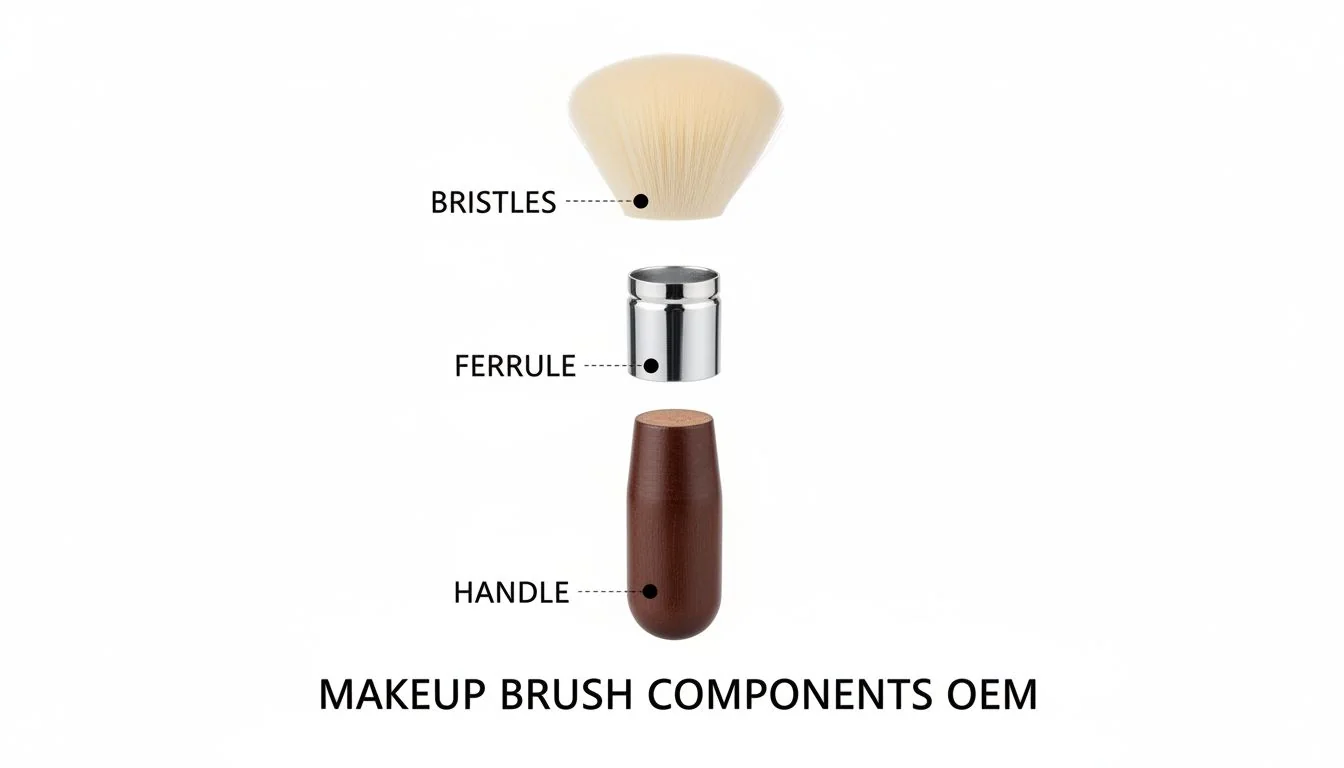
I once had a client whose return rate spiked to 15% on a new brush. The problem? The factory used a cheap, unsealed wooden handle that swelled and cracked when customers washed it. The glue failed, and the head fell off. We fixed it by switching to a waterproof polymer handle and specifying a double-crimped, seamless ferrule. The returns dropped to under 2%. This is why material selection is so critical. It directly impacts durability and customer satisfaction. Let’s look at the three key parts.
The Filaments: Engineered for Performance
For foundation brushes, modern synthetic filaments are far superior to natural hair. They don’t absorb liquid or cream products, meaning less wasted foundation for your customer. They are also easier to clean, can be made antimicrobial, and are inherently cruelty-free—a huge selling point.
- Filament Type: Specify high-quality PBT (Polybutylene Terephthalate). It has the perfect balance of softness and resilience.
- Tip Treatment: Ask for engineered smooth or tapered tips. This is what eliminates streaking.
- Density: Define the bristle count and bundle packing density to match the coverage you promise.
The Ferrule: The Unsung Hero of Durability
The ferrule is the metal band that connects the bristles to the handle. This is where most catastrophic brush failures happen.
- Material: Use a corrosion-resistant alloy like aluminum. Specify the wall thickness (e.g., 0.25–0.30 mm) for strength. For sensitive markets, request nickel-free plating.
- Assembly: Insist on a seamless ferrule design and an interlocking or double-crimping process. This mechanically locks the bristles in place and is your best defense against shedding.
The Handle: The First Touchpoint of Quality
The handle is what your customer holds. It needs to feel substantial and withstand repeated washing.
- Polymer/Resin: These are excellent choices as they are naturally waterproof and durable.
- Wood: If you want the aesthetic of wood, you must specify the moisture content control and a multi-coat polyurethane (PU) finish to prevent swelling and finish degradation.
Synthetic brushes are better than natural hair for liquid foundation.True
Synthetic filaments are non-porous, so they don't absorb liquid or cream products, leading to less waste and a smoother application. They are also cruelty-free and more hygienic.
Certs, QA, and Tolerances: The Invisible Factors Behind 4.7‑Star Reviews and Lower Returns?
You approved a perfect pre-production sample, but the bulk order that arrived is full of inconsistencies. Some brushes shed, others have crooked ferrules. One bad batch can destroy your product rating and your brand’s credibility.
The solution is to stop relying on promises and start demanding proof. Formalize your quality assurance7 (QA) checkpoints and require verifiable certifications. These invisible factors are what separate professional brands from amateur sellers and protect you from risk.
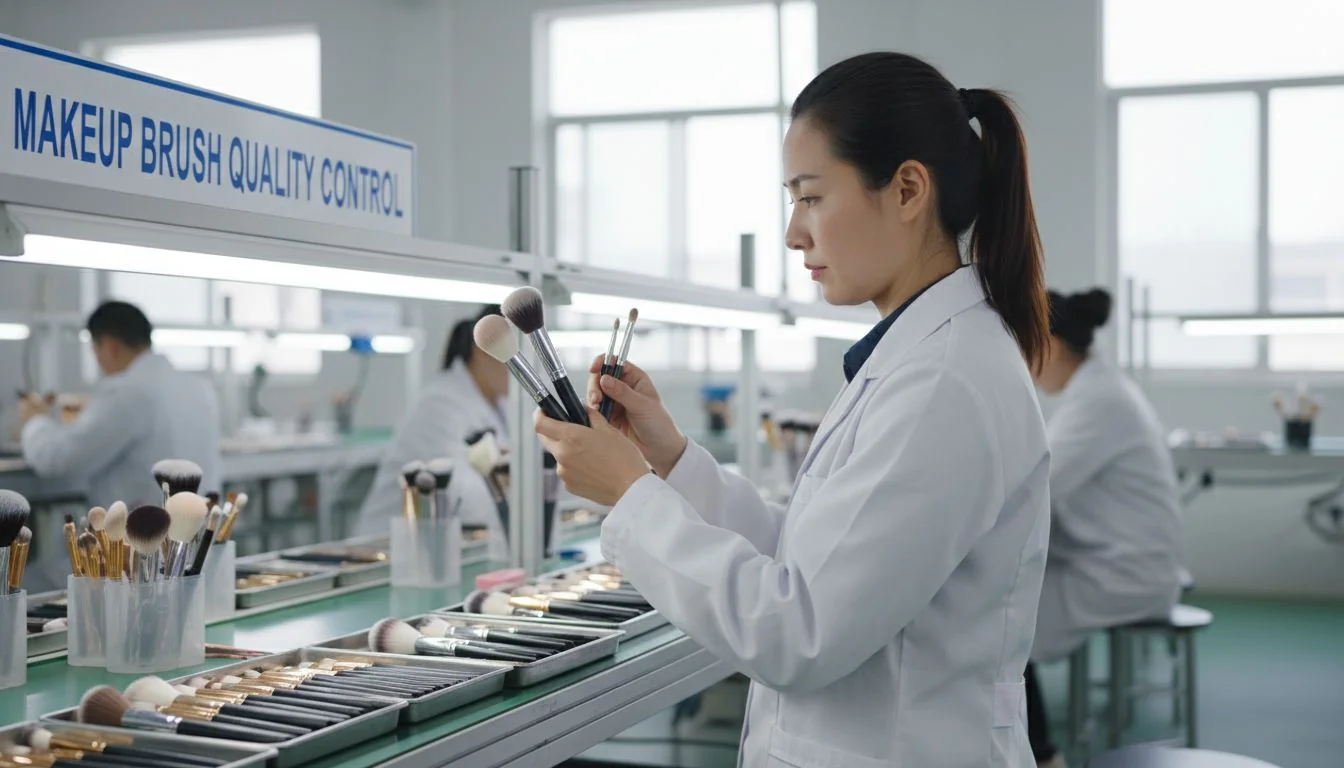
This is one of the biggest pain points I hear from founders. A factory says they are "cruelty-free," but when you ask for documentation, they have nothing. This is a huge red flag. For my clients, we build a QA checklist and a documentation requirement list right into the manufacturing agreement. It’s not about being difficult; it’s about being professional. You are responsible for the claims you make to your customers, so you need proof from your supply chain. This protects your customers, your brand, and your business from the risk of inconsistent quality and false advertising.
Key QA Checkpoints to Formalize
Your QC sheet should include pass/fail criteria for tests like:
- Filament Pull Test: A specific force (e.g., 500g) is applied to a bundle of bristles. No more than a few bristles should come out. This verifies shedding control.
- Ferrule Corrosion Test: The ferrule is subjected to a salt spray test to ensure the plating is durable and won’t rust.
- Handle Finish Abrasion Test: The handle’s coating is tested for resistance to scratches and wear.
- Glue Cure Verification: The adhesive bond between the ferrule and handle is tested to ensure it’s fully cured and strong.
- Batch Density Audits: Brushes from the production line are randomly checked to ensure bristle density is within the agreed tolerance (e.g., +/- 5%).
Certifications to Verify and Showcase
Don’t just accept a logo. Ask for the documentation.
- Cruelty-Free / Vegan: Require signed affidavits from the material suppliers confirming no animal products or testing were used.
- ISO 9001: This shows the factory has a documented quality management system. Ask for their certificate.
- EU/Region-Specific Compliance: If selling in the EU, ensure your factory can provide documentation for REACH or other required cosmetic safety regulations.
A factory's 'cruelty-free' claim is sufficient proof for your brand.False
You need verifiable documentation, such as raw material affidavits and supply chain declarations, to legally and ethically substantiate cruelty-free or vegan claims on your product listings.
Listing to Convert: Benefit‑Led Copy, Spec Tables, and Visuals That Win Featured Snippets?
Your product looks great, but your online listing isn’t converting visitors into buyers. Meanwhile, your competitors with similar products are dominating sales and even winning the Amazon’s Choice badge.
You need to structure your listing to answer customer questions before they even ask them. Lead with the benefit, explain the technical reason, and provide social proof. Use clear spec tables, trust badges, and visuals that demonstrate performance and build confidence.
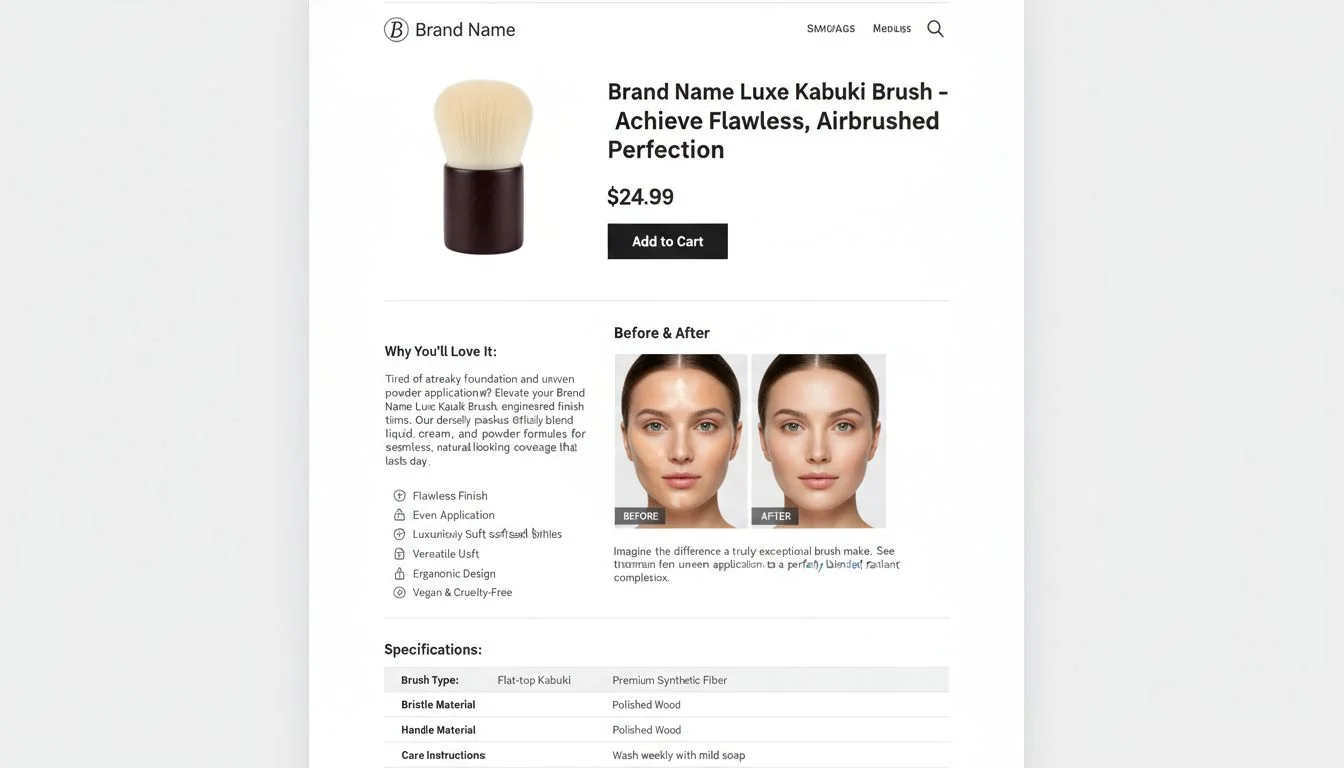
Top-performing product pages follow a clear pattern. They mirror the customer’s decision-making process. A customer doesn’t think, "I need a brush with PBT filaments and a double-crimped ferrule." They think, "I need a brush that gives me an airbrushed finish and won’t fall apart." Your job is to connect your smart OEM decisions to the benefits your customer is searching for. We help our clients build these "conversion-optimized" listings by translating their spec sheet into a powerful sales narrative.
The Winning Copy Formula: Benefit > Reason > Proof
Structure your headlines and bullet points this way:
- Benefit: "Achieve a Flawless, Airbrushed Finish in Seconds."
- Reason: "Our ultra-dense, flat-top head with 250,000+ synthetic bristles buffs and blends foundation without streaks."
- Proof: "Backed by our Zero-Shedding Guarantee and certified Cruelty-Free & Vegan."
The Power of a Spec Table
Don’t hide the details. Showcase them in a way that builds value. A spec table makes you look transparent and authoritative.
| Feature | Specification | Customer Benefit |
|---|---|---|
| Coverage | Medium to Full | Flawlessly covers blemishes and redness. |
| Finish | Streak-Free, Airbrushed | Achieved with a dense, flat head for buffing. |
| Filament | Vegan PBT Synthetic | Wastes less product, is hygienic, and 100% cruelty-free. |
| Ferrule | Double-Crimped Aluminum | Guarantees zero shedding for long-lasting use. |
| Handle | Waterproof Polymer | Durable and easy to clean without risk of damage. |
| Best For | Liquid & Cream Foundation | Perfect for your favorite foundation, concealer, or cream blush. |
Visuals That Demonstrate and Build Trust
Your images should sell the experience.
- Hero Shot: A beautiful, clean shot of the brush.
- In-Use GIF: A short, looping video showing the stippling and buffing motion on skin.
- Macro Shot: A close-up of the dense, soft bristles.
- Callout Image: An image of the brush with text pointing out key features (e.g., "Seamless Ferrule," "Waterproof Handle").
- Trust Image: An image that includes your key badges, like "Cruelty-Free," "Vegan," and "1-Year Warranty."
Conclusion
Spec your kabuki brush from geometry to QA, and build a listing that converts. This is how you create a best-seller, earn 5-star reviews, and build a lasting beauty brand.
References
-
Explore the advantages of flat-top kabuki brushes for achieving flawless makeup application. ↩
-
Discover why synthetic filaments outperform natural hair in makeup brushes for performance and hygiene. ↩
-
Learn tips and strategies to enhance conversion rates for your makeup brush product listings. ↩
-
Discover techniques to achieve a flawless, airbrushed finish using the right makeup brushes. ↩
-
Learn strategies to improve customer experience and satisfaction with your makeup brush products. ↩
-
Understand how corrosion-resistant ferrules improve the durability and longevity of makeup brushes. ↩
-
Explore essential quality assurance practices to ensure consistent product quality and customer satisfaction. ↩

 English
  French
  Spanish
  Italian
  German
  Portuguese
  Russian
  Arabic
  Japanese
  Korean
  Czech
Czech  Polish
  Swedish
  Vietnamese
  Thai
Thai  Indonesian