Your makeup sponge1 looks clean, but it could be causing breakouts. Storing it wrong traps moisture and bacteria. The solution is a simple, science-backed storage routine that protects your skin.
Store makeup sponges only after they’re completely dry: wash, squeeze, towel-roll, and air-dry until no damp core remains. Then keep them upright in a ventilated holder2 or mesh bag in a low-humidity area. Never seal a damp sponge; replace every 2–3 months.
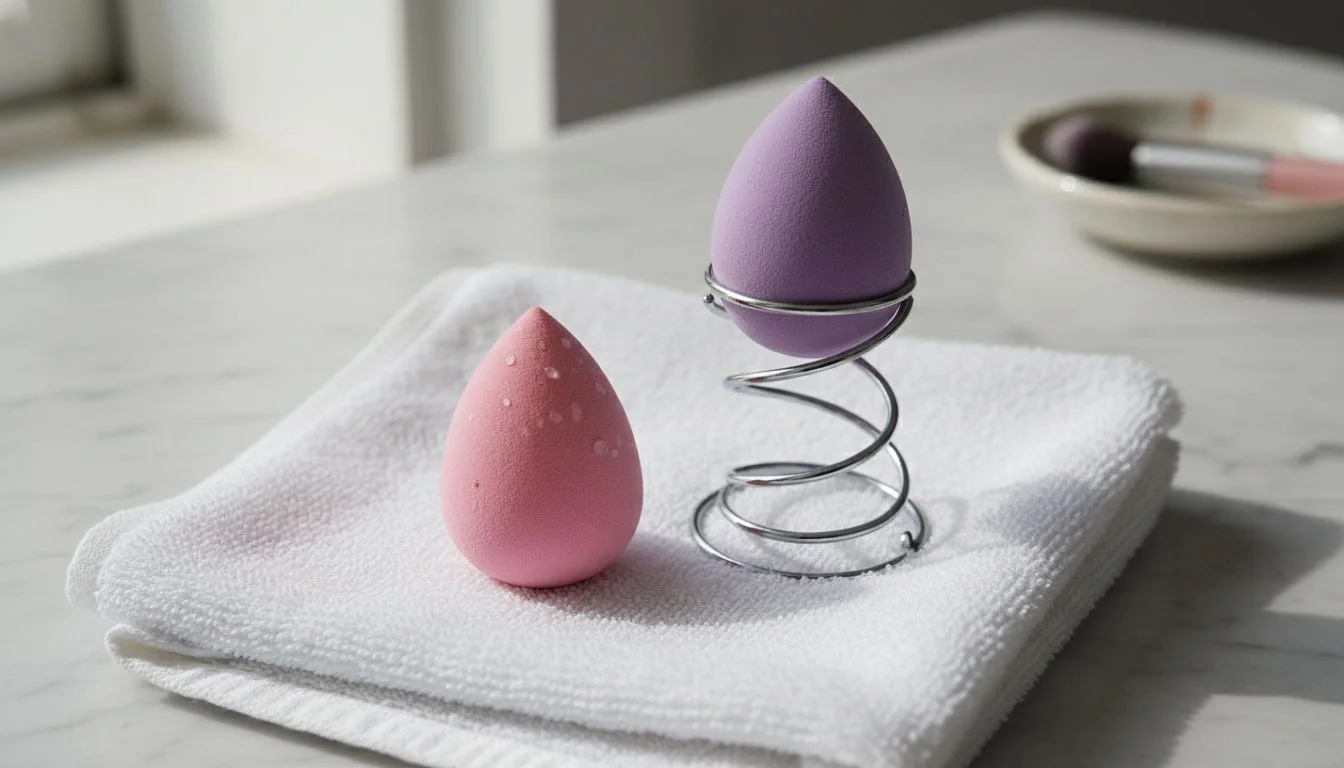
As someone who has spent a lifetime in the mold manufacturing business, I’ve learned that good design is about solving problems. A well-designed product works better and keeps you safer. This is true for complex industrial parts, and it’s just as true for something as simple as a makeup sponge holder. The wrong storage can turn a helpful tool into a source of skin problems. In this guide, I’ll share what I’ve learned about the science of safe storage and how smart design, from an OEM perspective, makes all the difference. Let’s get into the details.
Storing a makeup sponge at cold temperatures, like in a refrigerator, prevents bacteria growth.False
A study found no significant difference in bacterial counts between sponges stored at room vs. cold temperatures. The critical factor is moisture, not temperature.
Up to 81% of bacteria found on cosmetic tools are Gram-positive, including Staphylococcus species, which can cause skin issues.True
A 2025 study on cosmetic tool contamination highlighted this, underscoring the need for proper cleaning and dry, ventilated storage to minimize risk.
Dry First, Then Store: How Can a 3-Step Method Prevent Mold and Breakouts?
You just washed your sponge, so it’s safe to put away, right? Storing it while even slightly damp is a huge mistake. It creates the perfect environment for mold and bacteria, leading to breakouts. The solution is a simple but non-negotiable drying routine3.
First, wash your sponge with mild soap and water. Next, squeeze out all excess water and roll it firmly in a clean towel. Finally, let it air-dry completely in an open area until it’s bone-dry to the touch, with no cool or damp core.
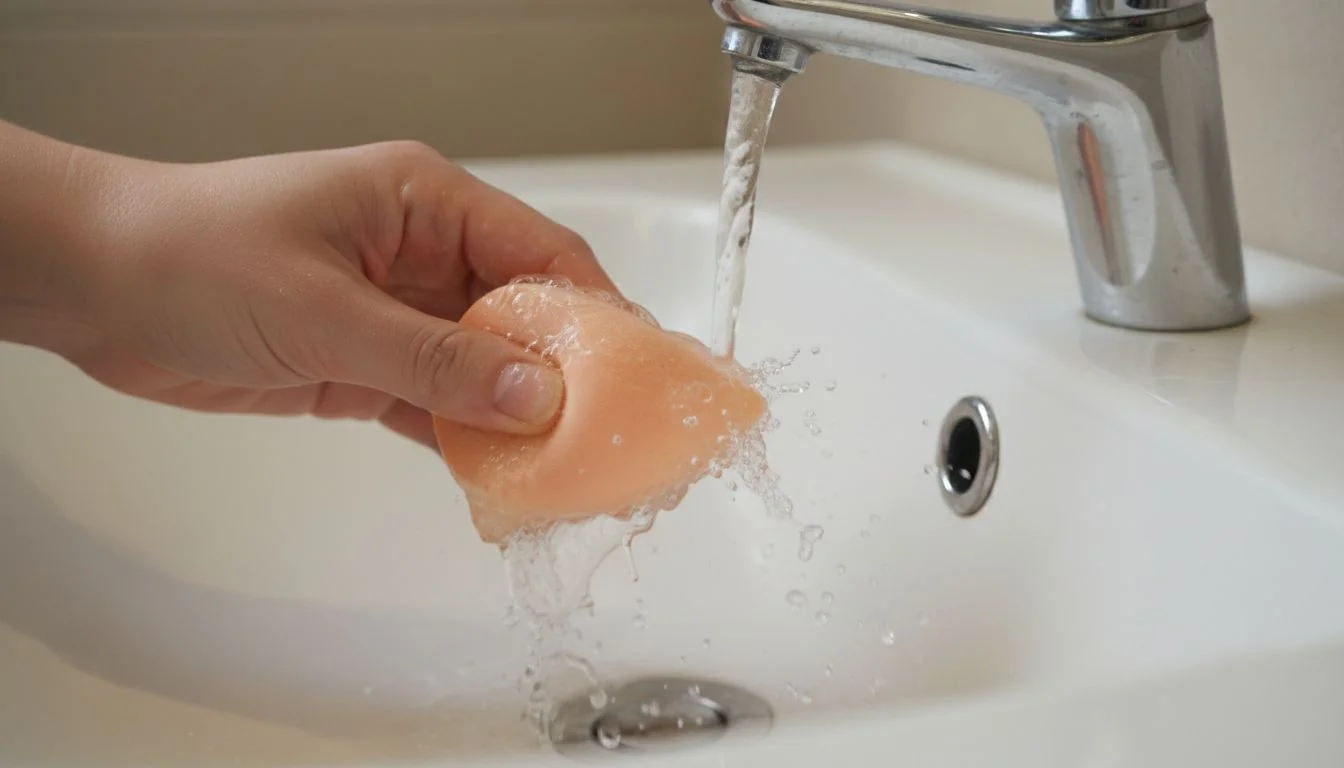
The science here is simple and clear. Bacteria and mold need moisture to multiply. A study I read confirmed that the biggest factor in bacterial growth on sponges isn’t storage temperature, but the presence of moisture and organic residue from makeup and skin cells. When you seal a damp sponge, you’re essentially creating an incubator. A 2025 study found that tools like these are often contaminated with Staphylococcus bacteria, and nearly 28% of users reported skin problems they suspected were linked to their tools. Drying your sponge completely starves these microbes of the water they need to thrive. This isn’t just about keeping your sponge nice; it’s a critical hygiene step to protect your skin.
The 3-Step Drying Method
| Step | Action | Why It’s Important |
|---|---|---|
| 1. Wash | Clean with mild soap and rinse thoroughly. | Removes makeup, oils, and skin cells that bacteria feed on. |
| 2. Squeeze & Roll | Gently squeeze out excess water, then roll it in a clean towel. | Removes the bulk of the moisture quickly, speeding up air-drying time. |
| 3. Air-Dry | Place on a clean, dry surface with good airflow until "bone-dry". | Eliminates the final traces of moisture, preventing microbial growth. |
You only need to let a sponge air-dry for an hour before storing it.False
Drying time varies based on humidity and sponge density. The sponge must be 'bone-dry' with no damp core, which can take several hours or even overnight.
44.3% of cosmetic tool users report that they rarely clean their tools.True
This data from a 2025 study shows that poor hygiene is common, making proper drying and storage even more critical to prevent contamination between infrequent cleanings.
Vent, Don’t Seal: What are the Best Holders and Travel Cases That Actually Breathe?
You’ve dried your sponge, but now you toss it in a sealed makeup bag. This traps any remaining trace moisture and dust, undoing all your hard work. You need a storage solution that allows for constant airflow.
The best storage options are holders that are designed for ventilation. Choose an upright stand that minimizes surface contact or a case with plenty of holes or slats. For travel, look for perforated silicone or hard plastic cases that protect the sponge while letting it breathe.
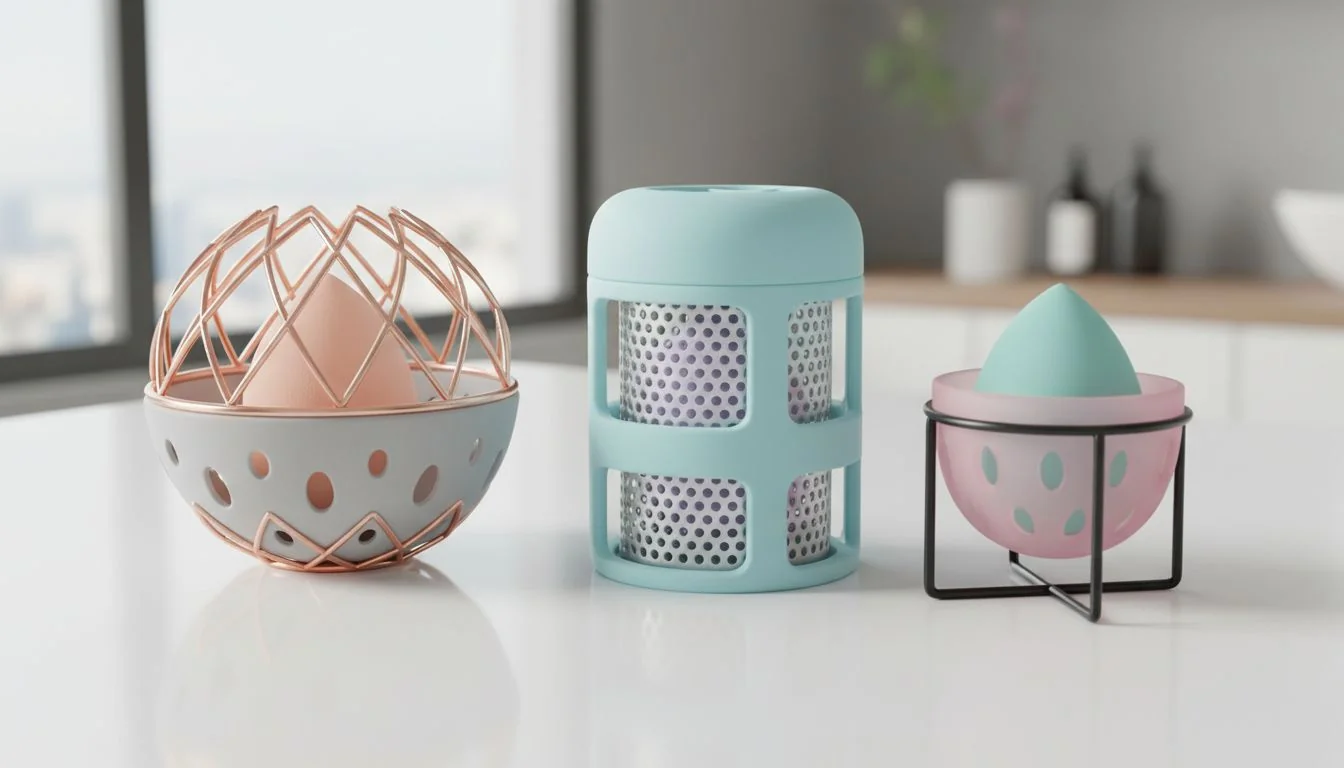
From my perspective as a mold designer, the holder is as important as the sponge itself. When my clients come to me for a new product, we focus on how the design serves the user’s needs. For a sponge case, the primary need is hygiene. This is where OEM and ODM buyers can really stand out. A cheap, sealed plastic container is a failed design. A great design incorporates features that actively promote cleanliness.
An OEM’s Perspective on Holder Design
When designing a holder, we focus on three things:
- 360° Ventilation: The design must have holes, slats, or a mesh pattern on all sides. This ensures air can circulate freely, no matter how the holder is placed.
- Minimal Contact Geometry: An upright "cradle" or "tripod" shape is ideal. It holds the sponge securely but only touches it on a few small points, maximizing the exposed surface area for drying.
- hygienic materials4: We use non-porous materials like silicone or polished ABS plastic. They are easy to clean and don’t absorb moisture or bacteria themselves. We also design them with smooth surfaces and no tiny crevices where gunk can build up.
For brands, printing clear instructions on the packaging—like "Ensure sponge is 100% dry before storing"—is a small step that builds trust and prevents misuse.
Any plastic container is fine for storing a makeup sponge.False
Airtight plastic containers are one of the worst storage methods, as they trap moisture and promote mold and bacteria growth. Only use containers with significant ventilation.
A good travel case for a makeup sponge should be made of a hard material and have perforations for airflow.True
Hard cases protect the sponge from being squashed, while perforations provide the essential ventilation needed to prevent moisture buildup during travel.
The Bathroom Humidity Trap: Where Should You Place Sponges to Keep Them Safe?
Your bathroom seems like the most convenient place to keep a makeup sponge. But the steam from your daily shower creates a high-humidity environment. This moisture in the air is enough to make your sponge a breeding ground for germs.
The rule is simple: store your sponge outside of the bathroom. Keep it in a dry, clean area with good airflow. A spot on your bedroom vanity or a shelf in your closet works perfectly. If you must use a drawer, place the sponge in a mesh bag first.
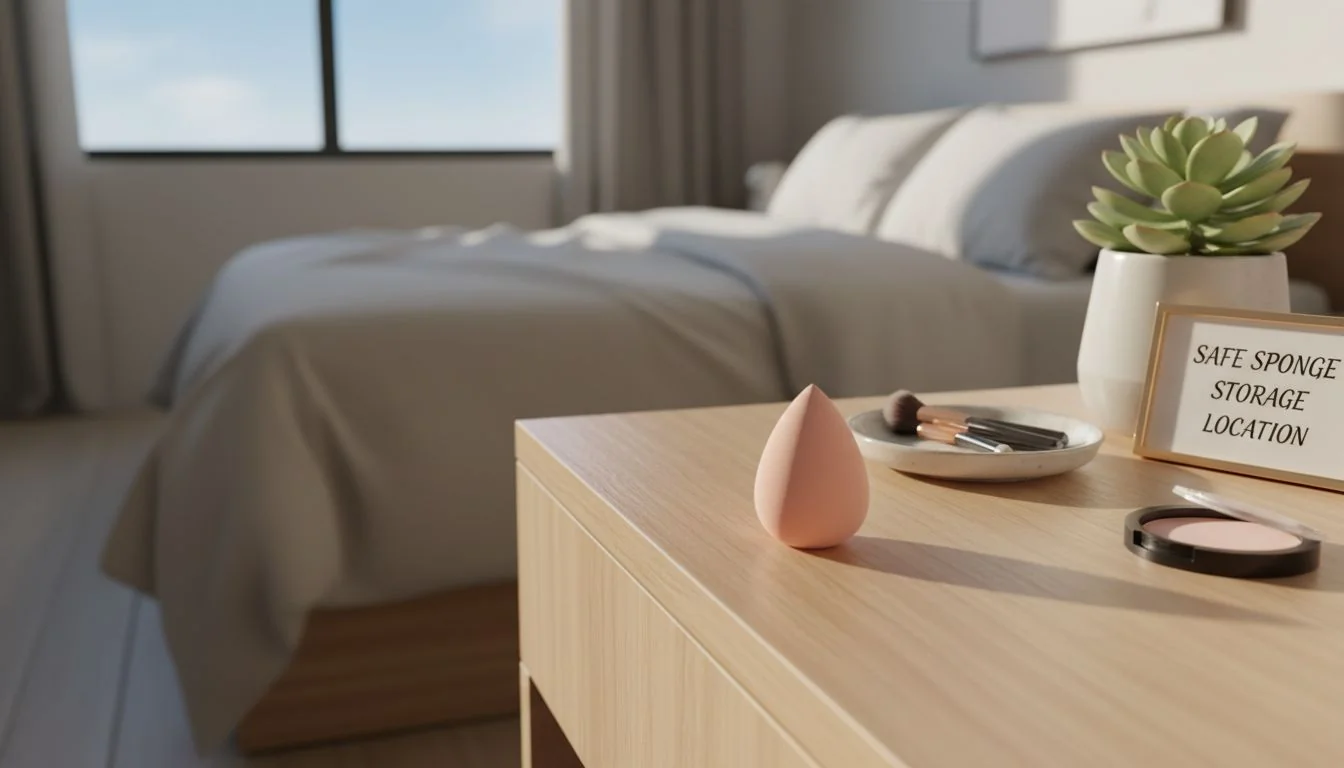
Think of your bathroom as a tropical climate. The humidity that fogs up the mirror also settles on every surface, including your sponge. Even if your sponge was completely dry when you put it there, it can absorb moisture from the air. This is enough to reactivate dormant bacteria and allow mold to start growing. I’ve seen this principle in my own industry; certain raw plastic materials must be stored in low-humidity environments to prevent defects during molding. The same logic applies here. You are trying to prevent a "defect"—microbial growth—by controlling the environment. Keeping your sponge out of the bathroom is the easiest way to control that variable and ensure it stays dry and safe for your skin.
Best and Worst Storage Locations
| Location | Verdict | Why? |
|---|---|---|
| Bathroom Counter | Avoid | High humidity from showers and sinks promotes microbial growth. |
| Sealed Makeup Bag | Avoid | Traps moisture and air, creating a perfect incubator for bacteria. |
| Bedroom Vanity | Ideal | Dry, open-air environment with good airflow. |
| Drawer (in a mesh bag) | Good | The mesh bag protects from dust while still allowing air to circulate. |
Leaving a sponge on the bathroom counter is fine as long as it's not wet.False
The ambient humidity from showers and sinks is enough to make a dry sponge damp again, creating an environment for bacteria to grow.
Storing a sponge in a mesh bag inside a drawer is a safe option.True
This method protects the sponge from dust and debris while the mesh material allows for sufficient airflow to keep it dry and hygienic.
When to Retire a Sponge: What are the Time-Based Rules and Visible Warning Signs?
Even with perfect care, your makeup sponge has a limited lifespan. Using it for too long means you’re just spreading old makeup and bacteria onto your face. You need to know when it’s time to say goodbye.
As a general rule, replace your sponge every 2 to 3 months of regular use. However, you must throw it out immediately if you see any warning signs like persistent stains, a bad smell, tearing, or visible black dots, which indicate mold.
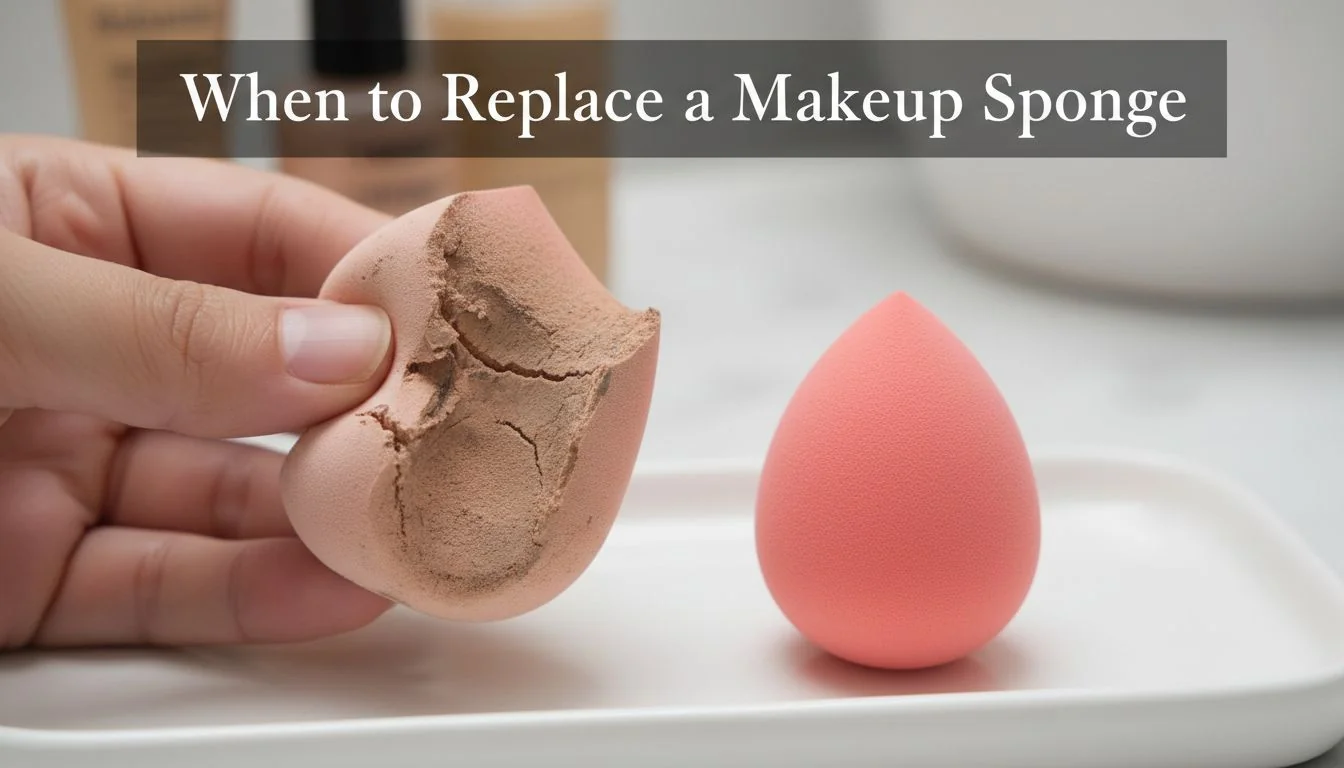
Think of a makeup sponge like any other tool that wears out. In manufacturing, we constantly monitor our molds and equipment for signs of wear and tear, because a worn tool produces a bad part. It’s the same with your sponge. As it ages, its porous structure starts to break down. Little nicks and tears become deep crevices that are impossible to clean properly, creating permanent homes for bacteria. The material also loses its "bounce," meaning it won’t apply your makeup as smoothly. The 2-3 month rule is a great guideline for average use, but visual inspection is just as important. Those black dots are a major red flag; that’s visible mold. Using a moldy sponge is something you must avoid at all costs.
Sponge Retirement Checklist
| Warning Sign | What It Means | Action |
|---|---|---|
| Persistent Stains | The sponge is deeply saturated with product that can’t be washed out. | Replace |
| Bad Odor | A sign of bacterial overgrowth. | Replace Immediately |
| Nicks or Tears | The structure is compromised, trapping bacteria and applying makeup poorly. | Replace |
| Black Dots | This is likely mold growth. | Replace Immediately |
| Age (2-3 Months) | The sponge has reached the end of its hygienic lifespan. | Replace |
You can use a makeup sponge for up to a year if you clean it regularly.False
Experts recommend replacing sponges every 2-3 months. After this time, the material degrades, making it impossible to fully clean and increasing the risk of skin irritation and breakouts.
Small black dots on a sponge are a definite sign of mold.True
Visible black or dark green spots are a clear indication of mold growth. The sponge should be discarded immediately to avoid applying mold spores to your skin.
Your Most Common Questions Answered
Can I store my sponge wet?
No. Always fully air-dry your sponge before storing it. Sealing moisture inside a container or bag is the fastest way to grow mold and bacteria.
What’s the safest storage method at home?
The safest method is to place the fully dry sponge in an upright, ventilated holder on a clean, dry surface like a vanity. A mesh bag in a drawer is also a good option.
Is the original plastic tube okay for storage?
It can be, but only if you leave the top off or add holes to it for ventilation. Never seal the sponge inside the original airtight tube, especially if it’s even slightly damp.
How do I store sponges for travel?
Use a dedicated travel case5 with ventilation holes. Make sure your sponge is 100% dry before you pack it, and avoid just tossing it into your main cosmetics bag.
Does cold storage reduce bacteria?
Research shows that storing a sponge in the cold (like a refrigerator) does not significantly reduce bacteria compared to room temperature. The most important factor is keeping the sponge dry.
How often should I replace a sponge?
Replace it every 2 to 3 months with regular use. You should replace it sooner if it has a bad smell, permanent stains, tears, or any visible mold spots.
Conclusion
Properly storing your makeup sponge is simple: dry it completely, give it air, keep it out of the bathroom, and know when to replace it. This protects your skin and your investment.
References
-
Understanding the best practices for makeup sponge care can significantly improve your skin health and hygiene. ↩
-
A ventilated holder is crucial for preventing mold and bacteria growth, ensuring your sponge stays clean and safe. ↩
-
A proper drying routine is essential for maintaining hygiene and prolonging the life of your makeup sponge. ↩
-
Choosing the right materials for sponge holders can enhance cleanliness and reduce the risk of contamination. ↩
-
A good travel case is essential for maintaining sponge hygiene while on the go, preventing moisture buildup. ↩

 English
  French
  Spanish
  Italian
  German
  Portuguese
  Russian
  Arabic
  Japanese
  Korean
  Czech
Czech  Polish
  Swedish
  Vietnamese
  Thai
Thai  Indonesian